Loading Page

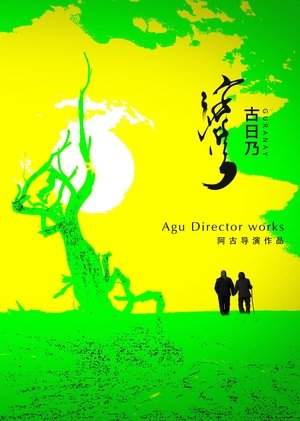
Guranay(2021)
Status: Released
Date: 2021-03-26
0%
0 Votes
Time: 1h 12m
Overview:
This film is a realistic record of a sixty-year-old couple living in a remote village (Gurenay) in the Badain Jaran Desert of Alashan, Inner Mongolia plant thousands of mu of ammodendron and euphratica to fight against expanding deserts.
Languages:
Countries:
China
Movie: Guranay
Video Trailer Guranay
All 1 videos
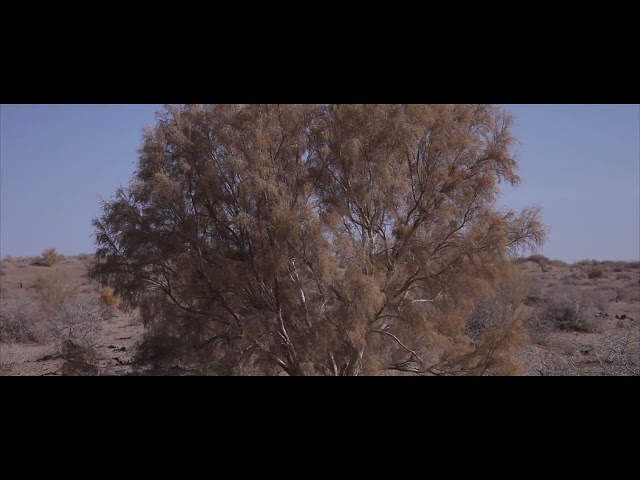
Gumai Trailer|《古日乃》预告片 - Trailer
Similar Movies

77%
Twenty Two(zh)
2017-08-14
Follow the lives of the elderly survivors who were forced into sex slavery as “Comfort Women” by the Japanese during World War II. At the time of filming, only 22 of these women were still alive to tell their story. Through their own personal histories and perspectives, they tell a tale that should never be forgotten to generations unaware of the brutalization that occurred.

0%
Spare My Bones, Coyote!(en)
2026-01-09
For the last twelve years, Marisela and Ely, along with the volunteer group The Águilas del Desierto have roamed the US-Mexico desert. Their goal: to seek, find and return to their families the bodies of migrants who died while crossing on foot. This all-consuming calling takes a crushing toll on them, but how could they stop? Spare My Bones, Coyote! follows their work, dedication, and difficult lives they have chosen to live.


61%
The Hunters(en)
1957-03-21
An ethnographic documentary following four Ju/’hoansi (!Kung) men during a multi-day giraffe hunt in the Kalahari Desert, filmed during the Smithsonian–Harvard Peabody expedition of 1952–53.

0%
In the Wake of the Flood(en)
2010-08-02
On the eve of her 70th birthday, Canadian writer Margaret Atwood set out on an international tour criss-crossing the British Isles and North America to celebrate the publication of her new dystopian novel, The Year of the Flood. Rather than mount a traditional tour to promote a book's publication, Atwood conceived and executed something far more ambitious and revelatory--a theatrical version of her novel. Along the way she reinvented what a book tour could (and maybe should) be. But Atwood wasn't selling books as much as advocating an idea: how humanity must respond to the consequences of an environmentally compromised planet before her work of speculative fiction transforms into prophesy.

60%
Monumental: David Brower's Fight for Wild America(en)
2004-08-19
From the moment David Brower first laid eyes on the beauty of the Yosemite Valley, he wanted to the fight to preserve the American wilderness for future generations. The story of a true American legend, Monumental documents the life of this outdoorsman, filmmaker and environmental crusader, whose fiery dedication and activism not only saved the Grand Canyon (among other accomplishments) but also transformed the Sierra Club into a powerful national political force, giving birth to the modern environmental movement. Seen through Brower's own eyes - he was an accomplished filmmaker, and his stunning footage is included here-- a 1956 raft trip down Glen Canyon, before its damming, evokes the awful sadness of losing public land we've failed to protect. And in period footage of Brower's early rock-climbs (done in sneakers, with hemp ropes) and of his training in the 10th Mountain Division (who defeated the Nazis in the high Alps).

64%
Go Further(en)
2003-03-07
"Go Further" explores the idea that the single individual is the key to large-scale transformational change. The film follows actor Woody Harrelson as he takes a small group of friends on a bio-fueled bus-ride down the Pacific Coast Highway. Their goal? To show the people they encounter that there are viable alternatives.

63%
Umbrella(zh)
2007-09-02
Workers, peasants, soldiers, students and merchants were five groups of Chinese society in the 1950s, after the so-called elimination of the exploited class. Borrowing this concept, the umbrella is taken as the clue to rediscover changes in various social classes after the economic reform, and to analyze the social problems in China. Workers making umbrellas, merchants selling umbrellas, students looking for jobs in the rain. Umbrella is used as a metaphor that can be seen everywhere. As the raindrop, what we see is sometimes clear, sometimes untraceable.

0%
First Vote(en)
2020-05-05
A soon-to-be first-time voter, the filmmaker’s thought-provoking journey into the Rust Belt and South captures four Asian American voters’ ardent first time grassroots political participation ignited by the 2016 rise of “Chinese Americans for Trump.” FIRST VOTE is a character driven cinema verité style film chronicling the democratic participation of four Asian American voters from 2016 through the 2018 midterm elections.

85%
Rachel Carson(en)
2017-01-24
An intimate portrait of the woman whose groundbreaking books revolutionized our relationship to the natural world. When 'Silent Spring' was published in September 1962 it became an instant bestseller and would go on to spark dramatic changes in the way the government regulated pesticides.

73%
More Than Honey(de)
2012-08-11
With dazzling nature photography, Academy Award®–nominated director Markus Imhoof (The Boat Is Full) takes a global examination of endangered honeybees — spanning California, Switzerland, China and Australia — more ambitious than any previous work on the topic.

42%
Meerkats 3D(en)
2011-10-02
Narrated by Oscar-nominated actress Emily Watson, MEERKATS 3D takes audiences on a journey with a family of meerkats as they cope with the twists and turns of life in the Kalahari Desert. The film begins as matriarch Klinky’s most recent litter emerges from the burrow for the first time. Klinky and her family, including elder children and regular babysitters Ms. Bean and Harry, must endure turf wars from rival families, attacks from vicious predators big and small and internal family turmoil. The survival of this clan hinges on the meerkat golden rule: Stick together, and keep calling.

80%
Glorious Bustards(de)
2021-05-01

54%
The American Dreamer(en)
1971-04-01
A documentary about actor/director Dennis Hopper, showing him at his home and studio putting together his film "The Last Movie."

0%
There Will Be A Movie!(ru)
1969-03-30
A documentary film about the work of stuntmen and camera operators in Soviet cinema, using the film "White Sun of the Desert" as an example.


0%
Force of Nature: The David Suzuki Movie(en)
2011-12-02
David Suzuki, iconic Canadian scientist, educator, broadcaster and activist delivers a 'last lecture' — what he describes as "a distillation of my life and thoughts, my legacy, what I want to say before I die". The film interweaves the lecture with scenes from the places and events in Suzuki's life — creating a biography of ideas — forged by the major social, scientific and cultural events of the past 70 years.

80%
Cierzo(es)
2022-11-08
At the border between Navarre and Aragon we find the moors known as the Bardenas Reales, characterized by the dust and the omnipresence of the northern wind. This is a portrait of a land, but also a journey through Pilar’s memories. It is a glance at the past but also the present, and about how everything has changed, for better or worse.

80%
Heidi in China(en)
2020-04-21
In 1946, Heidi is entrusted to a Swiss family by her father. He will never come back for her. Today, François Yang questions his mother about her past. What follows is a journey to China, a quest to reconstruct memory. Through contact with her brothers and sister, Heidi measures the extent of the drama experienced by her family that remained in China, persecuted by the Communist Party.

0%
Songhua(zh)
2007-01-01
In northeastern China the Songhua River flows west from the border of Russia to the city of Harbin, where four million people depend on it as a source of water. Songhua is a portrait of the varying people that gather where the river meets the city, and an ethnographic study of the intimate ways in which they play and work.