Loading Page
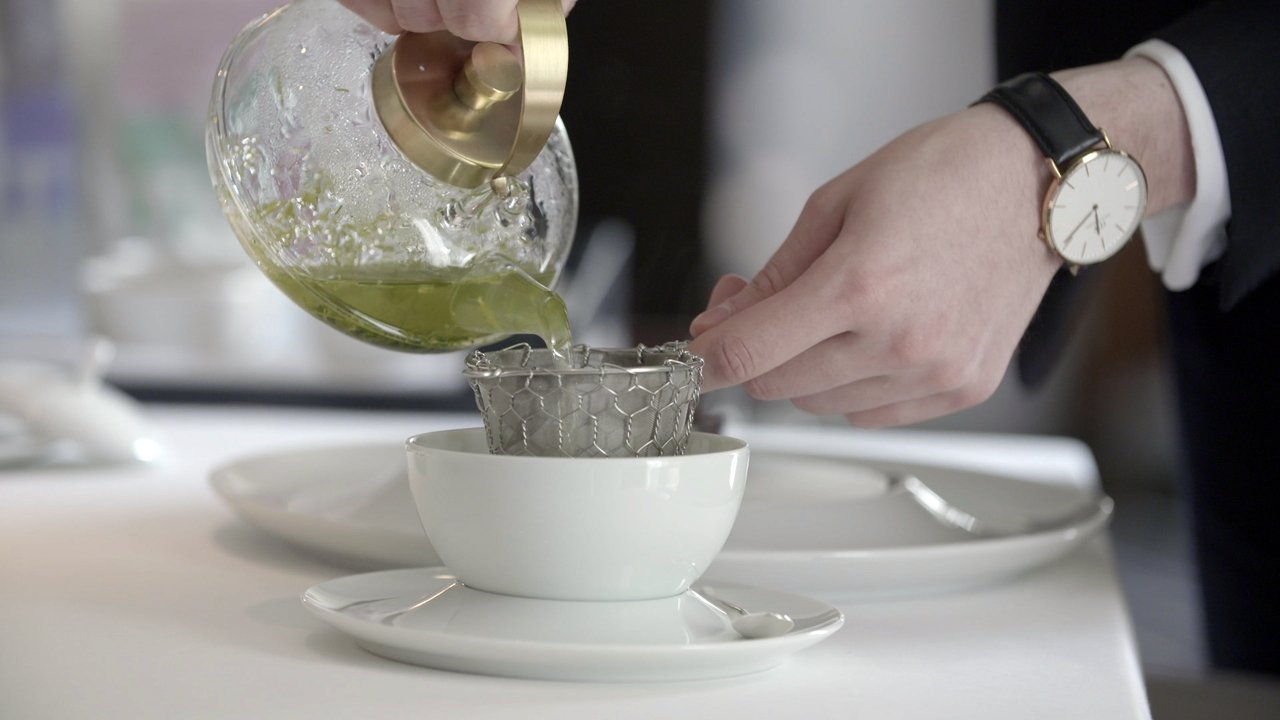

Thé mania(2017)
Status: Released
Date: 2017-03-05
0%
0 Votes
Languages: French.
Countries:
France
ProductionCompanies: 
Movie: Thé mania
HomePage
Overview
Release Date
2017-03-05
Average
0
Rating:
0.0 startsTagline
Genres
Languages:
FrançaisKeywords
Similar Movies

80%
The Poison Squad(en)
2020-01-28
The story of government chemist Dr. Harvey Wiley who, determined to banish dangerous substances from dinner tables, took on the powerful food manufacturers and their allies.

68%
That Sugar Film(en)
2014-07-31
One man's journey to discover the bitter truth about sugar. Damon Gameau embarks on a unique experiment to document the effects of a high sugar diet on a healthy body, consuming only foods that are commonly perceived as 'healthy'. Through this entertaining and informative journey, Damon highlights some of the issues that plague the sugar industry, and where sugar lurks on supermarket shelves.

72%
The Dark Side of Chocolate(en)
2010-03-16
A team of journalists investigate how human trafficking and child labor in the Ivory Coast fuels the worldwide chocolate industry. The crew interview both proponents and opponents of these alleged practices, and use hidden camera techniques to delve into the gritty world of cocoa plantations.

62%
Killer at Large(en)
2008-11-21
Obesity rates in the United States have reached epidemic proportions in recent years. Killer at Large shows how little is being done and more importantly, what can be done to reverse it. Killer at Large also explores the human element of the problem with portions of the film that follow a 12-year old girl who has a controversial liposuction procedure to fix her weight gain and a number of others suffering from obesity, including filmmaker Neil Labute.

0%
Tea War: The Adventures of Robert Fortune(fr)
2016-07-01
In the 19th century, China held the monopoly on tea, which was dear and fashionable in the West, and the British Empire exchanged poppies, produced in its Indian colonies and transformed into opium, for Chinese tea. Inundated by the drugs, China was forced to open up its market, and the British consolidated their commercial dominance. In 1839, the Middle Empire introduced prohibition. The Opium War was declared… Great Britain emerged as the winner, but the warning was heeded: it could no longer depend on Chinese tea. The only alternative possible was to produce its own tea. The East India Company therefore entrusted one man with finding the secrets of the precious beverage. His mission was to develop the first plantations in Britain’s Indian colonies. This latter-day James Bond was called Robert Fortune – a botanist. After overcoming innumerable ordeals in the heart of imperial China, he brought back the plants and techniques that gave rise to Darjeeling tea.

0%
Guide: A Culinary Documentary(en)
2020-06-27
In this short documentary, Vedat Milor tries to uncover the complex processes behind some of the traditional Turkish dishes that seem simple at first glance.

0%
The Jungle(en)
2024-10-15
A modern-day take on Upton Sinclair's shocking 1906 novel, The Jungle unravels centuries of greed and exploitation in America’s meat industry and reveals how indigenous knowledge may hold the key to creating an equitable food system for both people and the planet. Featuring former New York Times food columnist Mark Bittman, the film chronicles generations of profit-driven conglomerates manipulating our food system, destroying ecosystems, and exacerbating climate change. Industry insiders detail the roadmap for today’s corporate dominance. Simultaneously, slaughterhouse laborers fight for justice against relentless worker abuse. Others, like Paige and Derrick Jackson, have lost trust in the system, radically changing their lives to raise their own food. Committed to rebuilding our perpetually broken meat industry, Minnesota farmer Reginaldo Haslett-Marroquin begins to graze his chickens using an indigenous technique. The effects are a revelation.

65%
Tea Making Tips(en)
1941-01-01
Tea drinkers will benefit from 6 tips for making tea, as well as other handy hints.

80%
Sous le bio, la malbouffe(fr)
2021-11-16
Sales of organic products have increased tenfold in 20 years. In 2020, the market will have exceeded 13 billion euros in sales. The heavyweights of the food industry are surfing on this consumer craze for healthy food by offering more and more "green" products. But organic does not necessarily mean nutritionally balanced.

59%
Sushi: The Global Catch(en)
2012-06-07
A look at the global sushi phenomenon and how the hunger for Blue Fin Tuna is impacting the ocean's stock.

74%
All In This Tea(en)
2007-04-14
During the 1990s, David Lee Hoffman searched throughout China for the finest teas. He's a California importer who, as a youth, lived in Asia for years and took tea with the Dali Lama. Hoffman's mission is to find and bring to the U.S. the best hand picked and hand processed tea. This search takes him directly to farms and engages him with Chinese scientists, business people, and government officials: Hoffman wants tea grown organically without a factory, high-yield mentality. By 2004, Hoffman has seen success: there are farmer's collectives selling tea, ways to export "boutique tea" from China, and a growing Chinese appreciation for organic farming's best friend, the earthworm.

68%
The Automat(en)
2021-09-02
The 100-year story of the iconic restaurant chain Horn & Hardart, the inspiration for Starbucks, where generations of Americans ate and drank coffee together at communal tables. From the perspective of former customers, we watch a business climb to its peak success and then grapple with fast food in a forever changed America.

0%
Hungry(en)
2023-05-16
Almost half of the residents in the South Bronx live below the poverty level. One in four do not have access to quality food. Anita, among others, makes difficult choices to provide for her family. She depends on the local food pantry to make ends meet.

73%
Canned Dreams(fi)
2012-01-25
Canned Dreams shows the multi-branching network of the modern food industry. The Finnish consumer buys a can in the grocery store, but where from far away do the raw materials and packaging materials for the preserves come from - and through how many hands? The film not only traces the various stages of the production process, but gives a voice to the people who work as part of it.

77%
Cheap Food(fr)
2020-09-30
Industrial food production has provided the public with an abundance of food at very low prices. But with obesity and diabetes at record levels in Europe, there is clearly a problem with the food we eat. This documentary puts the spotlight on the agri-food industry and reveals how low-cost ultra-processed foods are really made.


0%
The District Nurse(en)
1942-12-31
The diary of a typical non-stop working day of a wartime district nurse.

71%
Food Coop(en)
2016-11-02
In the middle of an economic crisis, in the shadow of Wall Street, an institution that represents a less well-known American tradition is booming. The Park Slope Food Coop: a cooperative supermarket where all 16,000 members work 3 hours per months to earn the right to buy the best food in New York at incredibly low prices. The success of this cooperative is a bad new for capitalism and aggro-alimentary business, and an opportunity to change the food production and distribution systems. We will see what has become of the Park Slope Food Coop, now a well-rooted institution in the heart of Brooklyn: the way it functions, its hundreds of rules, the diversity and eccentricity of its members. We'll see how the culture that has been created at the coop gives its members daily visceral lessons in democracy, how this could represent a potential change in mentality for Americans faced with increasingly difficult economic times.

82%
Irresistible: Why We Can't Stop Eating(en)
2024-11-25
Chris van Tulleken takes a personal view at why ultra-processed foods are so irresistible and how they have come to dominate food culture.

72%
Together Forever Tea(en)
2021-08-06
Marketing whiz Lara Thompson is living a fast-paced life in the big city when she's summoned to the sleepy town of Kissing Falls to settle the affairs of her late Aunt Vivienne who owned a tea shop. Lara originally plans to sell the shop quickly, but switches course to fulfill her aunt's last wish - to have one of her teas awarded by the prestigious International Council of Tea Sommeliers. With the help of handsome local flower expert Matt, Lara sets out to recreate a long lost "love potion" tea. One problem - the tea's secret ingredient is the extinct Kissing Falls rose. As Lara and Matt work together, she finds herself not only falling for Matt but for the town itself.