Loading Page

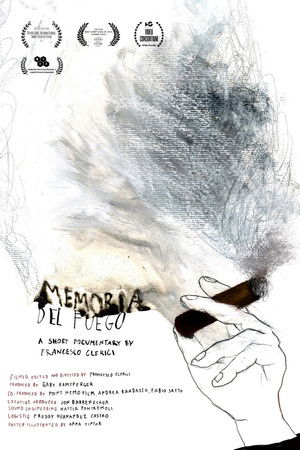
Memoria del fuego(2018)
Status: Released
Date: 2018-01-01
0%
0 Votes
Time: 0h 6m
Overview:
A short documentary, inspired by Eduardo Galeano: a short trip in rhythms, sounds and atmospheres in a cuban cigar factory in Estelí, Nicaragua.
Languages: Spanish.
Countries:
Italy,
Nicaragua
ProductionCompanies: 
Movie: Memoria del fuego
Video Trailer Memoria del fuego
All 1 videos

Memoria del fuego - Trailer
Similar Movies

0%
Nicaragua Part 3: In Their Time(en)
1985-10-28
Through the eyes of journalists and photographers working at Barricada, the official publication of the FSLN, the film observes the problems of putting socialism into practice, with reports on the war, the economy, the prison system and the political process leading up to the 1984 elections.

70%
¡Las Sandinistas!(en)
2018-03-12
¡Las Sandinistas! uncovers the disappearing stories of women who shattered barriers to lead combat and social reform during Nicaragua’s 1979 Sandinista Revolution, and who continue to lead Nicaragua’s current struggle for democracy and equality.

0%
Exiled(es)
2019-04-25
She accused the leader of the Sandinista revolution of sexual abuse. Now he is president of Nicaragua and she lives in exile.

0%
Dual Citizens(en)
2024-05-07
Three Nicaraguan-American artists from the Washington D.C. Metro area discuss growing up in two cultures and how it influences their art.

66%
Bananas!*(en)
2009-10-09
Juan “Accidentes” Dominguez is on his biggest case ever. On behalf of twelve Nicaraguan banana workers he is tackling Dole Food in a ground-breaking legal battle for their use of a banned pesticide that was known by the company to cause sterility. Can he beat the giant, or will the corporation get away with it?

68%
Big Boys Gone Bananas!*(en)
2011-11-19
The conflict between Dole Food Company and Swedish filmmaker Fredrik Gertten unfolds dramatically in the documentary "BIG BOYS GONE BANANAS!" as the corporation attempts to suppress Gertten's earlier film, "BANANAS!"—chronicling Nicaraguan workers' lawsuit against Dole. Initially selected for the 2009 Los Angeles Film Festival, "BANANAS!" was abruptly removed from competition, followed by a negative article in the Los Angeles Business Journal and legal threats from Dole's attorneys. Gertten captures this saga of corporate intimidation, media manipulation, and legal challenges in his documentary, showcasing the struggles documentary filmmakers face and highlighting the threat to freedom of speech posed by powerful corporations protecting their reputations.

65%
Ballad of the Little Soldier(de)
1984-11-05
A group of Miskito Indians use Nicaraguan child soldiers in their resistance against the Sandinistas.

0%
Solentiname(es)
2020-01-01
Solentime (2020), directed by Carlos Henríquez Consalvi and Camilo Henríquez, revisits the memory of poet-priest Ernesto Cardenal and the Christian community he founded in the Solentiname archipelago, where art, faith, and revolutionary consciousness converged. The film reconstructs a failed 1973 documentary project, when a young Consalvi traveled from Venezuela to film Cardenal with a 16mm Bolex, only to discover the footage was ruined. Nearly five decades later, during the COVID-19 lockdown and after Cardenal’s death, father and son assemble photographs, archival images, and sound to evoke that encounter and the fragile persistence of memory, turning loss, decay, and time into the material of the film itself.

100%
Visit Nicaragua(es)
2001-02-28
Looking for a few reasons why you should visit Nicaragua? Considering the country's two incredible coastlines, almost 20 volcanoes, lively colonial cities, abundant wildlife, rich culture, and delicious food, it won't be hard to convince you to put “visiting Nicaragua” at the top of your travel bucket list! Nicaragua, set between the Pacific Ocean and the Caribbean Sea, is a Central American nation known for its dramatic terrain of lakes, volcanoes and beaches. Vast Lake Managua and the iconic stratovolcano Momotombo sit north of the capital Managua. To its south is Granada, noted for its Spanish colonial architecture and an archipelago of navigable islets rich in tropical bird life.

60%
A Heart Is Always Red(sv)
2024-01-19
Born from the ashes of the iconic punk band Ebba Grön, this documentary tells the story of Imperiet and their journey to become the leading star of the post-punk generation and one of Sweden's biggest rock bands. It's also the story of Sweden, at a time in which they took their firm position on the world stage and when political commitment from the artists was a necessity.

0%
Harvest of Peace(en)
1985-09-01
Portrait of a group of 150 U.S. citizens who spent two weeks participating in the cotton harvest in a remote village in Nicaragua, seeing for themselves the impact of the U.S.-backed Contra war.

0%
From the Ashes: Nicaragua Today(es)
1982-04-07


67%
Nicaragua: A Nation's Right to Survive(en)
1983-01-01
How can a country survive when its jungle borders hold 4000 hostile troops?

0%
Nicaragua Part 1: Voyages(en)
1985-10-14
Composed of stills by renowned Magnum photographer Susan Meiselas taken in 1978 and 1979 during the overthrow of the fifty-year dictatorship of the Somoza family. Written in the form of a letter from Meiselas to Karlin, it is a ruminative and often profound exploration of the ethics of witnessing, the responsibilities of war photography and the politics of the still image.
