Loading Page

Kainai(1973)
Status: Released
Date: 1973-01-01
0%
0 Votes
Time: 0h 27m
Overview:
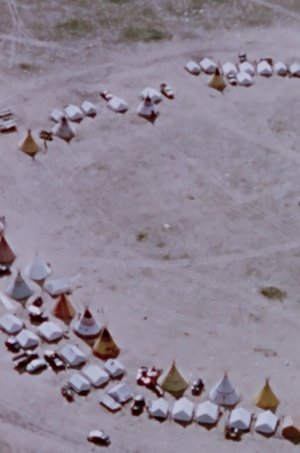
On the Kainai (Blood) First Nations Reserve, near Cardston, Alberta, a hopeful new development in Indigenous enterprise. Once rulers of the western plains, the Bloods live on a 1 300-square-kilometer reserve. Many have lacked gainful employment and now pin their hopes on a pre-fab factory they have built. Will the production line and work and wages fit into their cultural pattern of life? The film shows how it is working and what the owners themselves say about their venture.
Languages:
Countries:
Canada
ProductionCompanies: 
Movie: Kainai
Top 2 Billed Cast
HomePage
Overview
On the Kainai (Blood) First Nations Reserve, near Cardston, Alberta, a hopeful new development in Indigenous enterprise. Once rulers of the western plains, the Bloods live on a 1 300-square-kilometer reserve. Many have lacked gainful employment and now pin their hopes on a pre-fab factory they have built. Will the production line and work and wages fit into their cultural pattern of life? The film shows how it is working and what the owners themselves say about their venture.
Release Date
1973-01-01
Average
0
Rating:
0.0 startsTagline
Genres
Languages:
Keywords
Similar Movies

0%
Ningwasum(ne)
2022-02-11
Ningwasum follows two time travellers Miksam and Mingsoma, played by Subin Limbu and Shanta Nepali respectively, in the Himalayas weaving indigenous folk stories, culture, climate change and science fiction.

0%
Québec...?(fr)
1967-01-01
This short documentary film is a fascinating portrait of urban and rural Quebec in the late 1960s, as the province entered modernity. The collective work produced for the Quebec Ministry of Industry and Commerce calls on several major Quebec figures.

70%
Nin E Tepueian: My Cry(fr)
2020-01-24
NIN E TEPUEIAN - MY CRY is a documentary tracks the journey of Innu poet, actress and activist, Natasha Kanapé Fontaine, at a pivotal time in her career as a committed artist. Santiago Bertolino's camera follows a young Innu poet over the course of a year. A voice rises, inspiration builds; another star finds its place amongst the constellation of contemporary Indigenous literature. A voice of prominent magnitude illuminates the road towards healing and renewal: Natasha Kanapé Fontaine.

57%
Our People Will Be Healed(en)
2017-09-07
Legendary documentary filmmaker Alanis Obomsawin provides a glimpse of what action-driven decolonization looks like in Norway House, one of Manitoba's largest First Nation communities.

70%
Cholitas(es)
2020-01-24
Five Bolivian indigenous women share one goal: climbing the highest mountain in America.

0%
Nowhere Land(en)
2015-10-17
Documentary about filmmaker Bonnie Ammaaq's memories of life on Baffin Island, where her family moved for eleven years during her childhood from the hamlet of Igloolik to return to the traditional Inuit way of life.

0%
My Pride(fr)
2020-01-24
Spontaneous portrait of an endearing and cheerful teenager living in balance between traditionalism and modernity. She presents her regalia to us and we share her pride in being Innu.

0%
With These Hands: The Story of an American Furniture Factory(en)
2009-04-25
In 2007, unable to compete with cheaper offshore production, Hooker Furniture Co. closed its plant in Martinsville, Virginia, after 83 years in operation. With These Hands follows the last load of wood down the assembly line as it is cut, honed, and assembled into fine furniture. Along the way, employees at the factory share their perspectives on work, community, and survival in a country devastated by de-industrialization and outsourcing.

0%
In Jesus’ Name: Shattering the Silence of St. Anne's Residential School(en)
2017-06-07
A poignant all-Indigenous English and Cree-English collaborative documentary that breaks long-held silences imposed upon indigenous children who were interned at the notoriously violent St. Anne’s Residential School in Fort Albany First Nation, Ontario. Use of a homemade electric chair at St. Anne's and the incorporation of testimony about student-on-student abuse makes this documentary stand apart from other films about Canadian residential school experiences. This film will serve as an Indigenous historical document wholly authored by Indigenous bodies and voices, those of the Survivors themselves.

69%
The Pearl Button(es)
2015-10-15
The ocean contains the history of all humanity. The sea holds all the voices of the earth and those that come from outer space. Water receives impetus from the stars and transmits it to living creatures. Water, the longest border in Chile, also holds the secret of two mysterious buttons which were found on its ocean floor. Chile, with its 2,670 miles of coastline and the largest archipelago in the world, presents a supernatural landscape. In it are volcanoes, mountains and glaciers. In it are the voices of the Patagonian Indigenous people, the first English sailors and also those of its political prisoners. Some say that water has memory. This film shows that it also has a voice.

100%
Two villages, one single walk(gn)
2008-01-01
With no Forest left to hunt and no land to cultivate, the Maby-Guarani depend on the sale of their handcraft to survive. Three young Guarani filmmakers accompany the daily life of two comunities united by the same history, since the first contact with the Europeans until the intense coexistence with today’s White people.

83%
Invasion(en)
2020-05-01
In this era of “reconciliation”, Indigenous land is still being taken at gunpoint. Unist’ot’en Camp, Gidimt’en checkpoint and the larger Wet’suwet’en Nation are standing up to the Canadian government and corporations who continue colonial violence against Indigenous people. The Unist’ot’en Camp has been a beacon of resistance for nearly 10 years. It is a healing space for Indigenous people and settlers alike, and an active example of decolonization. The violence, environmental destruction, and disregard for human rights following TC Energy (formerly TransCanada) / Coastal GasLink’s interim injunction has been devastating to bear, but this fight is far from over.

0%
Western Brigade(en)
1958-01-01
This short dramatic film illustrates a cooperative program of fire protection that was carried out across Alberta in the late 1950s. It presents the problems inherent in a voluntary fire brigade, as well as the everyday heroes who step up and get the job done. The film is an entertaining look at how a crew that was once considered to be the joke of the town can evolve into the best fire brigade in the West.

0%
Attiuk(fr)
1963-07-19
The people of Unamenshipu (La Romaine), an Innu community in the Côte-Nord region of Quebec, are seen but not heard in this richly detailed documentary about the rituals surrounding an Innu caribou hunt. Released in 1960, it’s one of 13 titles in Au Pays de Neufve-France, a series of poetic documentary shorts about life along the St. Lawrence River. Off-camera narration, written by Pierre Perrault, frames the Innu participants through an ethnographic lens. Co-directed by René Bonnière and Perrault, a founding figure of Quebec’s direct cinema movement.

0%
Trick or Treaty?(en)
2014-09-04
Legendary Canadian documentarian Alanis Obomsawin digs into the tangled history of Treaty 9 — the infamous 1905 agreement wherein First Nations communities relinquished sovereignty over their traditional territories — to reveal the deceptions and distortions which the document has been subjected to by successive governments seeking to deprive Canada’s First Peoples of their lands.

55%
Our Indians(pt)
1995-01-16
Yndio do Brasil is a collage of hundreds of Brazilian films and films from other countries - features, newsreels and documentaries - that show how the film industry has seen and heard Brazilian indigenous peoples since they were filmed in 1912 for the first time: idealised and prejudiced, religious and militaristic, cruel and magic.

0%
Endless Letterpress(es)
2019-03-15
Facing deteriorating machines and the advance of new technologies, Argentine printing presses are closing up their shops. A group of young designers has rediscovered this great technical innovation in the history of the written word – the typesetting printing press – but the technique is difficult to learn, passed down from master to apprentice. The last press mechanic in the country will be in charge of teaching them so that this historic technique endures.

62%
Tawai: A Voice from the Forest(en)
2017-09-29
Explorer Bruce Parry visits nomadic tribes in Borneo and the Amazon in hope to better understand humanity's changing relationship with the world around us.

0%
Factory(en)
1970-01-01
A cinema verite study of the world of the blue-collar worker and the economic and psychological bind in which he is caught.
