Loading Page

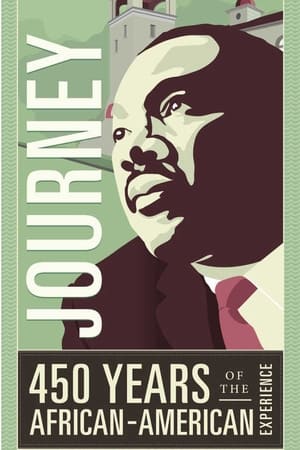
America's Untold Journey: 450 Years of the African American Experience(2016)
Status: Released
Date: 2016-01-31
0%
0 Votes
Time: 0h 45m
Overview:
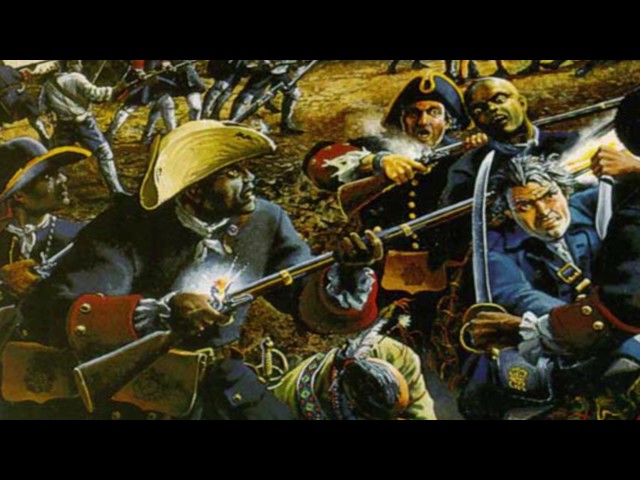
Chronicles over four centuries of African American influence on the development of the modern-day United States. Before Plymouth Rock and Jamestown, St. Augustine, FL had built a multicultural colony of free and enslaved men and women. This small colony would eventually set the stage for the first Underground Railroad in the late 1600s. Then, 300 years later, be the epicenter of events that would lead to the passage of the Civil Rights Act of 1964.
Languages: English.
Countries:
United States of America
ProductionCompanies:
Mummy Cat Productions
Movie: America's Untold Journey: 450 Years of the African American Experience
Top 1 Billed Cast
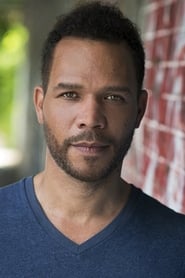
Jason Alan Carvell
Self - Host
Video Trailer America's Untold Journey: 450 Years of the African American Experience
Video: America - The Untold Journey Trailer

America - The Untold Journey Trailer

America's Untold Journey - Now Available Online!
All 2 videos

America - The Untold Journey Trailer - Trailer
America's Untold Journey - Now Available Online! - Trailer
Similar Movies

100%
Malcolm X: Make It Plain(en)
1994-01-26
Narrated by actress Alfre Woodard, this trenchant, eye-opening doc traces the radical civil rights leader’s life from his tumultuous childhood, through his rise in the ranks of the Nation of Islam, to his 1965 assassination.

88%
The Flag(fr)
2024-10-30
A furious, iconoclastic attack on power and the media in a modern France where Islamophobia has become mainstream and inequality is growing from the suburbs to the boulevards.

61%
Little White Lie(en)
2014-11-21
Lacey Schwartz grew up in a typical upper-middle-class Jewish household in Woodstock, NY, with loving parents and a strong sense of her Jewish identity - despite the open questions from those around her about how a white girl could have such dark skin. She believes her family's explanation that her looks were inherited from her dark-skinned Sicilian grandfather. But when her parents abruptly split, her gut starts to tell her something different. At age of 18, she finally confronts her mother and learns the truth: her biological father was not the man who raised her, but a black man named Rodney with whom her mother had had an affair.

100%
James Baldwin Abroad(en)
2023-02-03
Showcasing three short films by American writer James Baldwin, wherein he muses about race, sexuality and civil rights, among other topics, in Istanbul, Paris and Great Britain.

75%
Ablaze(en)
2022-05-26
A feature documentary about opera singer Tiriki Onus who finds a 70-year-old silent film believed to be made by his grandfather, Aboriginal leader and filmmaker Bill Onus. As Tiriki travels across the continent and pieces together clues to the film’s origins, he discovers more about Bill, his fight for Aboriginal rights and the price he paid for speaking out.

69%
Mavis!(en)
2015-03-15
A look at the life and music of legendary singer and civil rights activist, Mavis Staples.

60%
Hale County This Morning, This Evening(en)
2018-09-14
Composed of intimate and unencumbered moments of people in a community, this film is constructed in a form that allows the viewer an emotive impression of the Historic South - trumpeting the beauty of life and consequences of the social construction of race, while simultaneously a testament to dreaming.

67%
Seeing Allred(en)
2018-01-21
Gloria Allred overcame trauma and personal setbacks to become one of the nation’s most famous women’s rights attorneys. Now the feminist firebrand takes on two of the biggest adversaries of her career, Bill Cosby and Donald Trump, as sexual violence allegations grip the nation and keep her in the spotlight.

62%
Lorraine Hansberry: Sighted Eyes / Feeling Heart(en)
2017-10-14
On March 11, 1959, Lorraine Hansberry’s 'A Raisin in the Sun' opened on Broadway and changed the face of American theater forever. As the first-ever black woman to author a play performed on Broadway, she did not shy away from richly drawn characters and unprecedented subject matter. The play attracted record crowds and earned the coveted top prize from the New York Drama Critics’ Circle. While the play is seen as a groundbreaking work of art, the timely story of Hansberry’s life is far less known.

0%
Bittersweet(en)
2023-02-21
An oral history documentary of people of color at Miami University during its Public Ivy period—from 1970 to the early 2000s.

85%
Martin Luther King: More Than One Dream(fr)
2022-09-01
The real dream of the American pastor Martin Luther King was never limited to civil rights. He hoped for a just America, where poverty would no longer have a place. Social equality was for him the only guarantee of a true emancipation. During the last four years of his life, he mobilized all his energy to realize this "other dream". But there were many obstacles: he was scorned by white, racist America, abandoned by the political class, but also by some of his own people, who decided to turn their backs on the principle of non-violence.

42%
The Gospel of Eureka(en)
2018-03-11
Faith, love and civil rights collide on voting day in a small Southern town that hosts a famous performance of the last days of Christ and an infamous gospel drag show.

0%
Nightfighters: The True Story Of The 332nd Fighter Group--The Tuskegee Airmen(en)
1994-01-01
The story of the Tuskegee Airmen, a group of African American pilots who saw combat during the Second World War. The 332nd Fighter Group stands apart from any other air force fighter groups in the Second World War: all personnel, from pilots to ground crew to surgeons, were black. They confounded expectations and prejudices existing in America in the thirties and forties about the abilities of black Americans. They excelled as pilots and became a crack unit, showing great courage and skill and achieving where other fighter groups had failed. Despite this, they were segregated on the ground and in the air from the white flyers whose lives they protected. (Alexander Street)

69%
Mr. Dynamite: The Rise of James Brown(en)
2014-04-27
James Brown changed the face of American music forever. Abandoned by his parents at an early age, James Brown was a self-made man who became one of the most influential artists of the 20th century, not just through his music, but also as a social activist. Charting his journey from rhythm and blues to funk, MR. DYNAMITE: THE RISE OF JAMES BROWN features rare and previously unseen footage, photographs and interviews, chronicling the musical ascension of “the hardest working man in show business,” from his first hit, “Please, Please, Please,” in 1956, to his iconic performances at the Apollo Theater, the T.A.M.I. Show, the Paris Olympia and more.

10%
Illegal Love(en)
2011-03-03
In 2008 French filmmaker Julie Gali traveled to the US to film the election of Barack Obama. In spite of this victory for civil rights, it soon became apparent that the rights of another minority were under threat. In California the passing of Proposition 8 marked the only time in U.S. history that a civil right was actually taken away after it had been granted. Upon seeing this, Ms. Gali decided to immerse herself in the growing grassroots struggle of the gay community, which culminated in the October 11, 2009 March for Equality in Washington DC.

58%
All Power to the People!(en)
1996-06-01
Using government documents, archive footage and direct interviews with activists and former FBI/CIA officers, All Power to the People documents the history of race relations and the Civil Rights Movement in the United States during the 1960s and 70s. Covering the history of slavery, civil-rights activists, political assassinations and exploring the methods used to divide and destroy key figures of movements by government forces, the film then contrasts into Reagan-Era events, privacy threats from new technologies and the failure of the “War on Drugs”, forming a comprehensive view of the goals, aspirations and ultimate demise of the Civil Rights Movement…

0%
Men Of The Forest(en)
1952-06-30
An African-American family in Georgia works to save money for a power saw. Includes depictions of timber harvest techniques and process. Film made in 1952 by the United States Information Service and intended for foreign audiences.

74%
What Happened, Miss Simone?(en)
2015-01-22
The film chronicles Nina Simone's journey from child piano prodigy to iconic musician and passionate activist, told in her own words.

68%
Klansville U.S.A.(en)
2015-01-13
Investigates the reasons North Carolina, long seen as the most progressive state in the South, became home to the largest Klan organization in the country, with more members than all the other Southern states combined, during the 1960s.
