Loading Page

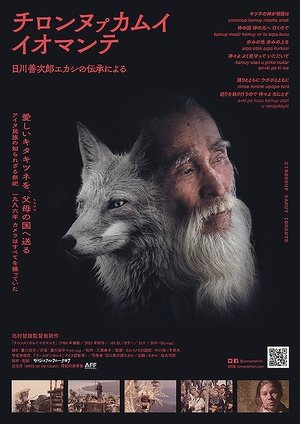
Chironnup Kamuy Iomante(2021)
Status: Released
Date: 2021-04-30
0%
0 Votes
Time: 1h 45m
Overview:
In 1986, for the first time in 75 years, the "Chironnup Kamuy Iomante (the sending off of the spirit of the fox)" was held at Bihoro Pass, in Hokkaido. According to the Ainu's traditional beliefs, animals are "gods" called "Kamuy" who live in the "land of gods" ("Kamuimosiri"), but sometimes they come to the "land of humans" ("Ainumosiri"), to offer their meat and furs as gifts. The Ainu take care of them, and they eventually hold an "Iomante (spirit sending)". In this ceremony, people offer prayers, sing songs, and dance, and send the animal back to the "land of the gods" with food and souvenirs.
Languages: Japanese.
Countries:
Japan
Movie: Chironnup Kamuy Iomante
HomePage
Overview
In 1986, for the first time in 75 years, the "Chironnup Kamuy Iomante (the sending off of the spirit of the fox)" was held at Bihoro Pass, in Hokkaido. According to the Ainu's traditional beliefs, animals are "gods" called "Kamuy" who live in the "land of gods" ("Kamuimosiri"), but sometimes they come to the "land of humans" ("Ainumosiri"), to offer their meat and furs as gifts. The Ainu take care of them, and they eventually hold an "Iomante (spirit sending)". In this ceremony, people offer prayers, sing songs, and dance, and send the animal back to the "land of the gods" with food and souvenirs.
Release Date
2021-04-30
Average
0
Rating:
0.0 startsTagline
Genres
Languages:
日本語Keywords
Similar Movies

0%
Ainu Puri(ja)
2024-12-14
Shigeki, one of the Ainu people of northern Japan, follows the traditions of his ancestors and teaches his son Motoki about their heritage. But how can old customs be revived after centuries of suppression?

0%
Ainu Neno An Ainu(ja)
2021-06-01
This documentary started as part of a photography project about the indigenous Ainu population in northern Japan, portraying people from tightly knit communities. They feel deeply connected by their culture and tradition. With gorgeous pictures, the directors explore how different generations of Ainu reflect on their identity after centuries of oppression.

0%
Tokyo Ainu(ja)
2013-05-15
TOKYO Ainu features the Ainu, an indigenous people of Japan, living in Greater Tokyo (Tokyo and its surrounding areas), who are and actively in promoting their traditional culture in a metropolitan environment away from their traditional homeland, Hokkaido. Shedding a common assumption that all Ainu live in Hokkaido, the film captures the feelings, thoughts and aspirations of Ainu people that who try to follow the Ainu way no matter where they live.


0%
Golden Kamuy: Assault on Abashiri Prison(ja)
2026-03-13
As each group pursues their mission, a fierce battle unfolds over the tattooed prisoners. Who is friend, and who is foe? The fight leads them all to Abashiri Prison, where Noppera-bo, the man who holds all the answers, is locked away...

69%
Golden Kamuy(ja)
2024-01-19
On the Hokkaido frontier, a war veteran and Ainu girl race against misfits and military renegades to find treasure mapped out on tattooed outlaws.

72%
Ainu Mosir(ja)
2020-10-17
Kanto, 14, a descendant of Japan's indigenous Ainu people, decides to visit a hole in the forest — a path to the other side of the world where dead people live, hoping to see his deceased father.

0%
Rira no hana wasureji(ja)
1947-10-08
In the 30th year, Nirasaki Den'emon established the Nirasaki Hokkaido Development Company with investment from Sonoi to build railway facilities. However, the endeavor faced criticism for attempting to buy Ainu land at low prices. Tokyo Nippo reporter Toshimasa Matsuzaka, who was actually Nirasaki's son, wants to expose the flawed practices of the company.


0%
The Monte Cristo Cottage: Boyhood Home of Eugene O'Neill(en)
The new and restored documentary introduces visitors to the early life and works of O’Neill, his troubled family relationships, and the role the cottage played in his dramas. The original film won a Grand Prize “AMI” Award for Best Documentary at the Association of Multi-Image International Festival in 1982.

67%
Arctic Tale(en)
2007-06-17
Arctic Tale is a 2007 documentary film from the National Geographic Society about the life cycle of a walrus and her calf, and a polar bear and her cubs, in a similar vein to the 2005 hit production March of the Penguins, also from National Geographic.

0%
Let's be Together(ko)
2024-03-28

0%
Christmas with Strangers(en)
2021-11-26
A behind-the-scenes documentary about the making of the Scottish Indie feature film Lost at Christmas (2020). The stars and filmmakers take us on their journey from script to screen as the world braces itself for a global pandemic.

0%
The Swedes(sv)
2017-01-27
Svenskarna (The Swedes) is a folk fusion band whose members are four middle-aged Swedish actors with roots from Turkey, Russia, Uganda, France and Spain. Manolo Diaz Rämö starts filming them in his search for answers regarding his own conflicting feelings about identity and belonging. —Manolo Diaz Rämö

0%
A Pure Heart(is)
2012-10-12
A priests work is never done. In Clean Heart we get to know Kristinn Ágúst Friðfinnsson a priest in the town of Selfoss. While fulfilling the various duties of priesthood he still has his own demons to deal with.

100%
50 Shades of Chocolate(fr)
2022-12-20
Since the discovery of America onward, the use of cacao has kept evolving across time and space. Currency or sacred drink for the Mayas and Aztecs, it became a medicine or aphrodisiac for the Europeans.

100%
The Homestead(en)
2022-10-02
A group of friends explores the area surrounding their Midwestern homestead

34%
My Boyfriend, The Sex Tourist(en)
2007-12-18
A look at global sex tourism, focusing on the situation in Venezuela and Thailand.

80%
Jean de la Fontaine and His Fables(fr)
2021-08-22
An account of the life of the French poet Jean de la Fontaine (1621-95), author of more than one hundred fables and a model for many other European fabulists of later times.

69%
Human Flow(en)
2017-10-02
More than 65 million people around the world have been forced from their homes to escape famine, climate change and war, the greatest displacement since World War II. Filmmaker Ai Weiwei examines the staggering scale of the refugee crisis and its profoundly personal human impact. Over the course of one year in 23 countries, Weiwei follows a chain of urgent human stories that stretch across the globe, including Afghanistan, France, Greece, Germany and Iraq.