Loading Page

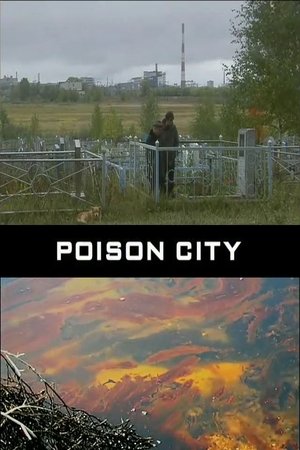
Poison City(2003)
Status: Released
Date: 2003-03-09
0%
0 Votes
Time: 0h 45m
Overview:
Dzerzhinsk, a Russian city 240 miles east of Moscow, is considered the most chemically polluted town on Earth. Factories producing industrial chemicals (and in Soviet times, chemical weapons) employ a quarter of the 300,000 residents in a city where life expectancy has fallen to 42-47 years, the death rate is 2.6 times higher than the birth rate, and the men are close to impotence. Reporter Tim Samuels recorded a series of in-depth interviews with the inhabitants of Dzerzhinsk for the Correspondent strand, revealing what life is like for the beleaguered populace.
Languages: English.
Countries:
United Kingdom
ProductionCompanies: 
Movie: Poison City
Top 1 Billed Cast

Tim Samuels
Self - Presenter
HomePage
Overview
Dzerzhinsk, a Russian city 240 miles east of Moscow, is considered the most chemically polluted town on Earth. Factories producing industrial chemicals (and in Soviet times, chemical weapons) employ a quarter of the 300,000 residents in a city where life expectancy has fallen to 42-47 years, the death rate is 2.6 times higher than the birth rate, and the men are close to impotence. Reporter Tim Samuels recorded a series of in-depth interviews with the inhabitants of Dzerzhinsk for the Correspondent strand, revealing what life is like for the beleaguered populace.
Release Date
2003-03-09
Average
0
Rating:
0.0 startsTagline
Genres
Languages:
EnglishKeywords
Similar Movies

76%
Cowspiracy: The Sustainability Secret(en)
2014-07-01
Follow the shocking, yet humorous, journey of an aspiring environmentalist, as he daringly seeks to find the real solution to the most pressing environmental issues and true path to sustainability.


70%
The Giants(en)
2023-04-20
A portrait of environmental folk hero & gay icon Bob Brown, who took green politics to the center of power. His story is interwoven with the life cycle of the ancient trees he's fighting for.

69%
Atomic Homefront(en)
2017-11-17
Revealing St. Louis, Missouri's atomic past as a uranium processing center for the atomic bomb and the governmental and corporate negligence that lead to the illegal dumping of Manhattan Project radioactive waste throughout North County neighborhoods.

0%
Amazonia Inc(en)
2019-01-01
This documentary explores an unknown civilization of the Brazilian Amazon, who risk their lives to protect their forest. In order to save the exploitation of the environment by big corporations, they have to create legal institutions.

100%
The Sun Queen(en)
2023-04-04
Chemical engineer and inventor Maria Telkes worked for nearly 50 years to harness the power of the sun, designing and building the world's first successful solar-heated modern residence and identifying a new chemical that could store solar heat like a battery. Telkes was undercut and thwarted by her (male) boss and colleagues at MIT, but she persevered. Upon her death in 1995 Telkes held more than 20 patents, and now she is recognized as a visionary pioneer in the field of sustainable energy whose work continues to shape how we power our lives today.

0%
Decommissioning Fukushima: The Battle to Contain Radioactivity(en)
2014-01-01
TEPCO's Fukushima Daiichi Nuclear Power Plant is the site of one of history's worst nuclear disasters: the meltdown of three nuclear reactors. The decommissioning program in Japan learns from the Three Mile Island decommissioning in the US after the nuclear plant accident in 1976 in Pennsylvania.

71%
How to Change the World(en)
2014-12-12
In 1971, a group of friends sail into a nuclear test zone, and their protest captures the world's imagination. Using never before seen archive that brings their extraordinary world to life, How To Change The World is the story of the pioneers who founded Greenpeace and defined the modern green movement.

60%
Plan B(en)
2011-03-30
Narrated by Matt Damon, Plan B is a 90 minute documentary based on the book by environmental visionary Lester Brown. Shot on location around the world, the film's message is clear and unflinching -- either confront the realities of climate change or suffer the consequences of lost civilizations and failed states. Ultimately Plan B provides audiences with a glimpse into a new and emerging economy based upon renewable resources as well as strategies to avoid the growing threat of global warming. Appearing with Lester Brown are Nobel Laureate Paul Krugman, Pulitzer Prize winner Tom Friedman, former Governor and Secretary of the Interior Bruce Babbitt, along with other scholars and scientists. Locations include: China, Japan, South Korea, India, Italy, Turkey, Bangladesh, Zambia, Haiti, and the U.S.

0%
Whose Dominion?(en)
2017-05-05
Whose Dominion? The Pollution of Cleveland County takes a very brief look at some of the environmental issues in Cleveland County, N.C.

55%
Topophilia(en)
2015-02-25
An exploration of built and natural environments along the 800-mile length of the Trans-Alaska Pipeline.

68%
Psychohydrography(en)
2010-10-01
An analysis of the flow of water from mountain to aqueduct, city to sea. Shot at and around the Eastern Sierra Nevada, Owens Valley, Los Angeles Aqueduct, Los Angeles River and Pacific Ocean.

20%
Guardian(en)
2019-08-06
Guardian chronicles the work of wildlife stewards amid sweeping legislative rollbacks of environmental protections in Canada. Part hermit, part biologist, Guardians live on boats, full-time, in one of the last pristine frontiers of the world to monitor salmon, the backbone of the ecosystem, economy, and culture along British Columbia's coast. But, in an age of science censorship and soaring resource extraction in the form of fracking for oil and natural gas, Guardians and the wildlife they have dedicated their lives to protect are now disappearing.

0%
Deep Time(en)
2015-03-14
Director Noah Hutton returns to the same landowners, state officials, and oil workers he captured at the beginning of the Bakken oil boom six years ago in his 2009 debut documentary feature Crude Independence. A new focus on the relationship of the indigenous peoples of North Dakota to their surging fossil wealth casts the ongoing boom in the context of paleo-cycles, climate change, and the dark ecology of the future.

0%
Brave New River(fr)
2013-05-02
Brave New River (directed by Nicolas Renaud) is a feature documentary exploring the paradoxes of our control over nature, the meeting between two worlds and the dilemmas of those taking part in the transformation of the land.

74%
Behemoth(zh)
2015-11-11
Under the sun, the heavenly beauty of grasslands will soon be covered by the raging dust of mines. Facing the ashes and noises caused by heavy mining , the herdsmen have no choice but to leave as the meadow areas dwindle. In the moonlight, iron mines are brightly lit throughout the night. Workers who operate the drilling machines must stay awake. The fight is tortuous, against the machine and against themselves. Meanwhile, coal miners are busy filling trucks with coals. Wearing a coal-dust mask, they become ghostlike creatures. An endless line of trucks will transport all the coals and iron ores to the iron works. There traps another crowd of souls, being baked in hell. In the hospital, time hangs heavy on miners' hands. After decades of breathing coal dust, death is just around the corner. They are living the reality of purgatory, but there will be no paradise.

0%
Tomorrow's Power(en)
2017-03-07
Tomorrow’s Power is a feature length documentary that showcases three communities around the world and their responses to economic and environmental emergencies they are facing. In the war-torn, oil-rich Arauca province in Colombia, communities have been building a peace process from the bottom up. In Germany activists are pushing the country to fully divest from fossil-fuel extraction and complete its transition to renewable energy. In Gaza health practitioners are harnessing solar power to battle daily life-threatening energy blackouts in hospitals.

78%
Tomorrow(fr)
2015-11-15
Climate is changing. Instead of showing all the worst that can happen, this documentary focuses on the people suggesting solutions and their actions.

86%
Sea Gypsies: The Far Side of the World(en)
2017-08-01
The vessel is Infinity, a 120-foot hand-built sailboat, crewed by a band of miscreants. The journey, an 8,000 mile Pacific crossing from New Zealand to Patagonia, with a stop in Antarctica. Unlike all the other boats heading to the Southern Ocean, Infinity is no ice-reinforced super-yacht crewed by professional sailors; rather, Infinity lives in the moment and sails on a whim. What can be found in abundance on board is blood, sweat, enthusiasm, risk tolerance, disdain for authority, and an ample supply of alcohol – all in all a mad voyage of reckless adventure just for the sheer joy of it. Along the way the crew will battle a hurricane of ice in the Ross Sea, assist the radical environmental group Sea Shepherd in their fight with illegal whalers, and tear every sail they have. At the heart of their journey is a quest for awe and a sense of wonder with the raw power of the natural world.

80%
The Mermaids' Tears: Oceans of Plastic(fr)
2009-05-21
Every km of ocean now contains an average of 74,000 pieces of plastic. A 'plastic soup' of waste, killing hundreds of thousands of animals every year and leaching chemicals slowly up the food chain. In Holland, scientists found plastic in the stomachs of 95% of all fulmar birds. In Germany, plastic has been found to affect the reproductive systems of animals, while in the US, conservationists are seeing increasing numbers of dolphins die in agony, their guts blocked with rubbish. What will be the long term impact of this 'plastic pollution'? Can anything be done to clean up our oceans?