Loading Page


A Life of Extravaganza - The Genius Frank Zappa(1993)
Status: Released
Date: 1993-01-01
90%
1 Votes
Time: 0h 49m
Overview:
The documentary examines Frank Zappa and his music through archive footage, including unique video excerpts from Austrian television archives featuring interviews with Zappa and backstage scenes from the 1970s and 1980s. The entire film is divided into chapters discussing the most important themes in Zappa's life and work.
Languages: German, English.
Countries:
Austria
ProductionCompanies:
DoRo Productions
Movie: A Life of Extravaganza - The Genius Frank Zappa
Top 10 Billed Cast
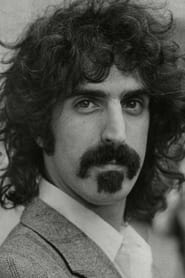
Frank Zappa
Self
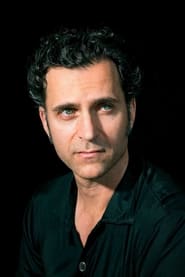
Dweezil Zappa
Self
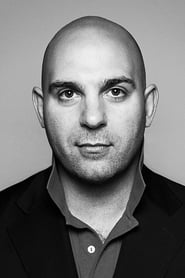
Ahmet Zappa
Self

Keith Moon
Self (archive footage)
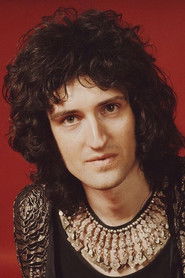
Brian May
Self
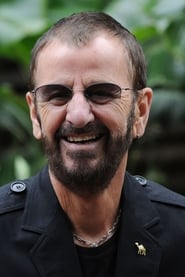
Ringo Starr
Self (archive footage)
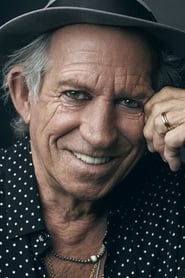
Keith Richards
Self
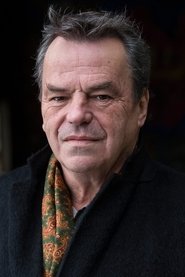
Neil Jordan
Self (archive footage)
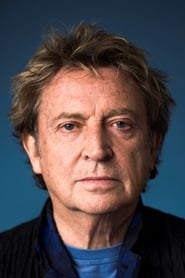
Andy Summers
Self
HomePage
Overview
The documentary examines Frank Zappa and his music through archive footage, including unique video excerpts from Austrian television archives featuring interviews with Zappa and backstage scenes from the 1970s and 1980s. The entire film is divided into chapters discussing the most important themes in Zappa's life and work.
Release Date
1993-01-01
Average
9
Rating:
4.5 startsTagline
Genres
Languages:
DeutschEnglishKeywords
Similar Movies

38%
60 Seconds of Solitude in Year Zero(en)
2011-12-22
An anthology of one-minute films created by 51 international filmmakers on the theme of the death of cinema. Intended as an ode to 35mm, the film was screened one time only on a purpose-built 20x12 meter public cinema screen in the Port of Tallinn, Estonia, on 22 December 2011. A special projector was constructed for the event which allowed the actual filmstrip to be burnt at the same time as the film was shown.

70%
In continuo(it)
1971-01-26
"In continuo" uses slaughterhouse imagery to present the warlike nature of man, first depicting the cleaning and mechanical preparations for the slaughterhouse and then the killing, however, the animal slaughter itself isn’t shown.

74%
Ryuichi Sakamoto: Coda(ja)
2017-11-04
Oscar-winning composer Ryuichi Sakamoto weaves man-made and natural sounds together in his works. His anti-nuclear activism grew after the 2011 Fukushima disaster, and his career only paused after a 2014 cancer diagnosis.

0%
Discovering Buñuel(en)
2012-01-01
Luis Bunuel, the father of cinematic Surrealism, made his film debut with 'Un Chien Andalou' in 1929 working closely with Salvador Dali. Considered one of the finest and controversial filmmakers with, 'L’Age d’Or' (1930), attacking the church and the middle classes. He won many awards including Best Director at Cannes for 'Los Olvidados' (1950), and the coveted Palme d’Or for 'Viridiana' (1961), which had been banned in his native Spain. His career moved to France with 'The Diary of a Chambermaid' with major stars such as Jeanne Moreau and Catherine Deneuve.

0%
John Cage: I Have Nothing to Say and I Am Saying It(en)
1990-09-18
This 56-minute documentary on America's most controversial and unique composer manages to cover a great many aspects of Cage's work and thought. His love for mushrooms, his Zen beliefs and use of the I Ching, and basic bio details are all explained intelligently and dynamically. Black Mountain, Buckminster Fuller, Rauschenberg, Duchamp are mentioned. Yoko Ono, John Rockwell, Laurie Anderson, Richard Kostelanetz make appearances. Fascinating performance sequences include Margaret Leng-Tan performing on prepared piano, Merce Cunningham and company, and performances of Credo In Us, Water Music, and Third Construction. Demystifies the man who made music from silence, from all sounds, from life.

0%
Man Ray: Prophet of the Avant-Garde(en)
1997-04-09
Man Ray, the master of experimental and fashion photography was also a painter, a filmmaker, a poet, an essayist, a philosopher, and a leader of American modernism. Known for documenting the cultural elite living in France, Man Ray spent much of his time fighting the formal constraints of the visual arts. Ray’s life and art were always provocative, engaging, and challenging.

64%
Genesis: Together and Apart(en)
2014-10-04
A feature-length documentary about one of the most successful British bands in rock music. The film recounts their extraordinary musical story, exploring the songwriting and the emotional highs and lows.

64%
The Hedge Theater(en)
2002-11-17
Filmed in Rome in the 1980s, the work draws on Borromini’s Baroque architecture and Il Sassetta’s St. Martin and the Beggar. Beavers contrasts winter’s subdued light with the verdant growth of spring, constructing a precise montage in which image and sound form a poetic dialogue.

74%
Quincy(en)
2018-09-09
An intimate look into the life of icon Quincy Jones. A unique force in music and popular culture for 70 years, Jones has transcended racial and cultural boundaries; his story is inextricably woven into the fabric of America. Jones came to prominence in the 1950s as a jazz arranger and conductor before working on pop music and film scores. He moved easily between musical genres, producing major pop hits of the early 1960s and serving as an arranger and conductor for several collaborations in the same time period.

70%
George: The Story of George Maciunas and Fluxus(en)
2018-02-21
In 1961 Lithuanian American artist and impresario George Maciunas established the avant-garde art movement Fluxus. George details the rise of Fluxus following a sensationalized tour of “concerts” in Europe in 1962, and continuing in New York for most of the 1960s and ’70s. During this time Maciunas was converting the dying industrial buildings of Soho into a network of artists’ lofts, creating one of the first official real estate co-ops of artist-owned buildings. Maciunas’s life and legacy—as recounted by artists of his generation, including Yoko Ono and Jonas Mekas—ignited debates that remain pivotal to artists working today.

60%
A Magic Friend: The Maestro Nino Rota(it)
1994-06-28
The artistic evolution of the great composer, whose work left an indelible mark in the history of Italian cinema. In this documentary Nino Rota's extraordinary musical production relives in the words of his friends and colleagues. His collaboration with Visconti and Fellini are truly memorable. His movie score and sequences of his performances in theaters all over the world hand us down a full and evocative outline of this outstanding artist.

0%
O Thou Transcendent: The Life of Ralph Vaughan Williams(en)
2007-12-31
Award-winning filmmaker Tony Palmer directs this riveting documentary on the life and times of influential English composer Ralph Vaughan Williams. With archived performances by conductor Sir Adrian Boult and stirring musical passages from "The Tallis Fantasia" and "The Lark Ascending," among others, Palmer's film also features interviews with Vaughan and his beloved wife, Ursula.


78%
Frank Zappa – Summer '82: When Zappa Came to Sicily(en)
2014-10-05
In the feature documentary, Summer 82 – When Zappa Came to Sicily, filmmaker and Zappa fan Salvo Cuccia tells the behind-the-scenes story of Frank Zappa's star-crossed concert in Palermo, Sicily, the wrap-up to a European tour that ended in public disturbances and police intervention. Cuccia had a ticket to the concert but never made it. Thirty years later, collaborating with Zappa's family, he re-creates the events through a combination of rare concert and backstage footage; photographs; anecdotes from family, band members, and concertgoers; and insights from Zappa biographer and friend Massimo Bassoli. The story is also a personal one, as Cuccia interweaves the story of Zappa's trip to Sicily with his own memories from that summer.

76%
The Weavers of Nishijin(ja)
1961-12-01
The Weavers of Nishijin captures the process of traditional textile manufacture in Nishijin.

81%
Good Morning, Mr. Orwell(en)
1984-01-01
In his book "1984", George Orwell saw the television of the future as a control instrument in the hands of Big Brother. Right at the start of the much-anticipated Orwellian year, Paik and Co. were keen to demonstrate satellite TV's ability to serve positive ends-- Namely, the intercontinental exchange of culture, combining both highbrow and entertainment elements. A live broadcast shared between WNET TV in New York and the Centre Pompidou in Paris, linked up with broadcasters in Germany and South Korea, reached a worldwide audience of over 10 or even 25 million (including the later repeat transmissions).

55%
Two Museums(de)
2014-01-22
The film juxtaposes/compares two museums: The Museum of Art, Ein Harod, Israel, which Samuel Bickels (1909-1975) built there in 1948, and The Menil Collection in Houston, Texas, built by Renzo Piano (b. 1937) 1986 . The method of natural lighting in Bickels‘s construction was the direct model for Piano, who adopted for his construction at the request of its patroness Dominique de Menil.

50%
Cinnamon(en)
2006-01-20
An experimental film that lifts the veil on the world of African American drag racing.

70%
.TV(en)
2018-01-25
.TV is a found footage essay film: Voicemails left by an anonymous caller from the future guide us to the remote islands of Tuvalu, a place the global media has described as “the first country to disappear due to rising sea levels”. Surrounded by thousands of miles of open water, much of Tuvalu’s revenue comes from its country-code web extension .TV, a popular domain choice among global video-streaming and television industries. The caller describes how heat, digital screens, and distance gave him no choice but to leave his sinking home and escape into cyberspace where rising waters will never reach him.