Loading Page
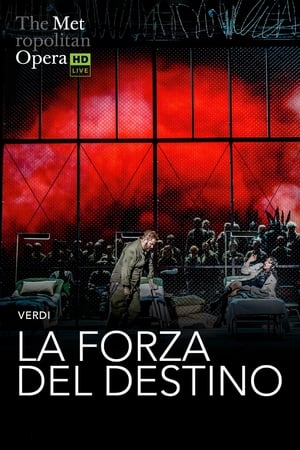
The Metropolitan Opera: La Forza del Destino(2024)
Status: Released
Date: 2024-03-09
10%
1 Votes
Time: 4h 5m
Overview:
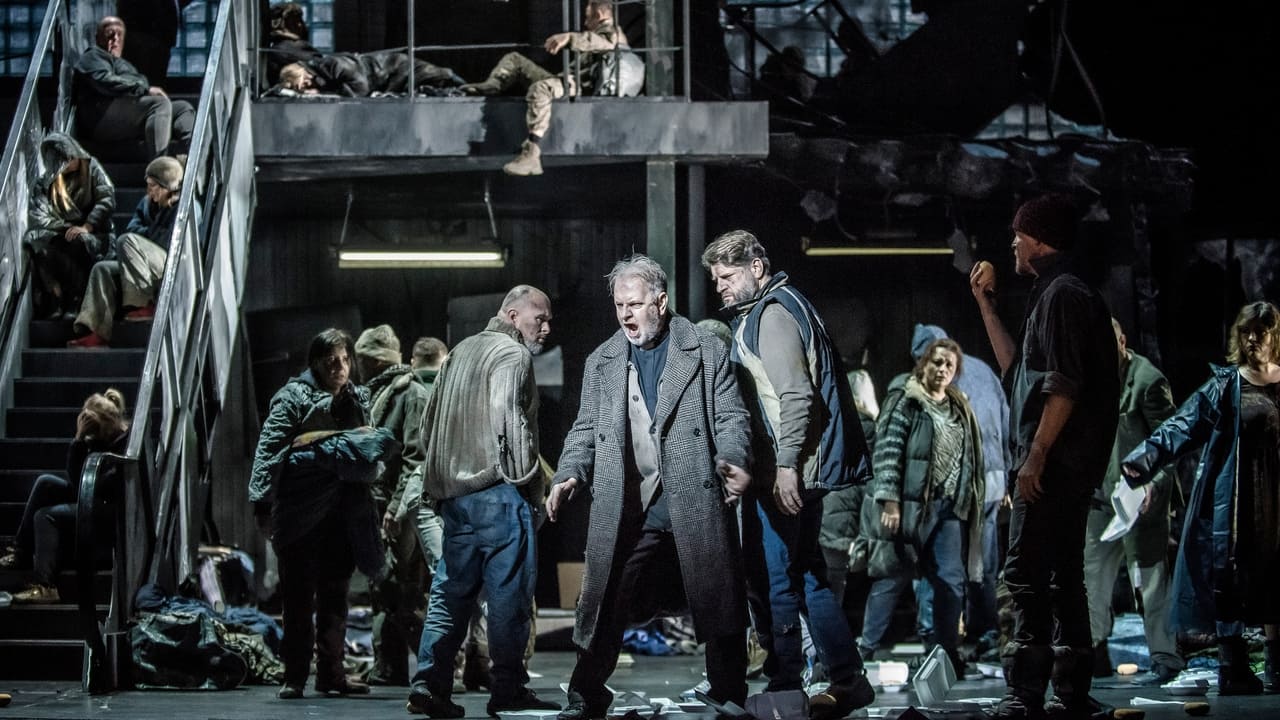
Music Director Yannick Nézet-Séguin conducts Verdi’s grand tale of ill-fated love, deadly vendettas, and family strife, with stellar soprano Lise Davidsen as the noble Leonora, one of the repertory’s most tormented—and thrilling—heroines. Director Mariusz Treliński delivers the company’s first new Forza in nearly 30 years, setting the scene in a contemporary world and making extensive use of the Met’s turntable to represent the unstoppable advance of destiny that drives the opera’s chain of calamitous events. The distinguished cast also features tenor Brian Jagde as Leonora’s forbidden beloved, Don Alvaro; baritone Igor Golovatenko as her vengeful brother, Don Carlo; bass-baritone Patrick Carfizzi as Fra Melitone; and bass Soloman Howard as both Leonora’s father and Padre Guardiano.
Languages: Italian.
Countries:
Poland,
United States of America
ProductionCompanies:
The Metropolitan Opera
Teatr Wielki–Polish National Opera
Movie: The Metropolitan Opera: La Forza del Destino
Top 6 Billed Cast
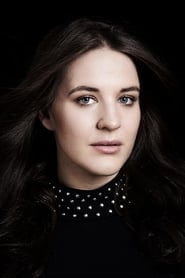
Lise Davidsen
Leonora

Judit Kutasi
Preziosilla
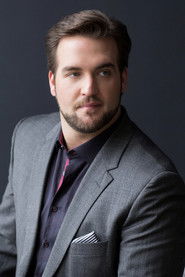
Brian Jagde
Don Alvaro
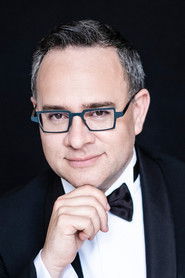
Patrick Carfizzi
Fra Melitone
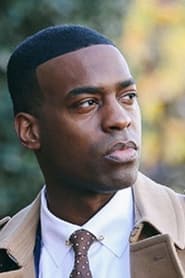
Soloman Howard
Marquis of Calatrava / Padre Guardiano
HomePage
Overview
Music Director Yannick Nézet-Séguin conducts Verdi’s grand tale of ill-fated love, deadly vendettas, and family strife, with stellar soprano Lise Davidsen as the noble Leonora, one of the repertory’s most tormented—and thrilling—heroines. Director Mariusz Treliński delivers the company’s first new Forza in nearly 30 years, setting the scene in a contemporary world and making extensive use of the Met’s turntable to represent the unstoppable advance of destiny that drives the opera’s chain of calamitous events. The distinguished cast also features tenor Brian Jagde as Leonora’s forbidden beloved, Don Alvaro; baritone Igor Golovatenko as her vengeful brother, Don Carlo; bass-baritone Patrick Carfizzi as Fra Melitone; and bass Soloman Howard as both Leonora’s father and Padre Guardiano.
Release Date
2024-03-09
Average
1
Rating:
0.5 startsTagline
Genres
Languages:
ItalianoKeywords
Similar Movies

60%
1984(en)
2008-05-12
Inspired by one of the twentieth century's greatest novels, composer Lorin Maazel evokes Orwell's totalitarian nightmare, where "Big Brother" is always watching, and those guilty of "thoughtcrime" are condemned to face their worst fears in the infamous "Room 101". Filmed during world premiere performances of Robert Lepage's spectacular and psychologically gripping Royal Opera production and conducted by the composer, an international cast brings George Orwell's dark vision to shattering operatic life.

0%
The Ghosts of Versailles(en)
1992-01-10
What happened to Figaro and his friends after the events told in Rossini’s and Mozart’s operas? One possible sequel is told in John Corigliano’s “grand opera buffa” The Ghosts of Versailles—an uproariously funny and deeply moving work inspired by Beaumarchais’s third Figaro play, La Mère Coupable, and commissioned by the Met to celebrate its 100th anniversary. This telecast captures its world premiere run, conducted by James Levine. Håkan Hagegård is Beaumarchais, Figaro’s creator, who is deeply in love with Marie Antoinette (Teresa Stratas in a heart-searing performance) and determined to rewrite history and save her from the guillotine. A young Renée Fleming, at the beginning of her international career, sings the unfaithful Rosina. Gino Quilico is the wily Figaro who tries to take matters in his own hands, and Marilyn Horne stops the show as the exotic entertainer Samira.

0%
La Cenerentola(en)
1988-09-22
Gioacchino Rossini's sparkling version of the Cinderella story comes live from the Salzburg Festival with Ann Murray and Francisco Araiza as Cinderella and the Prince. Director Michael Hampe envisions La Cenerentola less as a fairy tale and more as a gently satirical comment on the nature of society and the relationship between people. Conductor Riccardo Chailly's masterly display of the Rossini style is visually matched by the opulent and elegant set designs by Mauro Pagano. 162 minutes.

0%
Cosi Fan Tutte(it)
1989-07-04
Officers Ferrando and Guglielmo are certain that their lovers Dorabella and Fiordiligi are faithful to them, but the cynical Don Alfonso challenges them to a bet that the women will be unfaithful given the chance. The officers thus pretend to go off to war, and return in disguise as Albanian strangers, to woo Dorabella and Fiordiligi incognito. The ladies are initially frosty, but soon warm to their new suitors, spurred on by their maid Despina. Performed at the La Scala Theatre in Milan.

0%
Mozart: Così Fan Tutte (Zurich Opera House)(it)
2000-07-05
A production of Mozart's opera recorded live at Zurich Opera House in 2000. Cecilia Bartoli leads an all-star cast including Roberto Saccà, Liliana Nikiteanu, and Agnes Baltsa. The conductor is Nikolaus Harnoncourt. Filmed live at the Zurich Opera House in February 2000 on a set which visualises the subtitle "The School for Lovers", the plot revolves around two army officers arguing about the fidelity of their brides, then setting out to test their chastity. Despite the often playful humour, this is not only psychologically telling music-making, but reveals Mozart exploring the structure of opera, discarding convention to mix large ensemble sections with arias for as many different combinations of singers as possible. With Liliana Nikiteanu attractively contrasted with Bartoli, and thoroughly convincing performances by Roberto Sacca (Ferrando) and Oliver Widmer (Guilelmo), this Così has a freshness and flow which, coupled with the timeless romantic themes, feels very contemporary.

80%
The Metropolitan Opera: Don Carlos(en)
2022-03-26
For the first time in company history, the Met presents the original five-act French version of Verdi’s epic opera of doomed love among royalty, set against the backdrop of the Spanish Inquisition. Patrick Furrer leads a world-beating cast of opera’s leading lights in this March 26 performance, including tenor Matthew Polenzani in the title role, soprano Sonya Yoncheva as Élisabeth de Valois, and mezzo-soprano Elīna Garanča as Eboli. Bass Günther Groissböck and bass-baritone John Relyea are Philippe II and the Grand Inquisitor, and baritone Étienne Dupuis rounds out the all-star principal cast as Rodrigue. Verdi’s masterpiece receives a monumental new staging by David McVicar that marks his 11th Met production, placing him among the most prolific and popular directors in recent Met memory. This live cinema transmission is part of the Met’s award-winning Live in HD series, bringing opera to movie theaters across the globe.

40%
The Metropolitan Opera: Lucia di Lammermoor(en)
2022-05-21
On May 21, soprano Nadine Sierra takes on one of the repertory’s most formidable and storied roles, the haunted heroine of Lucia di Lammermoor, in an electrifying new staging by in-demand Australian theater and film director Simon Stone, conducted by Riccardo Frizza. Show-stopping tenor Javier Camarena adds to the bel canto fireworks as Lucia’s beloved, Edgardo, with baritone Artur Ruciński as her overbearing brother, Enrico, and bass Matthew Rose as her tutor, Raimondo. This live cinema transmission is part of the Met’s award-winning Live in HD series, bringing opera to movie theaters across the globe.

0%
Puccini: Gianni Schicchi(it)
2004-08-19
Opera in one act, libretto by G. Forzano based on Dante's Divine Comedy. Third part of his opera Triptych. The plot is based on canto XXX of "Inferno" from "The Divine Comedy", which are dedicated to the rogue and deceiver Gianni Schicchi, who was punished for his sins: he impersonated a dying rich man in order to make a forged will on his behalf. Gianni Schicchi is Puccini's only comic opera, a brilliant example of a modern opera buffa based on the tradition of Verdi's Falstaff. The most expressive recitative, bubbling melody, sharp character, impetuous tempo distinguish her music. Recorded live at Glyndebourne Opera House, Sussex, UK on 11 July 2004.

71%
The Phantom of the Opera(en)
1925-06-29
The deformed Phantom who haunts the Paris Opera House causes murder and mayhem in an attempt to make the woman he loves a star.

0%
Handel: Admeto(en)
2006-01-01
Axel Kohler, the internationally renowned countertenor has brought Admeto into the modern era in timeless style by the skillful application of imaginative theatrical digressions. Köhler's production at the Halle Opernhaus revisits a work that encompasses comedy, tragedy and almost absurd grotesqueness, couching it in the convincing metaphor of a modern hospital.

92%
Attila(it)
2016-01-26


50%
Rigoletto(it)
1946-01-01
This tragic story revolves around the licentious Duke of Mantua, his hunch-backed court jester Rigoletto, and Rigoletto's beautiful daughter Gilda. The opera's original title, La maledizione (The Curse), refers to the curse placed on both the Duke and Rigoletto by a courtier whose daughter had been seduced by the Duke with Rigoletto's encouragement. The curse comes to fruition when Gilda likewise falls in love with the Duke and eventually sacrifices her life to save him from the assassins hired by her father.

30%
Wagner: Götterdämmerung(en)
2014-03-03
Götterdämmerung, the final instalment of Wagner’s Ring of the Nibelung, is a story of human passions. Two essentially benevolent creatures, involved with and possibly doomed by their traffic with the gods, find treachery and evil in the world of the humans, and are ruined by the dark side of humanity. Iréne Theorin, acclaimed worldwide for her portrayal of Wagner’s heroines, stars as Brünnhilde opposite Lance Ryan, who continues his radiant portrayal of the tragic hero Siegfried. The strong cast also includes Mikhail Petrenko as the dark antagonist Hagen and Johannes Martin Kränzle, who once again shines as his father Alberich. Waltraud Meier has a memorable appearance as Brünnhilde’s sister Waltraute. With this 2013 recording of Götterdämmerung, the musically and visually compelling Scala Ring Cycle by Daniel Barenboim and Guy Cassiers was completed and proved to be one of the highlights of the Richard Wagner bicentenary.

0%
Wagner: Siegfried(en)
2014-01-06
In Siegfried, the “Second Day” or third evening of the Ring Cycle, we meet the pivotal hero of the epic tale. The energetic drive from Die Walküre is pursued here while Siegfried finally recaptures the mighty ring from Fafner the Dragon and awakens Brünnhilde from her penal sleep on the great rock. Lance Ryan, having interpreted this role on the greatest stages of the world including the Bayreuth Festival, portrays the naïve hero. His antagonists are Peter Bronder, great and agile as Mime, Terje Stensvold, an experienced Wanderer and Johannes Martin Kränzle, who continues his mean and deceitful depiction of Alberich. The leading ladies are Nina Stemme, once again unrivalled as Brünnhilde and Anna Larsson, moving as the God-mother Erda.

0%
Prodaná nevěsta(cs)
2024-03-04
The most popular Czech comic opera, with a libretto by Karel Sabina, marking the 200th anniversary of the birth of Bedřich Smetana, in the current production of the National Theater in Prague. For more than 150 years, The Bartered Bride has dominated Czech opera. No one else, not even Smetana himself, has managed to surpass its popularity, which over the years has become part of our national DNA, so to speak. At the time of its creation in the 1860s, however, The Bartered Bride was actually quite a bold experiment – Bedřich Smetana and librettist Karel Sabina masterfully mocked all those who imagined "national opera" as an idyllic picture of the Czech countryside, where national virtues reign supreme.


0%
Brown Sounds(en)
2021-03-26
This short begins with a pair thriving in a lush paradise representing the Garden of Eden. The pair are suddenly uprooted and driven to the unknown: the original sin of slavery. In the end, they dig their roots into the soil and stretch their limbs to the sun, finding new identities, new truths and new power.