Loading Page

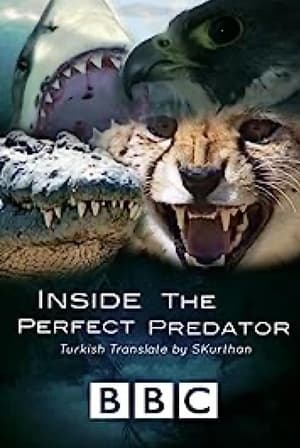
Inside the Perfect Predator(2010)
Status: Released
Date: 2010-03-25
0%
0 Votes
Time: 1h 0m
Overview:
Four top predators are compared, each champion in a type of environment, with key adaptations. On the ground, the cheetah outruns prey (approached in masterly stealth) and enemies. In the air, the peregrine falcon is a flight and diving machine. In sweet water, the Nile crocodile survives since the Dino age, without natural enemies, with several amazing metabolism stunts. Lurking under water, it snaps blindly at migrating wildebeest, then waits underground. In the oceans, the equally ancient shark, notably the great white, migrates seasonally to find abundant prey, such as young seals around South Africa.
Languages: English.
Countries:
United Kingdom
ProductionCompanies: 
Movie: Inside the Perfect Predator
HomePage
Overview
Four top predators are compared, each champion in a type of environment, with key adaptations. On the ground, the cheetah outruns prey (approached in masterly stealth) and enemies. In the air, the peregrine falcon is a flight and diving machine. In sweet water, the Nile crocodile survives since the Dino age, without natural enemies, with several amazing metabolism stunts. Lurking under water, it snaps blindly at migrating wildebeest, then waits underground. In the oceans, the equally ancient shark, notably the great white, migrates seasonally to find abundant prey, such as young seals around South Africa.
Release Date
2010-03-25
Average
0
Rating:
0.0 startsTagline
Genres
Languages:
EnglishKeywords
Similar Movies

76%
Microcosmos(fr)
1996-09-06
A documentary of insect life in meadows and ponds, using incredible close-ups, slow motion, and time-lapse photography. It includes bees collecting nectar, ladybugs eating mites, snails mating, spiders wrapping their catch, a scarab beetle relentlessly pushing its ball of dung uphill, endless lines of caterpillars, an underwater spider creating an air bubble to live in, and a mosquito hatching.

42%
The Strange Disappearance of the Bees(fr)
2010-05-18
Investigation into a global ecological disaster that could endanger the entire human race. Today, a third of our food depends directly on bees, the most important agricultural pollinator* on our planet. Yet, for several years now, millions of bees have been mysteriously disappearing. Why? Will we be able to cope with this predicted catastrophe?


78%
Earth: One Amazing Day(en)
2017-08-04
An astonishing journey revealing the awesome power of the natural world. Over the course of one single day, we track the sun from the highest mountains to the remotest islands to exotic jungles.


76%
Living with Leopards(en)
2024-05-09
A film crew follows two leopard cubs as they make the fascinating journey from infancy into adulthood in this up-close-and-personal nature documentary.

0%
The Earth Wins(en)
2013-02-28
The Earth Wins explores the delicate balance between man and Mother Earth, our inter-dependence and the impact of man's actions upon the earth and her inhabitants. With music from Coldplay, The Temper Trap, New Order, indigenous musicians, and commissioned choral pieces, The Earth Wins is a visceral experience celebrating the magnificent diversity of the earth's riches and asking the most important questions of all, "How do we save ourselves from causing the planet's destruction?"


77%
Wild Shetland: Scotland's Viking Frontier(en)
2019-01-23
Ewan McGregor narrates a captivating portrait of wild Shetland and traces the course of a breeding season as the animals on these remote islands battle for survival.

100%
Elephant Whisperer(en)
2012-06-02
Sangduen Chailert, or Lek, as she is generally known, has already rescued over 200 elephants. She has dedicated her life to saving the Asian elephant and founded a special camp, The Elephant Nature Park to protect them. We follow this winner of Time Magazine’s “Asian Hero of the Year” Award in her work. Lek is on a mission to save the Asian elephant in her native Thailand. This film looks at the plight of the Asian elephant, as it goes from being a widely used domestic animal, to becoming a burden on modernizing communities. With experts predicting its extinction within four decades, Lek’s work is needed now more than ever and she has gathered a large group of supporters and volunteers in her quest for a better future for the Asian elephant. This moving film demonstrates Lek’s natural understanding of and rapport with these huge animals and will stir the viewers emotions as it highlights the often desperate state some elephants are kept in.

80%
Yellowstone: The Mystery of the Wolves(de)
2018-01-02
70 years after the last wolves roamed the national park, a total of 41 wolves were reintroduced between 1995 and 1997. A globally unique experiment that had many supporters, but also resolute opponents, then as now.

82%
The Arctic: 66.5 Degrees North(de)
2023-01-13
The beauty of the Arctic is breathtaking. For as long as we can remember, the Arctic has been associated with inhospitable cold. But the climate is changing, and with it the northern polar region, which begins beyond latitude 66.5 degrees north. Climate change is now happening four times faster north of the Arctic Circle than on the rest of the planet, making the future outlook dire. At the moment it is still possible for polar bears to raise their cubs, but hunting is becoming increasingly difficult on the drastically shrinking pack ice. The disappearance of the ice also affects the marine fauna. The wintry ice bridge between Canada and Greenland is threatened with collapse. The unstoppable melting of the permafrost, which has held the tundra together for thousands of years, is worrying. But the Arctic is still one of the wildest and loveliest regions on earth. A documentary visit to the Arctic - as long as it still exists.

60%
Yanuni(en)
2025-06-14
Indigenous chief Juma Xipaia fights to protect tribal lands despite assassination attempts. Her struggle intensifies after learning she's pregnant, while her husband, Special Forces ranger Hugo Loss, stands by her side.

100%
Amazon: Land of the Flooded Forest(en)
1990-01-10
Explore an extraordinary region where water and land life intermingle six months out of the year.

100%
Kalahari: The Flooded Desert(en)
2021-11-09
The Okavango River empties into desert; wildlife such as fish eagles, Nile crocodiles, lions and sitatunga antelope.

100%
One in a Thousand(en)
2019-01-01
Intact ecosystems provide the best defense against climate change! The ecosystem of a small creek is complex and diverse – the shocking reality is that in Central Europe only one in a thousand is still intact, today. What happened to our streams and brooks? What does the future hold? The film ‘One in a Thousand’ portrays the diverse wildlife inside and alongside a stream, explains the importance of this habitat and identifies the sources of its destruction. A blue-chip wildlife film that carries an important message.


70%
Leave it to Beavers(en)
2014-05-14
From PBS - The fascinating story of beavers in North America - their history, their near extinction, and their current comeback, as a growing number of scientists, conservationists and grass-roots environmentalists have come to regard beavers as overlooked tools when it comes to reversing the disastrous effects of global warming and world-wide water shortages. Once valued for their fur or hunted as pests, these industrious rodents are seen in a new light through the eyes of this novel assembly of beaver enthusiasts and "employers" who reveal the ways in which the presence of beavers can transform and revive landscapes. Using their skills as natural builders and brilliant hydro-engineers, beavers are being recruited to accomplish everything from re-establishing water sources in bone-dry deserts to supporting whole communities of wildlife drawn to the revitalizing aquatic ecosystems their ponds provide.

0%
Do you hear the wind in the pine trees?(en)
2024-10-18
A young Belgian woman returns to Japan to gain insight and find peace in her past relationship with her Japanese ex-lover. She travels around Japan, observing nature as the seasons change. She is guided by the richness of the Japanese vocabulary, which has many words to describe the transience of nature and emotions that have no equivalent in Dutch or English. If she can accept this transience, she will be able to understand what happened to their love.

62%
From Blossom Time to Autumn Frost(hu)
1953-09-24
The film presents the wildlife of the Gemenc flood area sanctuary, arranging the episodes of each selected species into little etudes: how the fox steals the chicken from the pen, how the roused deer flees jumping across a huge abyss, how the sturgeon sticks to the bottom of the water, how the adoption of an orphaned fawn takes place. Wildlife is wound into striking novellas by shedding light on the inner life of the forest’s inhabitants.