Soviet Union: The Rise and Fall - Part 2(1996)
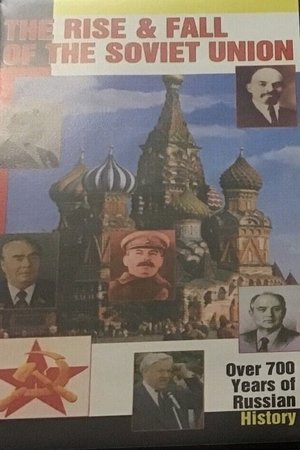
Historic Russian battles to repel invaders serve as prelude to the story of events that redrew the map of Eastern Europe and parts of Asia in the 20th century. Following the turmoil of the Bolshevik Revolution, Communist Russia faces the venom of Nazi aggression. 1940's film footage reveals the harsh reality of total war, as the Red Army and Soviet civilians alike confront a brutal and tenacious enemy. The following decades are darkened by tensions between the USSR and foreign powers, and violent measures taken to silence voices of dissent. Finally, the Soviet people's yearning for a freer society leads to accelerating reforms and the ultimate dissolution of the USSR.
Movie: Soviet Union: The Rise and Fall - Part 2
Top 10 Billed Cast
Self (archive footage)
Self (archive footage)
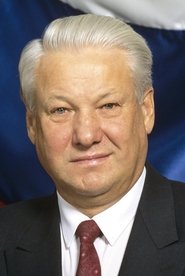
Self (archive footage)
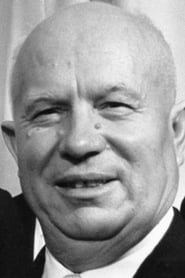
Self (archive footage)
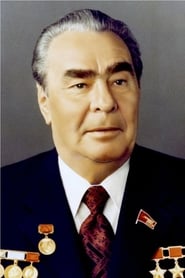
Self (archive footage)
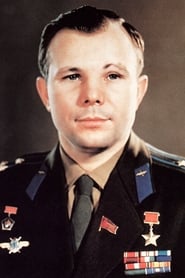
Self (archive footage)
Self (archive footage)
Self (archive footage)
Self (archive footage)
HomePage
Overview
Historic Russian battles to repel invaders serve as prelude to the story of events that redrew the map of Eastern Europe and parts of Asia in the 20th century. Following the turmoil of the Bolshevik Revolution, Communist Russia faces the venom of Nazi aggression. 1940's film footage reveals the harsh reality of total war, as the Red Army and Soviet civilians alike confront a brutal and tenacious enemy. The following decades are darkened by tensions between the USSR and foreign powers, and violent measures taken to silence voices of dissent. Finally, the Soviet people's yearning for a freer society leads to accelerating reforms and the ultimate dissolution of the USSR.
Release Date
1996-02-20
Average
0
Rating:
0.0 startsTagline
Genres
Languages:
Keywords
Similar Movies

Afrique-France : le divorce ?(fr)
At a time when French flags are being burned and French embassies targeted, this documentary delves into the growing disaffection between French-speaking Africa and the former colonial power. Through the voices of African leaders, pan-African activists, and committed young people, the film questions the persistence of a relationship marked by the aftermath of colonization, the opaque agreements of "Françafrique," and a military presence deemed paternalistic.

My Favorite War(lv)
Ilze Burkovska, a little girl who is obsessed with stories of World War II and will be a filmmaker in a distant future, lives in Latvia under the totalitarian boot of the Soviets and the ominous shadow of the many menaces and horrors of the Cold War.

Nikita Kino(fr)
The film is a travelogue of sorts. Ostrovsky’s personal family footage meets the archives of Soviet propaganda footage. The result is a kind of Khruschev-era mix with a collage of Soviet music and a voice-over of my reminiscences of the Cold War era.

Disco and Atomic War(et)
A different history of the Cold War: how Estonians under Soviet tyranny began to feel the breeze of freedom when a group of anonymous dreamers successfully used improbable methods to capture the Finnish television signal, a window into Western popular culture, brave but harmless warriors who helped change the fate of an entire nation.

Balancing Acts: A Jewish Theatre in The Soviet Union(en)
Moscow, January 1948. In the bitter cold, a large crowd attends the State Funeral of the Yiddish actor and director Solomon Mikhoels. An official proclamation mourns the death of "a great People's Artist of the Soviet Union." What people are really mourning is the death of the most popular Jewish theater in the Soviet Union, and the man who kept it alive against all odds for over 20 years. No doubt many suspected the truth: he had just been assassinated by Stalin's secret police.

War Tails(en)
The Russian invasion of Ukraine created an avalanche of abandoned dogs and cats that are now multiplying causing unforeseen consequences.

Russia, China, Iran: The Axis of Revenge(fr)
Russia, China and Iran: three former empires are determined to take their revenge and reassert their power after centuries of humiliation. Since the start of the war in Ukraine, they have never been so aligned on the international stage. Their common goal: to put an end to Western hegemony, restore their zone of influence and propose a new model of society. To achieve this, they are waging a hybrid war against the democracies: military, technological, economic, informational and ideological. Are they on the verge of joining forces to create a new world order?

Osteuropa zwischen Hitler und Stalin - Das große Sterben(de)
Between 1930 and 1945, Eastern Europe experienced mass violence on an unprecedented scale. Hitler and Stalin exploited the vast region for their respective expansionist plans. It is estimated that around 14 million civilians were murdered—primarily Jews, Poles, Balts, Belarusians, and Ukrainians.

Stalin: Man of Steel(en)
Emmy Awards nominee for "Outstanding Individual Achievement in a Craft: Research: Multi-faceted portrait of the man who succeeded Lenin as the head of the Soviet Union. With a captivating blend of period documents, newly-released information, newsreel and archival footage and interviews with experts, the program examines his rise to power, deconstructs the cult of personality that helped him maintain an iron grip over his vast empire, and analyzes the policies he introduced, including the deadly expansion of the notorious gulags where he banished so many of his countrymen to certain death.

Hitler & Stalin: Portrait of Hostility(de)
A double portrait of two dictators who were thousands of miles apart but were constantly fixated on each other.

An Ordinary Country(pl)
The story of what daily life was like in Poland under communism: private conversations, cruel interrogations, recruitment attempts, recorded and filmed with hidden devices; of how the secret services spied on every activity of ordinary citizens: nothing escaped the brutal system of control developed by the Soviets in the name of freedom.

They Are Here(en)
Dangling from a high window, a young non-binary person is on the cusp of life and death. Flashes of film, literature, art (paintings) and cultural history pass them by, as if to tell a message. A postmodern treatise on connection to culture and the past.

Stalin's Last Plot(fr)
January 1953: On the eve of his death Stalin finds himself yet another imaginary enemy: Jewish doctors. He organizes the most violent anti-Semitic campaign ever launched in the USSR, by fabricating the "Doctors' Plot," whereby doctors are charged with conspiring to murder the highest dignitaries of the Soviet Regime. Still unknown and untold, this conspiracy underlines the climax of a political scheme successfully masterminded by Stalin to turn the Jews into the new enemies of the people. It reveals his extreme paranoia and his compulsion to manipulate those around him. The children and friends of the main victims recount for the first time their experience and their distress related to these nightmarish events.

Leninland(ru)
At the peak of Perestroika, in 1987, in the village of Gorki, where Lenin spent his last years, after a long construction, the last and most grandiose museum of the Leader was opened. Soon after the opening, the ideology changed, and the flow of pilgrims gradually dried up. Despite this, the museum still works and the management is looking for ways to attract visitors. Faithful to the Lenin keepers of the museum as they can resist the onset of commercialization. The film tells about the modern life of this amazing museum-reserve and its employees.

The Gulag Archipelago: The Book That Changed Russian History(fr)
The story of Russian writer and Soviet dissident Aleksandr Solzhenitsyn (1918-2008) and his masterpiece, The Gulag Archipelago, published in Paris in 1973, which forever shook the very foundations of communist ideology.


National Geographic: The Volga(en)
Film cameras cruise the Soviet Union's mighty Volga River, providing a view of the Russian people along its 2300-mile length, including looks at the fishing industry, a rural village, a manufacturing town and the wedding of two factory workers.

Little Potato(en)
Wes Hurley's autobiographical tale of growing up gay in Soviet Union Russia, only to escape with his mother, a mail order bride, to Seattle to face a whole new oppression in his new Christian fundamentalist American dad.

In the Grip of Gazprom(de)
The war in the Ukraine has changed the way many European countries view Russian politics. Suddenly it became clear how dependent countries had become on Russian gas imports for decades and what Vladimir Putin was up to. However, no country needs more gas than Germany. It was only after Russia's invasion of the Ukraine that the German government realized that Russia had long used gas as a weapon to impose its will on states. The instrument created for this purpose is the natural gas production company GAZPROM. So how did Germany become so dependent on Russian gas? The documentary shows how, over several decades and several changes of government, a broad alliance of politicians and business representatives did everything possible to secure Germany's energy supply with cheap Russian gas, while the Kremlin's foreign policy became increasingly aggressive and the warnings of experts went unheeded.

Man with a Movie Camera(ru)
A cameraman wanders around with a camera slung over his shoulder, documenting urban life with dazzling inventiveness.