Loading Page


The Call of the Mountain(1997)
Status: Released
Date: 1997-01-01
0%
0 Votes
Time: 0h 51m
Overview:
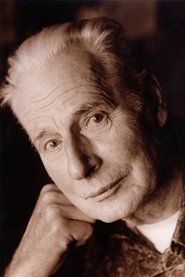
On 1500 metres above sea level, on the slope of the mountain Hallingskarvet, stands "Tvergastein', the cabin of Norwegian philosopher Arne Naess. In his life he has spent nearly 12 years in this hut, where he wrote several books and essays on philosophy and ecology. In this film, Naess tells about the concept of 'deep ecology', which was first introduced by him in 1973. One of the basic tenets of deep ecology is that nature has a value in itself, apart from its possible use value to humans. Next to being a famous mountaineer, Naess has been a longtime activist in the environmental movement. He gives an inspiring account of his participation in blockades to prevent the Alta river in northern Norway (the area of the Sami, an indigenous people) from being dammed.
Languages: English.
Countries:
Netherlands
Movie: The Call of the Mountain
Top 7 Billed Cast
Arne Næss
Self

Vandana Shiva
Self
Helena Norberg-Hodge
Self
Video Trailer The Call of the Mountain
All 1 videos

The Call of the Mountain ~ Arne Naess and the Deep Ecology Movement (full version) - Clip
Similar Movies

62%
Taking Root: The Vision of Wangari Maathai(en)
2008-04-14
This documentary provides a window into the extraordinary life of activist and Nobel Laureate Wangari Maathai, a Kenyan woman who has worked to regain ownership of her country and its fate after years of colonialism. While gentle and thoughtful, Maathai carries a powerful message: the First World holds much of the responsibility for the environmental, economic and social struggles of the developing world.

50%
Holding Up the Sky(fr)
2023-04-13
"When the shamans stop dancing and life in the rainforest loses its balance, the sky will collapse and come to crush everything." This wisdom is passed down from generation to generation by the Yanomami of Brazil. But gold miners are polluting the rivers, shamans are dying, the rainforest is disappearing and the earth is getting hotter. Davi Kopenawa, a tribal leader and spokesman for the Yanomami, has been fighting relentlessly against the colonization of his land for 40 years. He warns Westerners that when the sky collapses, they too will be crushed. Why don't they listen? Translated with www.DeepL.com/Translator (free version)

0%
Hidden Contamination(ja)
2015-09-16
The 20 km zone surrounding the Fukushima Nuclear Power Plant was designated an evacuation zone due to the radiation caused by the accident in March 2011. However, the thousands of people of Itate, situated just outside the zone, and those who had fled the area and taken shelter there were left to their own devices for over a month. Later on Itate became a restricted area and the residents were allowed only visits having to leave the area for good. The place became a ghost town, as it was too close to the Zone and many pets and farm animals are stranded there. There are said to be 150~200 dogs, 400~800 cats, 50 chickens and a pig although the exact numbers are unknown. The public interest in the accident has all but gone but there is one man who still cares what happens to those animals.

66%
Fellini of the Spirits(it)
2020-08-31
2020 marks 100 years since the birth of Federico Fellini, the most prominent Italian director and one of the symbols of the insuperable cinematic heyday of mid-20th century. Fellini had always been a mysterious director, not only in his cryptic symbolism but also in his idiosyncratic, excessive mixture of psychoanalysis, Catholicism and faith in the mysterious. In this documentary, his relationship with the paranormal, luck and fate, alongside the coexistence of organized discourse and transcendence to the imaginary, is examined via friends, collaborators and distinguished fans (Friedkin, Gilliam, Chazelle). A great testimony to why rationalists and ideologists have a hard time with his work, ‘Fellini and the Spirits’ is an appropriate yet unexpected tribute.

70%
Leave it to Beavers(en)
2014-05-14
From PBS - The fascinating story of beavers in North America - their history, their near extinction, and their current comeback, as a growing number of scientists, conservationists and grass-roots environmentalists have come to regard beavers as overlooked tools when it comes to reversing the disastrous effects of global warming and world-wide water shortages. Once valued for their fur or hunted as pests, these industrious rodents are seen in a new light through the eyes of this novel assembly of beaver enthusiasts and "employers" who reveal the ways in which the presence of beavers can transform and revive landscapes. Using their skills as natural builders and brilliant hydro-engineers, beavers are being recruited to accomplish everything from re-establishing water sources in bone-dry deserts to supporting whole communities of wildlife drawn to the revitalizing aquatic ecosystems their ponds provide.

80%
Des Rives(fr)
2023-04-13

82%
Ruptures(fr)
2021-09-01
Their destiny was well mapped out: brilliant studies, the promise of a good job and a big salary. However, nothing happened as planned. Aurélie, Maxime, Hélène, Emma, or Romain are graduates of Polytechnique, Sciences Po, Centrale or business schools. They have made a radical choice: to give up the future they were promised for a life they consider more compatible with the environmental and societal issues of our time. This film tells their story. For a year, the young director Arthur Gosset, himself a student at Centrale Nantes, followed the journey of six young people, their sometimes difficult decisions, their often painful breaks and their courageous choice to live in accordance with their convictions, whatever the cost. Discover the documentary that tells their story.

67%
Earth and the American Dream(en)
1992-10-01
A beautiful and disturbing film recounts America’s story from the environment’s point of view. From the arrival of Columbus to the simple wilderness living of the 16th and 17th centuries, through the agrarian lifestyle of the 18th century, the changes from the Industrial Revolution, to the 20th century when most of the planet’s resources have been depleted — this film examines the North American landscape and all the wildlife destruction, deforestation, soil depletion and pollution that have been wrought to make the American Dream come true.

70%
Julien, le marais et la libellule(fr)
2022-12-05

75%
Grizzly Man(en)
2005-08-12
Follows the story of "Grizzly Man" Timothy Treadwell and what the thirteen summers in a National Park in Alaska were like in his attempt to protect the grizzly bears. The film is full of unique images and a look into the spirit of a man who sacrificed himself for nature.

82%
Baraka(en)
1992-09-15
A paralysingly beautiful documentary with a global vision—an odyssey through landscape and time—that attempts to capture the essence of life.

69%
Plastic Planet(de)
2009-09-18
Werner Boote presents an up-close and personal view of the controversial and fascinating material that has found its way into every facet of our daily lives: plastic. He takes us on a journey around the globe, showing that plastics have become a threat for both environment and human health.

70%
Soulèvements(fr)
2026-02-11
A choral portrait with 16 voices, 16 unique trajectories, reflective and intimate, of an intergenerational resistance movement led by young people who live and fight against land and water grabbing, industrial devastation, the rise of totalitarianism, and face political repression. A deep dive into the heart of Soulèvements de la Terre, revealing the unprecedented composition of the multiple forces deployed throughout the country, experimenting with other ways of life, forging new links with living things, thus overturning the established divisions between the political and the sensitive, opening us up to a field of possibilities.

79%
Petra Kelly - Act Now!(de)
2024-09-12
The German documentary is dedicated to an influential figure of the 20th century: Petra Kelly spent her life campaigning for feminism, environmental activism, human rights and peace. She was a political co-founder of the Green Party in the 1970s and 80s and protested against nuclear missiles in West Germany at the height of the Cold War. Above all, however, she believed that one person could very well change the world and thus rose to become an icon of the peace movement.

72%
Pope Francis: A Man of His Word(en)
2018-05-18
Pope Francis responds to questions from around the world, discussing topics including ecology, immigration, consumerism and social justice.

65%
The Most Unknown(en)
2018-03-16
An epic documentary film that sends nine scientists to extraordinary parts of the world to uncover unexpected answers to some of humanity’s biggest questions. How did life begin? What is time? What is consciousness? How much do we really know? By introducing researchers from diverse backgrounds for the first time, then dropping them into new, immersive field work they previously hadn’t tackled, the film pushes the boundaries of how science storytelling is approached. What emerges is a deeply human trip to the foundations of discovery and a powerful reminder that the unanswered questions are the most crucial ones to pose. Directed by Emmy-nominated and Peabody Award-winning filmmaker Ian Cheney and advised by world-renowned filmmaker Werner Herzog, The Most Unknown is an ambitious look at a side of science never before shown on screen.

60%
The Unforeseen(en)
2007-01-01
A documentary about the development around Barton Springs in Austin, Texas, and nature's unexpected response to being threatened by human interference.

70%
The Lost Forest(en)
2020-05-22
How would natural habitats develop without human interference? In this documentary we follow an international team of scientists and explorers on an extraordinary mission in Mozambique to reach a forest that no human has set foot in. The team aims to collect data from the forest to help our understanding of how climate change is affecting our planet. But the forest sits atop a mountain, and to reach it, the team must first climb a sheer 100m wall of rock.

0%
Square Fieldwork(nl)
2022-02-08
Milah van Zuilen, visual artist and forest ecologist in training, uses the square to deal with the habit of people to construct nature. Square Fieldwork is filmed in the Bohemian forest in the Czech Republic and the concrete structure of Barendrecht, The Netherlands.

74%
Thomas Pesquet : Objectif France(fr)
2023-02-02