Loading Page


Cool(NaN)
Status: Released
Date:
0%
0 Votes
Time: 1h 0m
Overview:
Documentary exploring the meaning and history of cool through the American music that started in the 1940s in the bars of New York and LA, and became known as cool jazz.
Languages:
Countries:
Movie: Cool
Top 5 Billed Cast
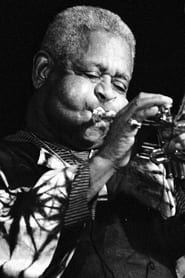
Dizzy Gillespie
Self
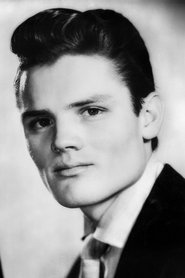
Chet Baker
Self
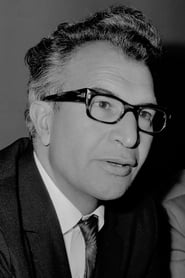
Dave Brubeck
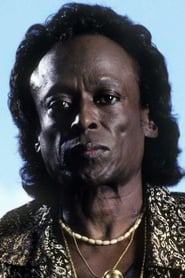
Miles Davis
Self
HomePage
Overview
Documentary exploring the meaning and history of cool through the American music that started in the 1940s in the bars of New York and LA, and became known as cool jazz.
Release Date
Average
0
Rating:
0.0 startsTagline
Genres
Languages:
Keywords
Similar Movies

66%
Stop for Bud(da)
1963-12-17
Stop for Bud is Jørgen Leth's first film and the first in his long collaboration with Ole John. […] they wanted to "blow up cinematic conventions and invent cinematic language from scratch". The jazz pianist Bud Powell moves around Copenhagen -- through King's Garden, along the quay at Kalkbrænderihavnen, across a waste dump. […] Bud is alone, accompanied only by his music. […] Image and sound are two different things -- that's Leth's and John's principle. Dexter Gordon, the narrator, tells stories about Powell's famous left hand. In an obituary for Powell, dated 3 August 1966, Leth wrote: "He quite willingly, or better still, unresistingly, mechanically, let himself be directed. The film attempts to depict his strange duality about his surroundings. His touch on the keys was like he was burning his fingers -- that's what it looked like, and that's how it sounded. But outside his playing, and often right in the middle of it, too, he was simply gone, not there."

20%
Andrea Motis, The Silent Trumpet(es)
2019-04-05
This film by director Ramon Tort documents a unique moment in the life and career of Andrea Motis: the months preceding the recording of her first album in New York as well as what followed. A time filled with changes and emotions; from leaving her parents’ home for the first time and start living by herself to embarking in a world tour that would take her to places like Japan, United States, Asia and Europe. A crucial time in a young woman's life, who is about to make the big leap…, but is she interested in success or fame? Andrea is not a conventional artist. She lives in the moment, enjoying the small things in life, every day in the most simplest way possible… An entire magical process that can only be understood through her music.

0%
The Musicians' Green Book: An Enduring Legacy(en)
2022-11-26
Stories and music of Black artists who relied on an underground travel guide to navigate the injustices of racial segregation while on the road. The Negro Travelers’ Green Book was a directory of lodgings, restaurants, and entertainment venues where African Americans were welcomed. Features performances and interviews with vocalists, musicians, activists, historians, and others.

50%
Don't Fall in Love with Yourself(en)
2022-11-13
A documentary about the life and music of Justin Pearson. An enigmatic underground musician and owner of Three One G records.

20%
Sing! Inge, Sing!(de)
2011-03-30
In Germany, jazz had a voice: Inge Brandenburg. This is the story of a woman in the 1950s and 1960s, when there was no place in Germany for self-assured women with international aspirations, a dramatic performance style and an emancipated attitude to love.

0%
JazzTown(en)
2021-03-14
Denver’s iconic and Grammy Award-winning musicians reveal the secrets of their success and longevity in the music business while warning the young lions to whom they pass the torch to stay relevant in a marketplace both treacherous and brutal. The majestic Rocky Mountains tower over a bustling metropolis filled with steamy and romantic nightclubs where jazz flourishes on stage. JazzTown features never seen before live concert footage on historic stages that have now crumbled due to economic stresses of the Covid Pandemic. ~ Dianne Reeves, 5-time Grammy Award winner for Best Jazz Vocalist ~ US Senator John Hickenlooper (former jazz club owner) ~ Ron Miles (Colorado Music Hall of Fame, Joshua Redman, Bill Frisell, Ginger Baker) ~ Charlie Hunter (Snarky Puppy, Christian McBride, Stanton Moore) ~ Art Lande (Mark Isham, Gary Peacock) ~ Ayo Awosika (Session Singer on Soundtracks to: Wakanda Forever, Nope, Dune, The Lion King ... tours with Miley Cyrus,) and many more.

46%
Nice Girls Don't Stay for Breakfast(en)
2019-02-27
In the late 1990s, iconic photographer Bruce Weber barely managed to convince legendary actor Robert Mitchum (1917-97) to let himself be filmed simply hanging out with friends, telling anecdotes from his life and recording jazz standards.


70%
Nat King Cole: Afraid of the Dark(en)
2014-05-13
Take an in-depth look at the life and talent of the trailblazing musician who conquered racial barriers to leave an indelible mark on the jazz world.

80%
Mary Lou Williams: The Lady Who Swings the Band(en)
2015-04-01
Jazz pianist Mary Lou Williams was a genius ahead of her time. From child prodigy to "Boogie-Woogie Queen" to groundbreaking composer to mentoring some of the greatest musicians of all time, she never ceased to astound those who heard her play. But for a Black woman in the early 1900s, life as a star did not come easy.

80%
Pete!(en)
1980-08-24
Narrated by Phil Harris, a longtime friend of Fountain's, "Pete!" uses performance film, interviews, behind-the-scenes footage and a home videos to offer an intimate portrait of Fountain, the walking, talking embodiment of his hometown. Produced and directed by by John Beyer, the film originally aired on PBS stations nationwide. When it aired locally as part of a PBS membership drive, "Pete!" was credited with raising "more than had ever been raised by a single program in the history of WYES," according to a story published in The Times-Picayune in August 1980.

0%
Stolen Moments: Red Hot + Cool(en)
1994-10-31
A musical documentary accompaniment to the 1994 benefit compilation album concerning AIDS in the African-American community.

50%
Talmage Farlow(en)
1981-07-01
A documentary about the life and career of American jazz guitarist Tal Farlow


60%
Sonic Mirror(en)
2008-04-25
The multi-award-winning Finnish documentarian Mika Kaurismäki, brother of Aki Kaurismäki (The Man Without a Past), helms the nonfiction work Sonic Mirror -- a protracted exploration of rhythm as one of life's driving forces. Revered drummer Billy Cobham serves as host, taking the audience on a long musical journey around the world and through a myriad of musical genres and styles. Cobham, Kaurismäki, and co. segue from Western concert halls and stages to the music of African tribes performed by Brazilian street children to the distinct music of autistic patients. Along the way, the filmmakers raise serious questions about the function of music as an identifying force, a means of communication, and an emotional release; they also probe the enduring connections between group awareness and self-awareness. The film ultimately builds to a hugely affirming and cathartic expression of music as collective expression that unifies its performers in spirit.

40%
Louis Prima: The Wildest!(en)
1999-10-22
Documentary about the mid-20th century Vegas bandleader and trumpeter Louis Prima, who showed the world what a rock show could be.

70%
Fire Music(en)
2021-09-10
Although the free jazz movement of the 1960s and '70s was much maligned in some jazz circles, its pioneers - brilliant talents like Ornette Coleman, Cecil Taylor, Sun Ra, Albert Ayler, and John Coltrane - are today acknowledged as central to the evolution of jazz as America's most innovative art form. FIRE MUSIC showcases the architects of a movement whose radical brand of improvisation pushed harmonic and rhythmic boundaries, and produced landmark albums like Coleman's Free Jazz: A Collective Inspiration and Coltrane's Ascension. A rich trove of archival footage conjures the 1960s jazz scene along with incisive reflections by critic Gary Giddins and a number of the movement's key players.

80%
Trollkarlen(sv)
1999-04-16
In this sober and moody documentary, director Anders Østergaard explores the life - and death - of Swedish wonder kid jazz pianist Jan Johansson through a rain-soaked windshield.

0%
Maceo Parker: My First Name Is Maceo(en)
1996-12-06
Documentary about the life of jazz and funk saxophonist, Maceo Parker