Loading Page
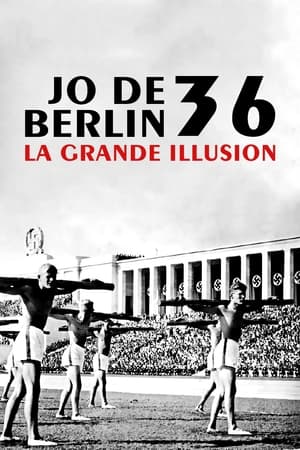
JO de Berlin 36, la grande illusion(2015)
Status: Released
Date: 2015-03-15
0%
0 Votes
Overview:
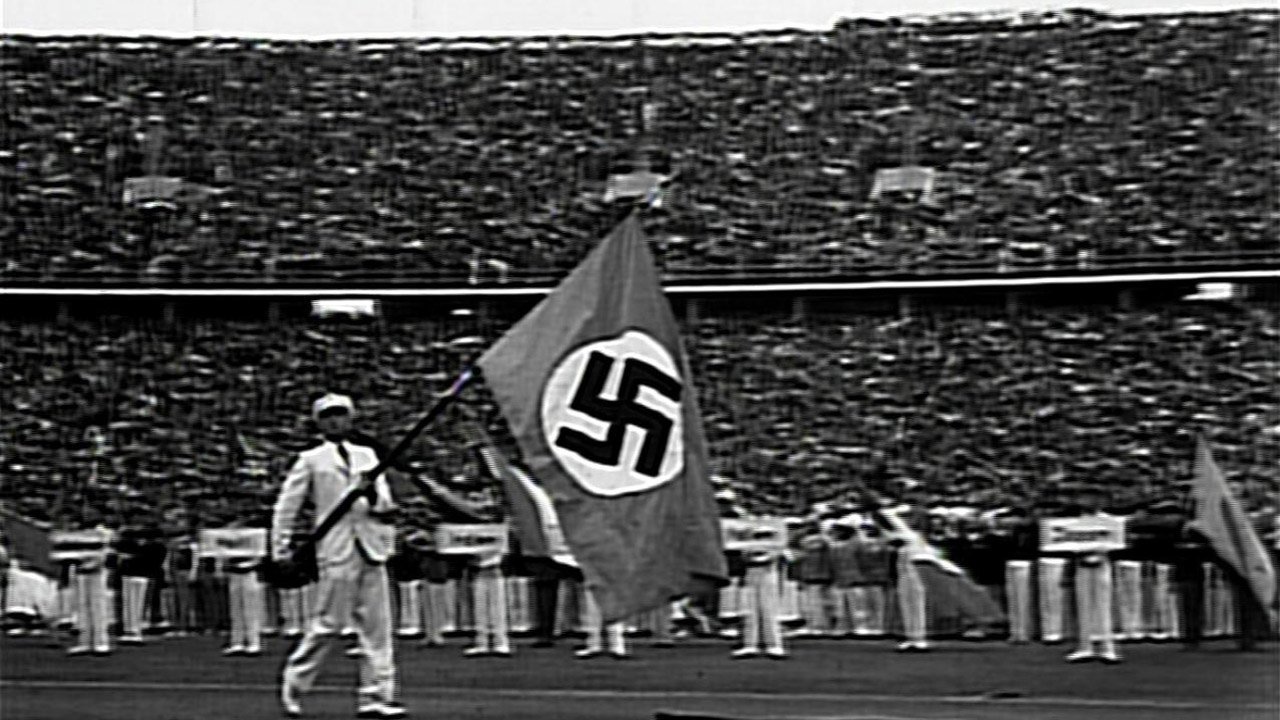
In August 1936, the Olympic Games, orchestrated by Joseph Goebbels, the Third Reich's Minister of Propaganda, took place in Berlin. This was a vast charm offensive designed to present Germany as a nation that respected the Olympic principles of equality and fraternity. This documentary reveals the political strategies of the Third Reich, which benefited from the complicity of the International Olympic Committee in thwarting calls for a boycott by several countries. Once the games were over, Nazi policy intensified. How could the civilized world turn a blind eye to this "great illusion"? Gretel Bergmann, the German Jewish athlete at the center of a bargaining chip between the German authorities and the US government, and Noël Vandernotte, who won a bronze medal in rowing, share their stories.
Languages: French.
Countries:
France
Movie: JO de Berlin 36, la grande illusion
HomePage
Overview
In August 1936, the Olympic Games, orchestrated by Joseph Goebbels, the Third Reich's Minister of Propaganda, took place in Berlin. This was a vast charm offensive designed to present Germany as a nation that respected the Olympic principles of equality and fraternity. This documentary reveals the political strategies of the Third Reich, which benefited from the complicity of the International Olympic Committee in thwarting calls for a boycott by several countries. Once the games were over, Nazi policy intensified. How could the civilized world turn a blind eye to this "great illusion"? Gretel Bergmann, the German Jewish athlete at the center of a bargaining chip between the German authorities and the US government, and Noël Vandernotte, who won a bronze medal in rowing, share their stories.
Release Date
2015-03-15
Average
0
Rating:
0.0 startsTagline
Genres
Languages:
FrançaisKeywords
Similar Movies

68%
Hitler's Games, Berlin 1936(fr)
2016-08-23
Summer 1936 - The Berlin Olympics, organized by the Nazi regime on the eve of World War II, acted as a grand showcase for a Germany that was athletic, peaceful and rejuvenated. The violence and hate that until then had reigned in the streets of Berlin suddenly vanished. Adolf Hitler became the triumphant host of European countries he would soon try to invade or face in a deadly global conflict.

77%
Beyond Utopia(en)
2023-10-23
A courageous pastor uses his underground network to rescue and aid North Korean families as they risk their lives to embrace freedom.

85%
The Blob: A Genius without a Brain(fr)
2019-10-26
This documentary outlines the unique properties and latest studies of "Physarum Polycephalum", also known as Blob.

45%
100 Years of the UFA(de)
2017-08-28
The intricate history of UFA, a film production company founded in 1917 that has survived the Weimar Republic, the Nazi regime, the Adenauer era and the many and tumultuous events of contemporary Germany, and has always been the epicenter of the German film industry.

55%
Sting: Beyond The Police(en)
2017-08-18
The personal life and professional career of music superstar Gordon Matthew Thomas Sumner, universally known as Sting, who became passionate about music at a very early age and founded the trio The Police in 1977 with Stewart Copeland and Andy Summers, achieving an immediate success.


80%
The Lives of Albert Camus(fr)
2020-01-22
Albert Camus died at 46 years old on January 4, 1960, two years after his Nobel Prize in literature. Author of “L'Etranger”, one of the most widely read novels in the world, philosopher of the absurd and of revolt, resistant, journalist, playwright, Albert Camus had an extraordinary destiny. Child of the poor districts of Algiers, tuberculosis patient, orphan of father, son of an illiterate and deaf mother, he tore himself away from his condition thanks to his teacher. French from Algeria, he never ceased to fight for equality with the Arabs and the Kabyle, while fearing the Independence of the FLN. Founded on restored and colorized archives, and first-hand accounts, this documentary attempts to paint the portrait of Camus as he was.

72%
The Captain(de)
2018-02-02
Germany, 1945. Soldier Willi Herold, a deserter of the German army, stumbles into a uniform of Nazi captain abandoned during the last and desperate weeks of the Third Reich. Newly emboldened by the allure of a suit that he has stolen only to stay warm, Willi discovers that many Germans will follow the leader, whoever he is.


70%
The Antifascists(sv)
2017-03-09
A low-intensity war is being fought on the streets of Europe and the aim is on fascism. This critically acclaimed documentary takes us behind the masks of the militants called antifascists. In 2013 a group of armed nazis attacks a peaceful demonstration in Stockholm where several people are injured. In Greece the neo-nazi party Golden Dawn becomes the third largest in the election and in Malmö the activist Showan Shattak and his friends are attacked by a group of nazis with knives and he ends up in a coma. In this portrait of the antifascists in Greece and Sweden we get to meet key figures that explain their view on their radical politics but also to question the level their own violence and militancy.

66%
Altman(en)
2014-08-01
Robert Altman's life and career contained multitudes. This father of American independent cinema left an indelible mark, not merely on the evolution of his art form, but also on the western zeitgeist. With its use of rare interviews, representative film clips, archival images, and musings from his family and most recognizable collaborators, Altman is a dynamic and heartfelt mediation on an artist whose expression, passion and appetite knew few bounds.

69%
Le Temps de cerveau disponible(en)
2010-03-17
Cruelty, psychological and sexual violence, humiliations: reality television seems to have gone mad. His debut in the early 2000s inaugurated a new era in the history of the audio-visual. Fifty years of archives trace the evolution of entertainment: how the staging of intimacy during the 80s opened new territories, how the privatization of the biggest channels has changed the relationship with the spectator. With the contribution of specialists, including philosopher Bernard Stiegler, this documentary demonstrates how emotion has made way for the exacerbation of the most destructive impulses.

38%
Hold on Tight(en)
2011-07-28
A short documentary exploring the ways LGBT couples show affection, and how small interactions like holding hands in public can carry, not only huge personal significance, but also the power to create social change.

79%
The True Story of Pirates(fr)
2022-12-31
Thanks to new excavations in Mauritius and Madagascar, as well as archival and museum research in France, Spain, England and Canada, a group of international scholars paint a new portrait of the world of piracy in the Indian Ocean.

70%
Meeting Snowden(en)
2017-04-19
Moscow, Russia, December 2016. Edward Snowden, Larry Lessig and Birgitta Jónsdóttir meet for the first time in a secret place. Apparently, Russia is interfering in the US presidential elections while it mourns the death of its ambassador to Turkey. Snowden carefully chooses his interviews, so nobody really knows something about him. As the world prepares for Christmas, they gather to discuss the only issue that matters, their common struggle: how to save democracy.

76%
Spielberg(en)
2017-10-05
A documentary on the life and career of one of the most influential film directors of all time, Steven Spielberg.

63%
Weekend of a Champion(en)
2013-10-09
Filmmaker Roman Polanski spends a weekend with world champion driver Jackie Stewart as he attempts to win the 1971 Monaco Grand Prix, offering an extraordinarily rare glimpse into the life of a gifted athlete at the height of his powers. "Re-cut and restored" version of the original "Weekend Of A Champion (1972)", with a 2011 post-film discussion between Jackie Stewart and Roman Polanski (begins at approx 71:15 minutes).


90%
Tasmanian Devil: The Fast and Furious Life of Errol Flynn(en)
2007-10-17
The story of Tasmanian-born actor Errol Flynn whose short & flamboyant life, full of scandals, adventures, loves and excess was largely played out in front of the camera - either making movies or filling the newsreels and gossip magazines. Tragically he was dead from the effects of drugs and alcohol by the time he was only 50 & the myths live on. But there is another side of Flynn that is less well known - his ambitions to be a serious writer and newspaper correspondent, his documentary films and his interest in the Spanish Civil War and Castro's Cuba