Loading Page
O Regresso(1989)
Status: Released
Date: 1989-04-23
0%
0 Votes
Time: 0h 53m
Overview:
"O Regresso" is a documentary featuring renowned Portuguese actor Ruy de Carvalho as he returns to Macau after a 10-year absence. Directed to mark the 10th anniversary of his visit, the film captures Ruy de Carvalho revisiting key locations across the city, reflecting on the cultural and social transformations that Macau underwent in the lead-up to its handover from Portuguese to Chinese administration in 1999. Blending personal memories with the evolving landscape, the documentary offers a nostalgic look at Macau's unique blend of Portuguese and Chinese heritage, seen through the eyes of one of Portugal’s most beloved actors.
Languages: Mandarin, Portuguese.
Countries:
Macao,
Portugal
ProductionCompanies: 
Movie: O Regresso
Top 2 Billed Cast
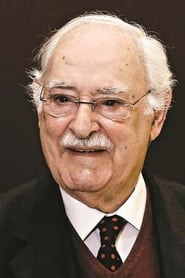
Ruy de Carvalho
Castro
HomePage
Overview
"O Regresso" is a documentary featuring renowned Portuguese actor Ruy de Carvalho as he returns to Macau after a 10-year absence. Directed to mark the 10th anniversary of his visit, the film captures Ruy de Carvalho revisiting key locations across the city, reflecting on the cultural and social transformations that Macau underwent in the lead-up to its handover from Portuguese to Chinese administration in 1999. Blending personal memories with the evolving landscape, the documentary offers a nostalgic look at Macau's unique blend of Portuguese and Chinese heritage, seen through the eyes of one of Portugal’s most beloved actors.
Release Date
1989-04-23
Average
0
Rating:
0.0 startsTagline
Genres
Languages:
普通话PortuguêsKeywords
Similar Movies

69%
Le Temps de cerveau disponible(en)
2010-03-17
Cruelty, psychological and sexual violence, humiliations: reality television seems to have gone mad. His debut in the early 2000s inaugurated a new era in the history of the audio-visual. Fifty years of archives trace the evolution of entertainment: how the staging of intimacy during the 80s opened new territories, how the privatization of the biggest channels has changed the relationship with the spectator. With the contribution of specialists, including philosopher Bernard Stiegler, this documentary demonstrates how emotion has made way for the exacerbation of the most destructive impulses.

80%
The Lie Detector(en)
2023-01-03
In the first decades of the 20th century, when life was being transformed by scientific innovations, researchers made a thrilling new claim: they could tell whether someone was lying by using a machine. Popularly known as the “lie detector,” the device transformed police work, seized headlines and was extolled in movies, TV and comics as an infallible crime-fighting tool. Husbands and wives tested each other’s fidelity. Corporations routinely tested employees’ honesty and government workers were tested for loyalty and “morals.” But the promise of the polygraph turned dark, and the lie detector too often became an apparatus of fear and intimidation. Written and directed by Rob Rapley and executive produced by Cameo George, The Lie Detector is a tale of good intentions, twisted morals and unintended consequences.


79%
The True Story of Pirates(fr)
2022-12-31
Thanks to new excavations in Mauritius and Madagascar, as well as archival and museum research in France, Spain, England and Canada, a group of international scholars paint a new portrait of the world of piracy in the Indian Ocean.

0%
Retratação(en)
2019-10-04
Fernando Lemos, a Portuguese surrealist artist, fled from dictatorship to Brazil in 1952 searching for something better. The movie follows the last moments of his journey and the struggle for the preservation of his legacy, trying to fulfill his last great desire: to be a good dead man.


84%
Nuremberg: The Nazis Facing their Crimes(fr)
2006-10-25
The documentary of the Nuremberg War Trials of 21 Nazi dignitaries held after World War II.

80%
The Battle of France(fr)
1964-06-03
A montage of newscasts tracing the events of the "damned war" and the German invasion of 1940.

75%
Tokyo Phoenix(fr)
2017-05-20
In 150 years, twice marked by total destruction —a terrible earthquake in 1923 and incendiary bombings in 1945— followed by a spectacular rebirth, Tokyo, the old city of Edo, has become the largest and most futuristic capital in the world in a transformation process fueled by the exceptional resilience of its inhabitants, and nourished by a unique phenomenon of cultural hybridization.

80%
Notre Dame de Paris: The Ordeal of the Centuries(fr)
2019-12-18
A fictional documentary on Notre Dame de Paris, produced in 2019.

0%
Empire of the Nude: The Victorian Nude(en)
2001-01-01
The Victorian era is often cited for its lack of sexuality, but as this documentary reveals, the period's artists created a strong tradition surrounding the classical nude figure, which spread from the fine arts to more common forms of expression. The film explains how 19th-century artists were inspired by ancient Greek and Roman works to highlight the naked form, and how that was reflected in the evolving cultural attitudes toward sex.

76%
King Leopold's Ghost(en)
2006-05-28
The modern history of the Congo, the heart of Africa, is a terrifying tale of appalling brutality: how the greedy and incredibly ruthless King Leopold II of Belgium (1935-1909) turned a vast country into his private estate (1885-1908) and how he plundered the land and raped the bodies and souls of its defenceless inhabitants, causing countless victims; and what exactly is the true impact of this often forgotten story of crime and horror today.

50%
Nero's Sunken City(de)
2017-04-16
Beneath the turquoise waves of the Bay of Naples lies an extraordinary underwater archeology site, the ancient Roman city of Baiae. From the first century to the third century AD, Baiae was the exclusive playground for the rich and powerful among Rome’s elite. What made Baiae such a special place? What really went on there? And why did it disappear?


0%
Burnt Earth(fr)
1934-01-01
A visual travel diary on the expedition led by Brondeel in 1934. This expedition to Belgian Congo, by truck, became a testimony to the social conditions of Africans during the colonial era.

75%
Gogol Online: Stalin's Funeral(ru)
2016-12-22
On the same day that Stalin was buried, Sergei Prokofiev's funeral took place completely unnoticed. And if the farewell to the composer quietly went against the backdrop of the farewell to the dictator that swept the whole country, then in the play everything is the opposite - Prokofiev's music is in the center, and it is interrupted by the stories of those people who would probably ignore Stalin's funeral and went to say goodbye to the great composer.

60%
Fatima: Miracle of the Sun or Harbinger of Deception?(en)
2017-09-08
100 years ago an event happened that changed the world. Upwards of 70,000 were gathered in the little village of Fatima, Portugal. They were told, by an apparition that had appeared to three children—what many believed to be Mary of the Bible—that a miracle would occur. Something happened on October 13, 1917 and thousands of people witnessed it… It was called, The Miracle of the Sun.

70%
longseason(pt)
2023-01-04
In the year of 2022, a late teenager and their friends film moments they would prefer not to forget: their long season.

90%
Prehistoric Worlds(en)
2020-01-23
Five times, Earth has faced apocalyptic events that swept nearly all life from the face of the planet. What did these prehistoric creatures look like? What catastrophes caused their disappearance? And how did our distant ancestors survive and give rise to the world we know today?
