Loading Page

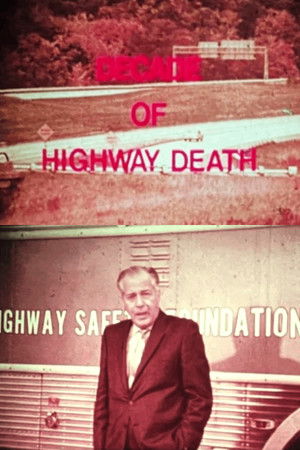
Decade of Death(1971)
Status: Released
Date: 1971-08-01
0%
0 Votes
Time: 0h 24m
Overview:
This highway scare film produced by the Highway Safety Foundation in 1971, "Decade of Death", is a retrospective of the organization's 10 years of gory, shocking social guidance films which aimed to promote traffic safety and driver responsibility through the display of bloody and horrific footage of traffic crashes.The Highway Safety Foundation made driver scare films such as "Signal 30," "Mechanized Death," and "Highways of Agony" that intended to encourage drivers to drive responsibly and with consideration of the risks and consequences. It was the organization's belief that crash footage, while horrific, was the best way to convey the importance of driving safely.
Languages: English.
Countries:
United States of America
ProductionCompanies:
Highway Safety Foundation (HSF)
EDCOM Productions
Movie: Decade of Death
Video Trailer Decade of Death
All 1 videos

“DECADE OF DEATH” 1970s DRIVER’S EDUCATION FILM PREVENTABLE AUTO ACCIDENTS SCARE FILM XD47834 - Trailer
Similar Movies


82%
Dad... Can I Borrow the Car?(en)
1970-09-30
A live-action short, using many avant-garde film techniques, that looks at American car culture in the late 1960s. The main section deals with the many trials and obstacles a teenager must face on the path to being able to drive. Surviving the driver's education class is only the first step, as the teenager must then pass his driving test, and then finally get permission to borrow the family car.

55%
The Dangerous Stranger(en)
1950-02-24
In this film, a police officer tells children about the dangers of accepting rides or presents from strangers, and relates the unfortunate stories of several children who did and were never seen again.


76%
Manufacturing Ignorance(fr)
2020-11-23
Tobacco, climate change, pesticides,... Never has scientific knowledge seemed so vast, detailed and shared. And yet it appears to be increasingly challenged. It is no longer surprising to see private corporations put strategies in place to confuse the public debate and paralyze political decision-making. Overwhelmed by excess of information, how can we, as citizens, sort out fact from fiction? One by one, this film dismantles the workings of this clever manoeuvre that aims to turn science against itself. Thanks to declassified archives, graphic animations and testimonies from experts, lobbyists and politicians, this investigation plunges us into the science of doubt. Along with a team of experts (philosophers, economists, cognitive scientists, political men, or even agnotologists), we explore concrete examples of doubt making and try to understand the whole process and the issues behind it.

73%
Dear Brother(de)
2019-11-28
Markus Becker is hit by a car, dragged along, his head bashed on a curb and he falls into a coma. The doctors don’t believe that the 45-year-old will survive the next five to ten days. His father makes preparations for the funeral. Markus’ brother Michael refuses to accept this fate and begins an extraordinary battle. In his brother’s apartment he seals Markus’ clothes to preserve the smell. He records the neighbors’ voices. Every day, Michael exposes his brother to things that are familiar and films everything that is part of Markus’ life with a DV camera. He wants to keep him in his world and to bring this world to his bedside. He documents every step of Markus’ development, risking his own life in the process, wishing that his brother will one day regain the ability to lead a normal life. This full-length documentary accompanies Michael Becker for 10 years on his unwavering and creative mission to bring his brother Markus back to life.


60%
Dead Is Dead(en)
1974-07-26
An educational video exploring drug addiction, including footage of real-life addicts going through rehab therapy.

20%
Doorways To Danger(en)
1990-01-01
Dabbling in the occult is widespread and often thought of as harmless entertainment. But this video shows why it is dangerous to get involved with spiritism, fortune telling, witchcraft, magic, and Satanism. The program introduces the real life stories of those who have been involved in these activities and shows the way out based upon a Biblical perspective.

0%
Suicide Trail(en)
1960-01-01
Shot with a big cowboy nod to the Western genre, this road safety film shows the danger of speeding on an unknown country road at night.

0%
It Might Be You(en)
1946-07-25
A doctor talks about the number of injuries and deaths resulting from automobile accidents.

0%
Behind the Life of Chris Gaines(en)
1999-11-24
To promote the release of his album Garth Brooks in... The Life of Chris Gaines, Garth Brooks appeared as Chris Gaines in a television "mockumentary," a version of VH1's seminal cable classic Behind the Music, featuring a totally made-up tale that just may be the greatest rock n' roll documentary ever made. This piece of art has everything that makes the story of being a rockstar fucking cool. It has childhood trauma, record label trauma, death, disfigurement, a plane crash, a car crash, sex addiction, redemption, a house fire, random unexplained commentary from Billy Joel, and more sex addiction.


39%
Faces of Death II(en)
1981-05-01
Brief scenes of death related material: mortuaries, accidents and police work are filmed by TV crews and home video cameras. Some of it is most likely fake, some not as much.

80%
Le Mans 55, une tragédie française(fr)
2024-04-27
The Le Mans race in 1955 made history through tragedy when more than 80 spectators were killed. Uncover the story of the crash that took the lives of so many and, to this day, looms over the world of motorsports.

0%
Collision Rescue(en)
1974-01-01
When two parties get in a head-on collision, it's up to emergency services to free them from the wreckage. What follows is a demonstration of what their job and duties entail.


50%
LSD-25(en)
1967-01-01
The dangers of LSD are driven home to teenagers in this classroom training film, which is "narrated" by an LSD tab. The "tab" tells kids that he is "a depth charge in the mind!" and various teenagers are shwn babbling about their LSD experiences. "Experts" are presented who warn that LSD makes kids "paint themselves green" and has various other horrible side effects, the most serious of which is that it gives users a police record, and that there is "no known way of getting your fingerprints out of a police file once they're in there."


53%
Hell's Highway: The True Story of Highway Safety Films(en)
2003-06-27
This film covers the early history of post World War II educational films, especially those involving traffic safety by the Highway Safety Foundation under direction of Richard Wayman. In the name of promoting safe driving in teenagers, these films became notorious for their gory depiction of accidents to shock their audiences to make their point. The film also covers the role of safety films of this era, their effect on North American teenage culture, the struggle between idealism and lurid exploitation and how they reflected the larger society concerns of the time that adults projected onto their youth.