Loading Page

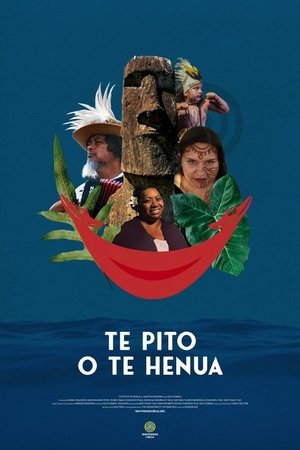
The Navel of the World(2024)
Status: Released
Date: 2024-06-14
0%
0 Votes
Time: 0h 30m
Overview:
“Te Pito o Te Henua” (The Navel of the World) tells the story of the community behind Rapa Nui’s largest and most colorful annual Indigenous celebration, the Tāpati Rapa Nui Festival. Honoring ancient rites and competitions, Rapa Nui families participate in nine days of athletic feats, cultural demonstrations and ceremonies paying respect to the land, water and other natural beings of the island. They also crown a Queen to represent her people for a year throughout Polynesia and on the world stage. The film traces the journey of 19-year-old candidate Vaitiare and her family as they join work to earn her the crown and represent this small but well-known island as its people fight for increased autonomy and recognition on the world stage. Through intimate character portraits, behind-the-curtain moments and heartfelt musical performances, “Te Pito o Te Henua” reveals the true meaning of Tāpati and the deep connections the Rapa Nui share with their lands and waters.
Languages:
Countries:
Chile
Budget: $100,000.00
Movie: The Navel of the World
Video Trailer The Navel of the World
All 1 videos

Te Pito o Te Henua - Trailer - Trailer
Similar Movies

0%
Aitamaako'tamisskapi Natosi: Before the Sun(en)
2023-02-25
An intimate and thrilling portrait of a young Siksika woman and the deep bonds between her father and family in the golden plains of Blackfoot Territory as she prepares for one of the most dangerous horse races in the world… bareback.

80%
Piripkura(pt)
2018-03-01
The last two surviving members of the Piripkura people, a nomadic tribe in the Mato Grosso region of Brazil, struggle to maintain their indigenous way of life amidst the region's massive deforestation. Living deep in the rainforest, Pakyî and Tamandua live off the land relying on a machete, an ax, and a torch lit in 1998.

80%
Keep Talking(en)
2017-03-16
Three Alaska Native women work to save their endangered language, Kodiak Alutiiq, and ensure the future of their culture while confronting their personal demons. With just 41 fluent Native speakers remaining, mostly Elders, some estimate their language could die out within ten years. The small community travels to a remote Island, where a language immersion experiment unfolds with the remaining fluent Elders. Young camper Sadie, an at-risk 13 year old learner and budding Alutiiq dancer, is inspired and gains strength through her work with the teachers. Yet PTSD and politics loom large as the elders, teachers, and students try to continue the difficult task of language revitalization over the next five years.

0%
Cinéphiles #01 Gabriel Matzneff(fr)
2017-01-31
The French controversial author Gabriel Matzneff talks about film/cinema and his taste and flavors, without editing or interruptions. Among a lot of favorable experiences Matzneff mention "The Boy with Green Hair" (1948) by Joseph Losey, "Salò, or the 120 Days of Sodom" (1975) by Pier Paolo Pasolini, and directors/auteurs like Marcel Carné and Orson Welles.

0%
Namatjira Project(en)
2017-09-05
From the remote Australian desert to the opulence of Buckingham Palace - Namatjira Project is the iconic story of the Namatjira family, tracing their quest for justice.

58%
ThuleTuvalu(en)
2014-11-13
Thule, Greenland, also called Qaanaaqis, one of the northernmost towns in the world. As the climate warms and the ice caps begin to melt, the gentle balance of life for the people of this community is in jeopardy. On the other side of the globe, the melting ice caps are raising sea levels around the Polynesian island nation of Tuvalu, threatening to wipe the island right off the map. Though a world apart, these two communities are intricately connected as environmental balance begins to tip and traditional ways of life are threatened. 'ThuleTuvalu' is a stunning documentary addressing the high price of a hundred years of development and how two very different communities are now bound together in facing an uncertain future.

50%
maɬni—towards the ocean, towards the shore(en)
2020-01-26
An experimental look at the origin of the death myth of the Chinookan people in the Pacific Northwest, following two people as they navigate their own relationships to the spirit world and a place in between life and death.

66%
The 50 Year Argument(en)
2014-06-07
Follows the waves of literary, political, and cultural history as charted by the The New York Review of Books, America’s leading journal of ideas for over 50 years. Provocative, idiosyncratic and incendiary, the film weaves rarely seen archival material, contributor interviews, excerpts from writings by such icons as James Baldwin, Gore Vidal, and Joan Didion along with original verité footage filmed in the Review’s West Village offices.

100%
Invasion(en)
2019-11-01
In this era of "reconciliation", Indigenous land is still being taken at gunpoint. INVASION is a new film about the Unist'ot'en Camp, Gidimt'en checkpoint, and the Wet'suwet'en Nation standing up to the Canadian government and corporations who continue colonial violence against indigenous people.


0%
Trick or Treaty?(en)
2014-09-04
Legendary Canadian documentarian Alanis Obomsawin digs into the tangled history of Treaty 9 — the infamous 1905 agreement wherein First Nations communities relinquished sovereignty over their traditional territories — to reveal the deceptions and distortions which the document has been subjected to by successive governments seeking to deprive Canada’s First Peoples of their lands.

0%
Amarok's Song - The Journey to Nunavut(en)
1998-01-01
In this feature-length documentary, three generations of the Caribou Inuit family come together to tell the story of their journey as Canada's last nomads. From the independent life of hunting on the Keewatin tundra to taking the reins of the new territory of Nunavut on April 1, 1999, we see it all. The film is the result of a close collaboration between Ole Gjerstad, a southern Canadian, and Martin Kreelak, an Inuk. It's Martin's family that we follow, as the story is told through his own voice, through those of the Elders, and through those of the teens and young adults who were born in the settlements and form the first generation of those growing up with satellite TV and a permanent home.

69%
The Pearl Button(es)
2015-10-15
The ocean contains the history of all humanity. The sea holds all the voices of the earth and those that come from outer space. Water receives impetus from the stars and transmits it to living creatures. Water, the longest border in Chile, also holds the secret of two mysterious buttons which were found on its ocean floor. Chile, with its 2,670 miles of coastline and the largest archipelago in the world, presents a supernatural landscape. In it are volcanoes, mountains and glaciers. In it are the voices of the Patagonian Indigenous people, the first English sailors and also those of its political prisoners. Some say that water has memory. This film shows that it also has a voice.

100%
We Will Speak(en)
2023-03-23
The Cherokee language is deeply tied to Cherokee identity; yet generations of assimilation efforts by the U.S. government and anti-Indigenous stigmas have forced the Tri-Council of Cherokee tribes to declare a State of Emergency for the language in 2019. While there are 430,000 Cherokee citizens in the three federally recognized tribes, fewer than an estimated 2,000 fluent speakers remain—the majority of whom are elderly. The covid pandemic has unfortunately hastened the course. Language activists, artists, and the youth must now lead the charge of urgent radical revitalization efforts to help save the language from the brink of extinction.

66%
Ex-Shaman(pt)
2018-02-17
Ever since their first contact with the Western world in 1969 the Paiter Suruí, an indigenous people living in the Amazon basin, have been exposed to sweeping social changes. Smartphones, gas, electricity, medicines, weapons and social media have now replaced their traditional way of life. Illness is a risk for a community increasingly unable to isolate itself from the modernization brought by white people or the power of the church. Ethnocide threatens to destroy their soul. With dogged persistence, Perpera, a former shaman, is searching for a way to restore the old vitality to his village.

0%
Cree Way(en)
1977-01-01
This short documentary examines an innovative educational program developed by John and Gerti Murdoch to teach Cree children their language via Cree folklore, photographs, artifacts, and books that were written and printed in the community. Made as part of the NFB’s groundbreaking Challenge for Change series, Cree Way shows that local control of the education curriculum has a place in Indigenous communities.

0%
Carropasajero(es)
2024-04-15
The sound of metal creaking as if something is about to break. An old pickup truck adapted to carry passengers crosses the La Guajira desert in Colombia. With the wind come voices that merge among the passengers who travel there. A Wayuu woman returns to her territory, accompanied by her family, after years of exile due to a paramilitary massacre. A cyclical journey where the time layers of the territory touch and the border between the living and the dead is diluted.

90%
All Creatures Welcome(de)
2018-04-24
All Creatures Welcome explores the world of hackers and nerds at the events of the Chaos Computer Club, Europe's largest hacker association. The film dispels common clichés and draws a utopian picture of a possible society in the digital age.