Loading Page

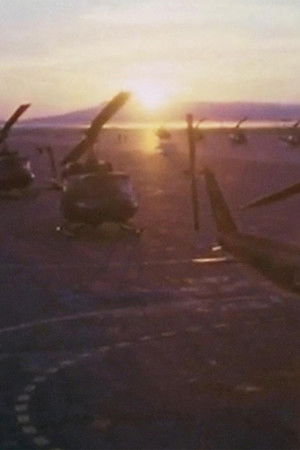
Operation Gamescan 76(1977)
Status: Released
Date: 1977-01-01
0%
0 Votes
Time: 0h 57m
Overview:
This short documentary profiles the Canadian military’s organization, logistical, and security operations at the XXI Olympiad held in 1976 in Montréal. The scale of the operation was large: 16,000 troops were mobilized to provide protection for 7,500 athletes, countless VIPs, and the general public on 138 sites located in Montreal, Bromont, and Kingston. This film offers a behind-the-scenes look at the planning and synchronization necessary to mount a successful international event of massive proportions.
Languages: English, French.
Countries:
Canada
ProductionCompanies: 

Movie: Operation Gamescan 76
Top 2 Billed Cast
HomePage
Overview
This short documentary profiles the Canadian military’s organization, logistical, and security operations at the XXI Olympiad held in 1976 in Montréal. The scale of the operation was large: 16,000 troops were mobilized to provide protection for 7,500 athletes, countless VIPs, and the general public on 138 sites located in Montreal, Bromont, and Kingston. This film offers a behind-the-scenes look at the planning and synchronization necessary to mount a successful international event of massive proportions.
Release Date
1977-01-01
Average
0
Rating:
0.0 startsTagline
Genres
Languages:
EnglishFrançaisKeywords
Similar Movies

50%
Where the World Meets(fi)
1952-11-28
A first part of a documentary on the 1952 Olympic Games in Helsinki.

50%
Memories of the Olympic Summer of 1952(fi)
1954-01-01
Documentary footage from the 1952 Olympic Games in Helsinki.

63%
Alain Mimoun(fr)
1959-12-31
A documentary about French marathon runner Alain Mimoun at the 1956 Olympic Games in Melbourne.

46%
People, Hopes, Medals(de)
1960-03-14
A documentary covering the 1960 Winter Olympic Games in Squaw Valley, California.

52%
IX Olympic Winter Games, Innsbruck 1964(de)
1964-05-30
A documentary on the 1964 Olympic Games in Innsbruck, Austria.


50%
Calgary ’88: 16 Days of Glory(en)
1989-03-22
A documentary covering the 1988 Olympic Games in Calgary.

52%
Lillehammer ’94: 16 Days of Glory(en)
1994-11-27
A documentary covering the 1994 Olympic Games in Lillehammer.


58%
Nagano ’98 Olympics: Stories of Honor and Glory(en)
1998-12-20
A documentary covering the 1998 Winter Olympic Games in Nagano.

52%
Olympic Glory(en)
1999-01-22
A documentary covering the 1998 Olympic Games in Nagano, filmed for IMAX presentations.

73%
Sydney 2000: Stories of Olympic Glory(en)
2001-08-26
A documentary covering the 2000 Olympic Games in Sydney.


52%
Bud Greenspan Presents Vancouver 2010: Stories of Olympic Glory(en)
2011-04-28
A documentary covering the 2010 Olympic Games in Vancouver.

68%
Hitler's Games, Berlin 1936(fr)
2016-08-23
Summer 1936 - The Berlin Olympics, organized by the Nazi regime on the eve of World War II, acted as a grand showcase for a Germany that was athletic, peaceful and rejuvenated. The violence and hate that until then had reigned in the streets of Berlin suddenly vanished. Adolf Hitler became the triumphant host of European countries he would soon try to invade or face in a deadly global conflict.

90%
Waterman(en)
2022-04-01
Five-time Olympic medalist and Native Hawaiian Duke Paoa Kahinu Mokoe Hulikohola Kahanamoku shattered records and brought surfing to the world while overcoming a lifetime of personal challenges. Waterman explores his journey and legacy as a legendary swimmer, trailblazer, and the undisputed father of modern-day surfing, following the sport’s first-time inclusion in this year’s Summer Olympics – a fitting tribute to his work promoting the sport around the globe.

0%
Sleeping Tigers: The Asahi Baseball Story(en)
2003-04-01
After the Japanese attack on Pearl Harbor, all persons of Japanese descent in Canada were sent to internment camps. The former Asahi members survived by playing ball. Their passion was contagious and soon other players joined in, among them RCMP officials and local townspeople. As a result, the games helped break down racial and cultural barriers.

73%
One Day in September(en)
1999-10-22
The full story of the 1972 Munich Olympics Massacre and the Israeli revenge operation 'Wrath of God.' The 1972 Munich Olympics were interrupted by Palestinian terrorists taking Israeli athletes hostage. Besides footage taken at the time, we see interviews with the surviving terrorist, Jamal Al Gashey, and various officials detailing exactly how the police, lacking an anti-terrorist squad and turning down help from the Israelis, botched the operation.

79%
Beijing 2008 Olympic Opening Ceremony(zh)
2008-08-08
The 2008 Summer Olympics opening ceremony was held at the Beijing National Stadium, also known as the Bird's Nest. It began at 8:00 p.m. China Standard Time (UTC+8) on August 8, 2008, as 8 is considered to be a lucky number in Chinese culture. Featuring more than 15,000 performers, the ceremony lasted over four hours and cost over $100 million USD to produce.
