Loading Page

Messengers(2025)
Status: Released
Date: 2025-04-09
0%
0 Votes
Time: 0h 45m
Overview:
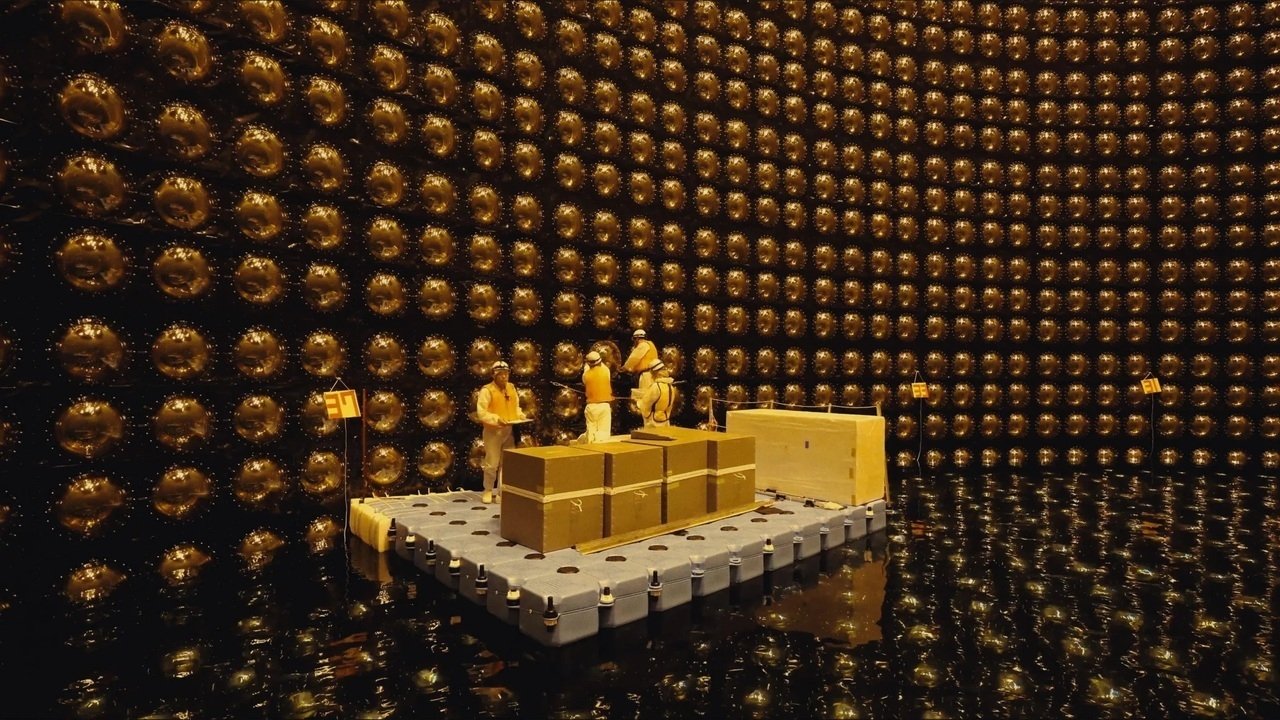
A poetic exploration of three subterranean telescopes in remote regions of Canada, Japan, and Antarctica that reveal a new way of perceiving the universe from within. Underground, we are dreaming into the earth.
Languages: English.
Countries:
Canada
ProductionCompanies:
Trapdoor (CA)
Movie: Messengers
Video Trailer Messengers
All 1 videos

Trailer | Messengers | Jeffrey Zablotny - Trailer
Similar Movies

75%
Chronos(en)
1985-05-10
Carefully picked scenes of nature and civilization are viewed at high speed using time-lapse cinematography in an effort to demonstrate the history of various regions.

62%
Tawai: A Voice from the Forest(en)
2017-09-29
Explorer Bruce Parry visits nomadic tribes in Borneo and the Amazon in hope to better understand humanity's changing relationship with the world around us.

62%
Panta Rhei(en)
1952-03-08
In 1952, Haanstra made Panta Rhei , another view of Holland through the eyes of a painter and filmmaker. Its poetic images of water, skies and clouds reflect Haanstra's own moods.

82%
Baraka(en)
1992-09-15
A paralysingly beautiful documentary with a global vision—an odyssey through landscape and time—that attempts to capture the essence of life.

74%
Sans Soleil(fr)
1983-03-02
A woman narrates the thoughts of a world traveler, meditations on time and memory expressed in words and images from places as far-flung as Japan, Guinea-Bissau, Iceland, and San Francisco.

100%
Routine(hu)
2025-03-30
An experimental half-documentary half-fiction about a young person’s routine of getting to sleep and waking up.

69%
Olympia Part One: Festival of the Nations(de)
1938-04-21
Starting with a long and lyrical overture, evoking the origins of the Olympic Games in ancient Greece, Riefenstahl covers twenty-one athletic events in the first half of this two-part love letter to the human body and spirit, culminating with the marathon, where Jesse Owens became the first track and field athlete to win four gold medals in a single Olympics.

67%
Olympia Part Two: Festival of Beauty(de)
1938-06-02
Part two of Leni Riefenstahl's monumental examination of the 1938 Olympic Games, the cameras leave the main stadium and venture into the many halls and fields deployed for such sports as fencing, polo, cycling, and the modern pentathlon, which was won by American Glenn Morris.

0%
Feedback(en)
2010-04-30
Even death is in movement, since the soul is going someplace else. A short film inspired by Jacques Languirand's philosophic work.

76%
Microcosmos(fr)
1996-09-06
A documentary of insect life in meadows and ponds, using incredible close-ups, slow motion, and time-lapse photography. It includes bees collecting nectar, ladybugs eating mites, snails mating, spiders wrapping their catch, a scarab beetle relentlessly pushing its ball of dung uphill, endless lines of caterpillars, an underwater spider creating an air bubble to live in, and a mosquito hatching.


75%
Berlin: Symphony of a Great City(de)
1927-09-23
A day in the city of Berlin, which experienced an industrial boom in the 1920s, and still provides an insight into the living and working conditions at that time. Germany had just recovered a little from the worst consequences of the First World War, the great economic crisis was still a few years away and Hitler was not yet an issue at the time.

0%
Terpsichore(en)
2024-11-14
Terpsichore is a captivating exploration of dance as an art form, illuminating the passion, discipline, and vulnerability that transform movement into poetry. The documentary follows three distinct yet interconnected artists: Cece Trapani, an Irish dancer; Aurora Maur, a burlesque performer; and the Dayton Contemporary Dance Company (DCDC), a renowned contemporary dance ensemble. Through their stories, Terpsichore reveals the universal language of dance—one that transcends genre and speaks to the depths of human emotion. Intimate interviews and behind-the-scenes rehearsal footage offer a raw, unfiltered look at the artistry behind each performance, capturing the essence of dance as both personal expression and a bridge between artist and audience. More than a showcase of technique, Terpsichore delves into the soul of movement, celebrating its power to connect, inspire, and reveal the unspoken truths of the human spirit.

79%
Koyaanisqatsi(en)
1983-04-27
Takes us to locations all around the US and shows us the heavy toll that modern technology is having on humans and the earth. The visual tone poem contains neither dialogue nor a vocalized narration: its tone is set by the juxtaposition of images and the exceptional music by Philip Glass.

56%
Glass Life(en)
2021-09-01
A dynamic configuration of images and videos overlaid with musings on human existence.

73%
Bruce Lee: A Warrior's Journey(en)
2000-10-22
Documentary on the legendary martial artist Bruce Lee, with a focus on the production of his unfinished film Game of Death. Using interviews and behind-the-scenes footage, Lee aficionado John Little paints a portrait of the world's most famous action hero, concluding with a new cut of Game of Death's action finale, reconstructed from Lee's notes and recently-recovered footage.

10%
The Endless Question(en)
2019-04-27
Since before time, humankind has pondered one central question...who are we, and why are we here? Many theories have been put forth by religious leaders, scientists, philosophers, writers, artists, and countless others. None of the theories have held the test of time because there is a central fact, a hidden truth so powerful it almost transcends comprehension. It is so shocking, few dare imagine it. To keep this secret question hidden countless people throughout the centuries have been misled, manipulated, lied to, and even slaughtered, their lives ruined to benefit the ruling class. The most powerful and successful people on earth do not want you to know these truths, because it would undermine their control over the earth's population of sheeple. Once this incredible truth sweeps the world, nothing will be the same. Don't be left behind on this one. Watch for...The Endless Question.

80%
A Gentle Glow(en)
2017-11-29
The camera floats quietly to capture the beauty that emerges from the mundane. Accompanied by Ryuichi Sakamoto's composition, Arseny Tarkovsky's poem celebrates life.

62%
The Ister(en)
2004-01-23
The Ister is a 3000km journey to the heart of Europe, from the mouth of the Danube river on the Black Sea, to its source in the German Black Forest. Hailed by Scott Foundas of Variety as "a philosophical feast—at which it is possible to gorge oneself yet leave feeling elated,” the film is based on the work of one of the most influential and controversial philosophers of the 20th century, Martin Heidegger, who in 1933 swore allegiance to the National Socialists. By joining a vast philosophical narrative with an epic voyage along Europe’s greatest waterway, The Ister invites you to unravel the extraordinary past and future of ‘the West.’

62%
After Work(en)
2023-08-04
Kuwait’s constitution says that every person has the right to a job, so in some places 20 people are employed for one person’s job. In South Korea, they work so much that a policy has been introduced to turn off computers at the end of the day so that employees can’t work any more. In the US, they give up over 500 million holiday hours each year, while Amazon’s drivers are trying to form a union. Meanwhile, robots are poised to take over most jobs and put the rest of us out of work. Work is so crucial to our identity and what we spend our waking hours on that it is barely noticed anymore. A lot has happened since a group of Puritan priests invented the concept of work ethic in the 1600s, and in the 21st century the very concept of work is in many ways disintegrating. A perfect situation for a filmmaker like Swedish mastermind Erik Gandini, who travels the world to explore what the concept of work means today – if it means anything at all.