Loading Page

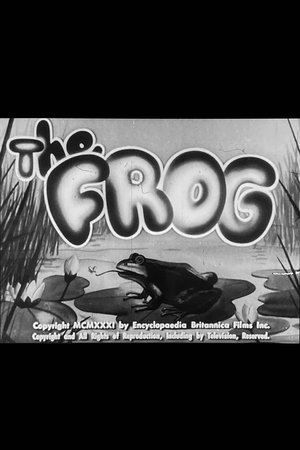
The Frog(1931)
Status: Released
Date: 1931-02-24
0%
0 Votes
Time: 0h 9m
Overview:
An educational film about frogs produced by Encyclopædia Britannica Films, an educational film production company in the 20th century owned by Encyclopædia Britannica Inc.
Languages:
Countries:
ProductionCompanies:
Encyclopædia Britannica Films
Movie: The Frog
HomePage
Overview
An educational film about frogs produced by Encyclopædia Britannica Films, an educational film production company in the 20th century owned by Encyclopædia Britannica Inc.
Release Date
1931-02-24
Average
0
Rating:
0.0 startsTagline
Genres
Languages:
Keywords
Similar Movies


57%
Our People Will Be Healed(en)
2017-09-07
Legendary documentary filmmaker Alanis Obomsawin provides a glimpse of what action-driven decolonization looks like in Norway House, one of Manitoba's largest First Nation communities.

78%
Attacking the Devil: Harold Evans and the Last Nazi War Crime(en)
2014-06-09
Before the internet. Before social media. Before breaking news. The victims of Thalidomide had to rely on something even more extraordinary to fight their corner: Investigative journalism. This is the story of how Harold Evans fought and won the battle of his and many other lives.


100%
The Truth About Reading(en)
2024-02-24
The Truth About Reading looks at the illiteracy problem in America, highlighting people who learned to read as adults, and sharing proposed solutions for working towards a future where every child learns to read proficiently.

82%
Dad... Can I Borrow the Car?(en)
1970-09-30
A live-action short, using many avant-garde film techniques, that looks at American car culture in the late 1960s. The main section deals with the many trials and obstacles a teenager must face on the path to being able to drive. Surviving the driver's education class is only the first step, as the teenager must then pass his driving test, and then finally get permission to borrow the family car.

0%
The Man Who Stole Einstein's Brain(en)
2023-05-03
On April 18, 1955, the pathologist performing the autopsy on Albert Einstein covertly steals the genius's brain, hoping to uncover the secret of brilliance. His good intentions and scientific ambitions collide with harsh realities as his world crumbles.

0%
Kindergarten(en)
1963-06-09
One day in a kindergarten classroom at Van Horne Public School in Montreal. The teacher encourages children to turn their curiosity into questions and organizes group activities and play periods.

0%
Cree Way(en)
1977-01-01
This short documentary examines an innovative educational program developed by John and Gerti Murdoch to teach Cree children their language via Cree folklore, photographs, artifacts, and books that were written and printed in the community. Made as part of the NFB’s groundbreaking Challenge for Change series, Cree Way shows that local control of the education curriculum has a place in Indigenous communities.

0%
Taking Stock(en)
2017-09-09
Using his failed attempts at creating profitable stock footage, a filmmaker reflects on the absurd, mundane and funny side of being trapped inside your own head as an out of work, self-employed freelancer.

81%
Picture a Scientist(en)
2020-11-11
A documentary that looks at systemic sexism faced by women scientists in STEM fields.

35%
Free Will(en)
2022-03-26
An in-depth investigation featuring world renowned philosophers and scientists into the most profound philosophical debate of all time: Do we have free will?

33%
It's Elementary: Talking About Gay Issues in School(en)
1996-05-21
Depicts what happens when students K-8 discuss LGBT-related topics in age-appropriate ways. Shot in six public and private schools (in San Francisco and New York City, as well as Madison, Wisconsin, and Cambridge, Massachusetts), It’s Elementary models excellent teaching about family diversity, name-calling, stereotypes, community building, and more.

60%
The Brain That Changes Itself(en)
2008-11-27
The discovery of neuroplasticity, the fact that thoughts can change the structure and function of our brains, even into old age, is one of the most important breakthroughs in our understanding of the brain in recent times. In The Brain That Changes Itself, Dr Norman Doidge explores the profound implications of the changing brain in a way that will permanently alter the way we look at human possibility and human nature. The documentary examines a blind man who sinks a basketball; a woman with half a brain who leads a normal life; learning disorders, strokes and brain traumas that are improved and cured; and chronic pain that is alleviated. The vast expanse of the brain's possibility is still unrealized.

83%
Fabulous Frogs(en)
2014-06-25
Sir David Attenborough takes us on a journey through the weird and wonderful world of frogs, shedding new light on these charismatic, colorful and frequently bizarre little animals through first-hand stories, the latest science, and cutting-edge technology. Frogs from around the world are used to demonstrate the wide variety of frog anatomy, appearance and behavior. Their amazing adaptations and survival techniques have made them the most successful of all amphibians.

75%
The Real T Rex with Chris Packham(en)
2018-01-02
A documentary examining what the Tyrannosaurus Rex was really like - both appearance and behaviour - using the recent palaeontological and zoological research.

68%
First Case, Second Case(fa)
1979-02-01
A documentary about a teacher who sends a group of pupils out of the classroom when one of them does not own up to talking behind the master's back.

82%
Galore(fr)
2020-08-28
A grandmother living in a small Kenyan village completes her final year of primary school at the old age of 94.

65%
The Most Unknown(en)
2018-03-16
An epic documentary film that sends nine scientists to extraordinary parts of the world to uncover unexpected answers to some of humanity’s biggest questions. How did life begin? What is time? What is consciousness? How much do we really know? By introducing researchers from diverse backgrounds for the first time, then dropping them into new, immersive field work they previously hadn’t tackled, the film pushes the boundaries of how science storytelling is approached. What emerges is a deeply human trip to the foundations of discovery and a powerful reminder that the unanswered questions are the most crucial ones to pose. Directed by Emmy-nominated and Peabody Award-winning filmmaker Ian Cheney and advised by world-renowned filmmaker Werner Herzog, The Most Unknown is an ambitious look at a side of science never before shown on screen.

0%
Dare to Say No!(en)
1988-09-15
Shows children various reasons why they need to resist peer pressure, refuse drugs, and refuse to follow the crowd just to fit in