Loading Page
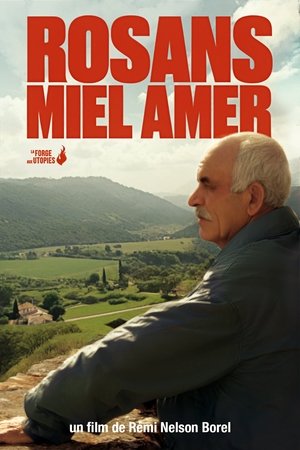
Rosans, Bitter Honey(2011)
Status: Released
Date: 2011-01-01
100%
1 Votes
Time: 1h 0m
Overview:
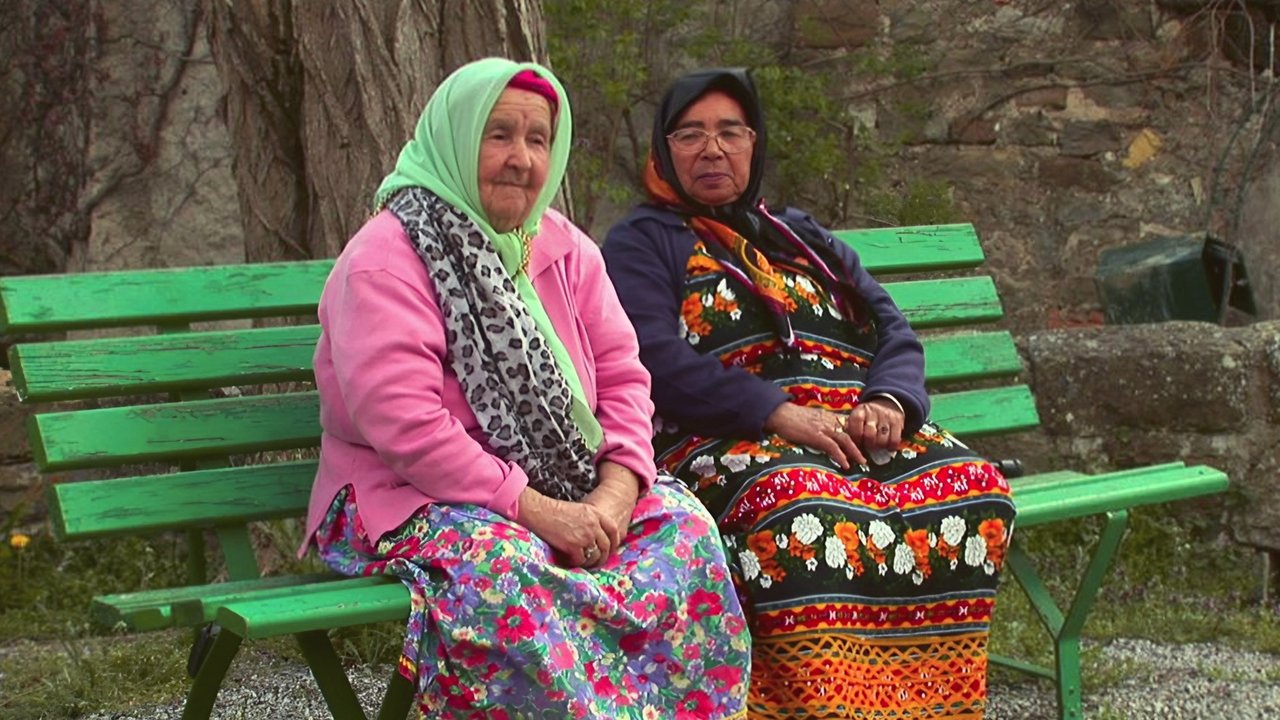
In 1963, Rosans, a village in the Hautes-Alpes region depopulated by the rural exodus, welcomed Harkis (military soldiers) forced to leave Algeria for supporting France during the Algerian War. Around thirty families settled in a camp below Rosans. Nearly half a century after their arrival, first- and second-generation Harkis and native Rosanais recount their experiences of this culture clash, often painful, sometimes happy. Language barriers, religious differences, living in barracks for 14 years, and unemployment were all obstacles to overcome in order to be accepted and then achieve mutual enrichment. Enriched with archive footage to explain the historical context of the time, the film seeks above all to express feelings and unspoken words.
Languages: French.
Countries:
France
ProductionCompanies: 
Movie: Rosans, Bitter Honey
HomePage
Overview
In 1963, Rosans, a village in the Hautes-Alpes region depopulated by the rural exodus, welcomed Harkis (military soldiers) forced to leave Algeria for supporting France during the Algerian War. Around thirty families settled in a camp below Rosans. Nearly half a century after their arrival, first- and second-generation Harkis and native Rosanais recount their experiences of this culture clash, often painful, sometimes happy. Language barriers, religious differences, living in barracks for 14 years, and unemployment were all obstacles to overcome in order to be accepted and then achieve mutual enrichment. Enriched with archive footage to explain the historical context of the time, the film seeks above all to express feelings and unspoken words.
Release Date
2011-01-01
Average
10
Rating:
5.0 startsTagline
Genres
Languages:
FrançaisKeywords
Recommendations Movies

60%
Strange Object(en)
2020-10-07
An archival investigation into the imperial image-making of the RAF ‘Z Unit’, which determined the destruction of human, animal and cultural life across Somaliland, as well as Africa and Asia.

77%
Panda! Go Panda!(ja)
1972-12-17
Cheerful Mimiko has a wonderfully strange family—a Panda for her Papa; and his son Panny, calls her Mom! When Panny follows Mimiko to school, he must pretend to be a teddy bear so Mimiko won't get into trouble. Despite his efforts to behave, Panny causes trouble in school and now the school is after Panny! Then, Panny makes a new friend, Tiny, a baby tiger who's wandered off from the circus.


62%
Sonic the Hedgehog: Freedom Fighters Unite(en)
2009-05-05
Sonic Conversion: the Freedom Fighters develop a De-Robotisizer and try it out on Bunnie. Dulcy: After Dulcy exhibits strange behavior, Sally discovers she's going through a rites of passage state of her adolescence. The Void: After Sonic is almost sucked inside the Void, he finds a huge ring which Sally believes is an ancient relic but which turns out to be a trick of Nagus. Spyhog: After Antoine saves Sally's life during a raid, Sonic can't stand his bragging and zips in to see Uncle Chuck, who finds out his bug in Robotnik's hardware is malfunctioning.

69%
Re-Elected(en)
2020-07-04
Friends battle former U.S. presidents when they come back from the dead as zombies on the Fourth of July.

54%
Bill Burr Presents: Friends Who Kill(en)
2022-06-06
In a night of killer comedy, Bill Burr hosts a showcase of his most raucous stand-up comic pals as they riff on everything from COVID to Michael Jackson.

100%
Mon amour, mon ami(en)
2017-08-31
Daniela and Fouad live in Gubbio, and they both come from the sea: she is from Bari, he is from Casablanca. Their bodies have suffered hardships and alcoholism. They met by chance and a deep and healing friendship was born, which led them to live together. Now that Fouad needs a permit to stay, marriage seems to be the easiest solution. Daniela agrees to it, but as the wedding approaches, the ambiguity of Fouad’s feelings begins to worry her. Can you fake- marry someone who really loves you?

78%
Marty Feldman: Six Degrees of Separation(en)
2008-03-31
A documentary about the legendary and influential comedian, actor and writer, who went out from the BBC to conquer Hollywood, but sadly the system quickly withdrew its support when they couldn't contain his talents. This portrait is spiked with many comments from people who knew Feldman privately or had dealt with him professionally. His early death sadly rendered him all but forgotten by the public. The compilation consists of interviews, some film clips and photos as well as various audio clips from him.

57%
Another Story of the World(es)
2017-07-20
A small town, two families joined together over time. A man who does not forget the values of honor and fraternal friendship. From the director of The Journey to the Sea, history proposes the coalition of two worlds or, perhaps, the same but with different ways of understanding it.


67%
Mektoub, My Love: Canto Uno(fr)
2018-03-21
Amin, an aspiring screenwriter living in Paris, returns home for the summer, in Sète, South of France. It is a time of reconnecting with his family and his childhood friends. Together with his cousin Tony and his best friend Ophélie, he spends his time between the Tunisian restaurant run by his parents, the local bars and the beaches frequented by girls on holiday.

72%
Frozen Stiff(sr)
2002-03-15
The basic plot revolves around drug dealer Limeni and two men, Lemi and Kiza, who are trying to transport their dead grandfather for burial, until their car breaks down and they end up struggling to get him home onboard a train. This is when these two plots intersect and all hell breaks loose.

62%
My Christmas Love(en)
2016-12-17
A hopeless romantic who can’t ever seem to give a guy a real chance begins receiving each of the "12 Days of Christmas” as gifts anonymously at her door. As she tries to figure out who is sending the gifts, she begins to believe that the mystery suitor could finally live up to her expectations.


68%
Ewa Wants to Sleep(pl)
1958-03-17
Ewa Bonecka, a young student about to start school in a new place finds herself without a place to sleep after she is declined a room in a women-only hotel. Helped by a pleasant policeman, Piotr, she tries to find a lodging in the strange town full of thieves and petty troublemakers.

74%
WWE WrestleMania XXVII(en)
2011-04-02
The Rock returns home to be The World’s Most Electrifying Host of WrestleMania XXVII from Atlanta, GA. The Great One will lay the SmackDown on all of the pomp and festivities that makes WrestleMania the world’s greatest, annual pop culture extravaganza. John Cena looks to dethrone the self-proclaimed “most must see WWE champion in history” the Miz. Undertaker’s legendary 18-0 WrestleMania winning streak has never been in greater peril when Triple H challenges the Phenom. Alberto Del Rio looks to fulfill his destiny and take Edge’s World Heavyweight Championship. A bitter and personal rivalry comes to a head when Randy Orton battles CM Punk.. All this and more when the Superstars of WWE invade the Georgia Dome for WrestleMania XXVII.

61%
Dead Mountaineer's Hotel(et)
1979-08-27
The police get a call-out to a lonely hotel in the Alps. When an officer gets to the hotel everything seems to be alright. Suddenly, an avalanche cuts them off from the rest of the world and strange things start happening.
Similar Movies

70%
De Gaulle, the Last King of France(fr)
2017-03-27
Charles de Gaulle, the first president (1958-1969) of the Vth Republic, France’s current system of government, left his mark on the country . He was statesman of action and has been compared to a monarch. This film depicts the general’s personality through the great events of his presidential term, at a time when the world was undergoing considerable changes.

100%
Sawt Echaâb(ar)
1961-01-01
“La Voix du Peuple,” composed of archival photographs by René Vauthier and others, exposes the root causes of the armed conflict of the Algerian resistance. Participating in a war of real images against French colonial propaganda, these images aimed to show the images that the occupier had censored or distorted, by showing the extortions of the French occupation army: torture, arrests and arbitrary executions, napalm bombings, roundabout fires, erasing entire villages from the map, etc. This is what the French media described as a “pacification campaign”.

45%
Forms of Forgetting(tr)
2023-06-17
Nesrin and Erdem talk about their relationship, which they don’t remember in exactly the same way. Çevik’s visually stunning essay uses their conversations to forge a pensive treatise on what it means to forget, where word and image play an equal role.

0%
Ballymanus(en)
2023-09-13
10 May 1943. Something is spotted drifting ashore off the coast of Northwest Donegal, Ireland. Something that would change the lives of the local people forever.

44%
Mind Games - The Experiment(en)
2023-01-19
Can exercise sharpen the brightest minds? In this ground-breaking experiment, four world-class gamers, competing in eSports, Chess, Mahjong and Memory Games, put this to the test.


80%
The Lives of Albert Camus(fr)
2020-01-22
Albert Camus died at 46 years old on January 4, 1960, two years after his Nobel Prize in literature. Author of “L'Etranger”, one of the most widely read novels in the world, philosopher of the absurd and of revolt, resistant, journalist, playwright, Albert Camus had an extraordinary destiny. Child of the poor districts of Algiers, tuberculosis patient, orphan of father, son of an illiterate and deaf mother, he tore himself away from his condition thanks to his teacher. French from Algeria, he never ceased to fight for equality with the Arabs and the Kabyle, while fearing the Independence of the FLN. Founded on restored and colorized archives, and first-hand accounts, this documentary attempts to paint the portrait of Camus as he was.

70%
Jamila, the Algerian(ar)
1958-12-09
Djamila, a young Algerian woman living with her brother Hadi and her uncle Mustafa in the Casbah district of Algiers under the French occupation of Algeria, sees the full extent of injustice, tyranny and cruelty on his compatriots by French soldiers. Jamila's nationalist spirit will be strengthened when French forces invade her university to arrest her classmate Amina who commits suicide by ingesting poison. Shortly after the prominent Algerian guerrilla leader Youssef takes refuge with her, she realizes that her uncle Mustafa is part of this network of anti-colonial rebel fighters. Her uncle linked her to the National Liberation Front (FLN). A series of events illustrate Jamila's participation in resistance operations against the occupier before she was finally captured and tortured. Finally, despite the efforts of her French lawyer, Jamila is sentenced to death...

100%
An Unhealed Wound - The Harkis in the Algerian War(fr)
2010-09-20
It's the unforgivable story of the two hundred thousands harkis, the Arabs who fought alongside the French in the bitter Algerian war, from 1954 to 1962. Why did they make that choice? Why were they slaughtered after Algeria's independence? Why were they abandonned by the French government? Some fifty to sixty thousands were saved and transferred in France, often at pitiful conditions. This is for the first time, the story of this tragedy, told in the brilliant style of the authors of "Apocalypse".

0%
History and Memory: For Akiko and Takashige(en)
1991-04-10
This film is a poetic composition of recorded history and non-recorded memory. Filmmaker Rea Tajiri’s family was among the 120,000 Japanese and Japanese Americans who were imprisoned in internment camps after the attack on Pearl Harbor. And like so many who were in the camps, Tajiri’s family wrapped their memories of that experience in a shroud of silence and forgetting. This film raises questions about collective history – questions that prompt Tajiri to daringly re-imagine and re-create what has been stolen and what has been lost.

85%
Algeria in Flames(ar)
1958-01-02
These are the first images shot in the ALN maquis, camera in hand, at the end of 1956 and in 1957. These war images taken in the Aurès-Nementchas are intended to be the basis of a dialogue between French and Algerians for peace in Algeria, by demonstrating the existence of an armed organization close to the people. Three versions of Algeria in Flames are produced: French, German and Arabic. From the end of the editing, the film circulates without any cuts throughout the world, except in France where the first screening takes place in the occupied Sorbonne in 1968. Certain images of the film have circulated and are found in films, in particular Algerian films. Because of the excitement caused by this film, he was forced to go into hiding for 25 months. After the declaration of independence, he founded the first Algerian Audiovisual Center.


0%
Tricky Memory(en)
2016-01-01
The lastest neuroscience discoveries show surprising results: false memories, distortion, modification, déjà vus. Our memory is affected in many ways, and deceives us every day. The very fact of recalling souvenirs modifies them. The everyday consequences are manyfold. To what extent can we rely on our souvenirs? How much credit can we give them during trials? Even more shocking, scientists have proved to be able to manipulate our memory: creating artificial souvenirs, deleting, emphasizing or restoring them on demand.

64%
Mariner of the Mountains(fr)
2023-09-28
Filmmaker Karim Aïnouz decides to take a boat, cross the Mediterranean, and embark on his first journey to Algeria. Accompanied by the memory of his mother, Iracema, and his camera, Aïnouz gives a detailed account of the journey to his father’s homeland, interweaving present, past, and future.

100%
Abd El-Kader(fr)
2014-01-14
Illustrated with archival photographs, animations and live action, this film explores the history and historical and spiritual heritage of Emir Abd El-Kader. Algerian leader of the 19th century, was admired by Abraham Lincoln and celebrated to this day by the Red Cross as a great humanitarian. Emir Abd el-Kader, the man who challenged the French armies from 1832 to 1847 before creating the bases of a real Algerian state, is today considered by independent Algeria as one of the most outstanding figures. of its history. The nobility of his attitude after his capture and the very effective protection he brought to the Christians of Damascus at the end of his life also earned him great prestige among his former adversaries. A documentary told in dialectal Arabic by the voice of Amazigh Kateb.

60%
Outside(de)
2018-02-18
The film explores the turbulent lives of homeless persons in Cologne, Germany. Through their personal belongings the homeless share with the viewer their memories and emotions, and provide insight into the secrets of survival on the street.

64%
Fadhma N'Soumer(ar)
2014-05-01
This film, is about the courage and the determination of a young woman in djurdjur"as mountain in Algeria, fighting for her ancestor land during the earlier years of french occupation.

0%
All this Roughness(es)
2020-09-02
An unnamed passer-by is forced to trace a circular route inside an abandoned tram station, facing loss and time. The broken walls act as a channel, transmitting fragmentary, blurred and analogical memories.


100%
Frantz Fanon, trajectoire d'un révolté(fr)
2021-11-07
Frantz Fanon alone embodies all the issues of French colonial history. Martinican resistance fighter, he enlisted, like millions of colonial soldiers, in the Free Army out of loyalty to France and the idea of freedom that it embodies for him. A writer, he participated in the bubbling life of Saint-Germain with Césaire, Senghor and Sartre, debating tirelessly on the destiny of colonized peoples. As a doctor, he revolutionized the practice of psychiatry, seeking in the relations of domination of colonial societies the foundations of the pathologies of his patients in Blida. Activist, he brings together through his action and his history of him, the anger of peoples crushed by centuries of colonial oppression. But beyond this exceptional journey which makes sensitive the permanence of French colonialism in the Lesser Antilles at the gates of the Algerian desert, he leaves an incomparable body of work which has made him today one of the most studied French authors across the Atlantic.