Loading Page
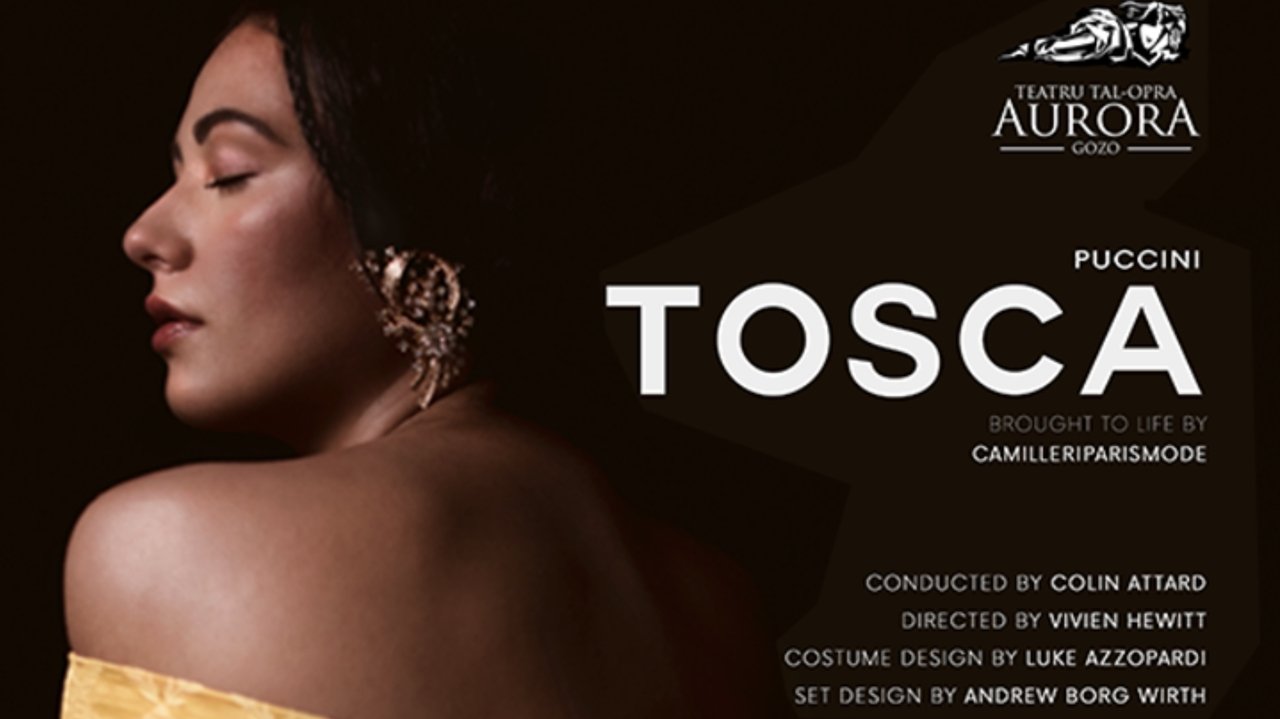
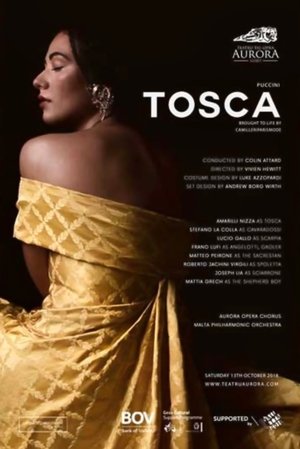
Tosca - Teatru tal-Opra Aurora(2018)
Status: Released
Date: 2018-10-13
0%
0 Votes
Time: 2h 22m
Overview:
Tosca returns to the Teatru tal-Opra Aurora in a completely new production, under the direction of the renowned Vivien Hewitt, following the recent successes of 2011 (Aurora's own production) and 2014 (a Gaulitanus chorus production). Attracting the greatest names in the opera world since its first performance in Rome in 1900, Tosca 2011 brought the Aurora its largest ever international cast, featuring soprano Michele Crider, tenor Neil Schicoff, and baritone Juan Pons. This time, the Aurora has made a point of enhancing the star-quality element in the cast beyond just the three leading roles. It is with pleasure, and a good dose of enthusiasm, that we announce our stellar cast, composed of Amarilli Nizza (Tosca), Stefano La Colla (Cavaradossi), Marco Vratogna (Scarpia), Frano Lufi (Angelotti), Matteo Peirone (Sacristan), Cliff Zammit Stevens (Spoletta), Joseph Lia (Sciarrone), and our own Mattia Grech (Shepherd Boy).
Languages: Italian.
Countries:
Malta,
Italy
Movie: Tosca - Teatru tal-Opra Aurora
Top 8 Billed Cast
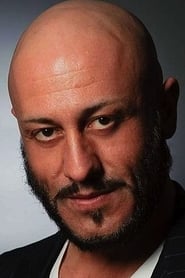
Marco Vratogna
Baron Scarpia
Video Trailer Tosca - Teatru tal-Opra Aurora
All 1 videos

Teatru tal-opra Aurora (Malta 2018) - Tosca - Trailer
Similar Movies

56%
Blackbird(en)
2014-02-16
Seventeen-year-old Randy tries very hard to be a good person. Since his father left, Randy takes care of his emotionally disturbed mother, and he's the kind of friend all of his classmates can depend on. As strong as he seems on the outside, Randy is hiding a secret inner struggle and denial of his true self. It's not until he opens himself up to love that he discovers that becoming a man means accepting who you really are.

90%
Royal Opera House: Madama Butterfly(it)
2017-03-30
Cio-Cio-San, the young Japanese bride of dashing American officer Lieutenant Pinkerton, finds her romantic idyll shattered when he deserts her shortly after their marriage. She lives in hope that one day he will return. Three years later, Cio-Cio-San and her little son see Pinkerton’s ship in the harbour. She excitedly expects his visit – but Pinkerton and his American wife Kate have come only to take the boy away, to raise him in America. Cio-Cio-San bids her son farewell and then takes her own life.

0%
The ROH Live: Nabucco(en)
2016-06-09
Nabucco, King of Babylon, takes Jerusalem in his war with the Israelites – but his daughter Fenena loves the Israelite Ismaele. She releases their prisoners, leading her vengeful half-sister Abigaille to plot to take power. Nabucco declares himself a god and is struck by a bolt of lightning. Abigaille tricks the now feeble king into signing a death warrant for the Israelites, including Fenena and Ismaele. Nabucco prays to the God of Israel for forgiveness; his sanity is restored and he saves the prisoners from death. He converts himself and his people, while Abigaille commits suicide.

57%
Oh, for a Man!(en)
1930-11-28
Disenchanted opera star Carlotta Manson falls for ruffian cat burglar Barney McGann and gives up her career to marry him. But Barney grows disenchanted himself at being known as the husband of a diva and itches to get back to his life of crime and manliness.

70%
Station(tr)
1977-01-02
The film focuses on the relationship between Gırgır Ali and a singer he has kidnapped. Gırgır Ali is a man who has been involved in many petty crimes throughout his life. Since his release from prison, he has been trying to live without committing crimes. One day, his old friend Palandöken asks Ali to kidnap the famous singer Yasemin. At first, Ali is reluctant to do so, but he decides to kidnap her himself to prevent others from doing so. The two spend some time together in an isolated mansion. Although Yasemin initially hates Ali, she will eventually be influenced by his lifestyle.

60%
FOLLOWMi World Tour Live(cn)
2019-12-20
In July 2019, Sammi Cheng launched the concert #FOLLOWMi, her first live tour in three years and tenth ever at the Hong Kong Coliseum. The diva finished 13 shows in less than a month. Apart from her classic hits and concert regulars, Sammi performed her chart-topping concert theme song "We Grew This Way" for the first time and sang duets with various artists, including "A Tacit Agreement" with Louis Koo, Power of Love and "The Last One" with Tie Shu Lan, Creo en Mi with Jackson Wang, and "Love Comes To Those Who Believe It" with rapper SHIMICA.

29%
Priceless Beauty(en)
1988-04-28
A rock-star who stopped singing after the death of his brother finds a female genie in a vase. She tries to help him live again.

56%
Beyoğlu Güzeli(tr)
1971-03-01


55%
Conspiracy(en)
1939-08-01
American Steve Kendall, a freighter's radio officer, discovers seaman Carlson sending an unauthorized message ashore as the ship approaches his war-poised homeland. Carlson is shot in cold blood when he jumps ship and Kendall, implicated in the espionage, swims ashore to avoid arrest. A woman he meets at the dock hides him in her apartment, where he learns Carlson was her brother, and they both work in a sabotage ring. Nedra is a singer at Tio's Cafe, and she approaches Tio for help when both the saboteurs and the secret police try to capture Steve.

40%
Rock N' Roll(ml)
2007-11-16
Chandramouli, an international drummer, goes to Chennai to help his friend in his new project. However, his life turns upside down when he falls in love with a playback singer.

0%
Cosi Fan Tutte(it)
1989-07-04
Officers Ferrando and Guglielmo are certain that their lovers Dorabella and Fiordiligi are faithful to them, but the cynical Don Alfonso challenges them to a bet that the women will be unfaithful given the chance. The officers thus pretend to go off to war, and return in disguise as Albanian strangers, to woo Dorabella and Fiordiligi incognito. The ladies are initially frosty, but soon warm to their new suitors, spurred on by their maid Despina. Performed at the La Scala Theatre in Milan.

0%
Mozart: Così Fan Tutte (Zurich Opera House)(it)
2000-07-05
A production of Mozart's opera recorded live at Zurich Opera House in 2000. Cecilia Bartoli leads an all-star cast including Roberto Saccà, Liliana Nikiteanu, and Agnes Baltsa. The conductor is Nikolaus Harnoncourt. Filmed live at the Zurich Opera House in February 2000 on a set which visualises the subtitle "The School for Lovers", the plot revolves around two army officers arguing about the fidelity of their brides, then setting out to test their chastity. Despite the often playful humour, this is not only psychologically telling music-making, but reveals Mozart exploring the structure of opera, discarding convention to mix large ensemble sections with arias for as many different combinations of singers as possible. With Liliana Nikiteanu attractively contrasted with Bartoli, and thoroughly convincing performances by Roberto Sacca (Ferrando) and Oliver Widmer (Guilelmo), this Così has a freshness and flow which, coupled with the timeless romantic themes, feels very contemporary.

0%
La Cenerentola(en)
1988-09-22
Gioacchino Rossini's sparkling version of the Cinderella story comes live from the Salzburg Festival with Ann Murray and Francisco Araiza as Cinderella and the Prince. Director Michael Hampe envisions La Cenerentola less as a fairy tale and more as a gently satirical comment on the nature of society and the relationship between people. Conductor Riccardo Chailly's masterly display of the Rossini style is visually matched by the opulent and elegant set designs by Mauro Pagano. 162 minutes.

56%
My Valentine(en)
2020-02-07
A pop singer's artistic identity is stolen by her ex-boyfriend/manager and shamelessly pasted onto his new girlfriend/protégé. Locked together late one night in a concert venue, the three reconcile emotional abuses of the past...until things turn violent.

70%
Romeo et Juliette - Liceu(es)
2018-02-27


0%
Tamerlano(en)
2002-04-02
Handel's 1724 opera Tamerlano followed the success of his previous year's Giulio Cesare with another colourful historical costume drama. This time the setting is the court of "Timur the Tartar", who has just defeated the Turkish Sultan Bajazet at the battle of Angora. There are, naturally enough, romantic complications when both Tamerlano and his ally, the Greek Prince Andronico, fall in love with Bajazet's daughter Asteria. She, however, has plans to revenge her father's defeat. This production was directed by Jonathan Miller and staged in the intimate surroundings of the Goethe Theatre of Bad Lauchstadt as part of the 2001 Halle Handel Festival.