Loading Page

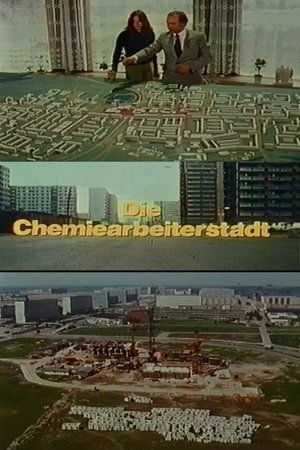
Die Chemiearbeiterstadt(1977)
Status: Released
Date: 1977-08-01
0%
0 Votes
Time: 0h 43m
Overview:
Documentary about the life in the then newly completed city Halle Neustadt in the former DDR in East Germany.
Languages:
Countries:
Movie: Die Chemiearbeiterstadt
HomePage
Overview
Documentary about the life in the then newly completed city Halle Neustadt in the former DDR in East Germany.
Release Date
1977-08-01
Average
0
Rating:
0.0 startsTagline
Genres
Languages:
Keywords
Similar Movies


0%
TRANSIT(de)
2010-09-30
In this documentary Angela Zumpe searches for traces of her brother, who moved from west to east Germany in 1968 to live in the DDR but killed himself eight months after.

70%
Grenze(de)
2004-08-03
In February 1986 they received the call of a fatherland that no longer exists: four young GDR citizens on the verge of adulthood see themselves forced, like so many others in East and West Germany, to do their one and a half years of military service. What is special: Their service area is the border system, an anti-imperialist protective wall according to their superiors, death strips and prison bars for a population incapacitated in naked reality. Now, seventeen years later, there is a reunion with the comrades and the old post. This feature film, which was the first in reunified Germany to deal with the inner workings of the GDR border troops, tells of life on the fence, the associated contradictions and some hot phases in the Cold War.

50%
Soulless City(sv)
1993-07-06

70%
15 Miles On The Erie Canal (Part 2)(en)
2006-08-06
Highlighting the canal’s quiet beauty and fascinating people, Part 2 travels from the Genesee Waterways to Spencerport, Brockport, Holley, and Lockport– taking to the trails and the water, on everything from the historic Sam Patch tour boat to Luxury cabin cruisers. Dr. William Hullfish, a SUNY Brockport associate professor, musician and the expert in Erie Canal Songs.

0%
Salt Lake City: A Downtown Story(en)
2012-03-20
In the very core of Salt Lake City, two special downtown blocks serve as a mirror. Just a handful of acres of land hold more than 150 years of the Utah story. On planners' maps, they're known as Salt Lake City Blocks 75 and 76. But to generations who have worked, lived, and played along their streets, Blocks 75 and 76 are a world unto themselves.

75%
Make No Little Plans: Daniel Burnham and the American City(en)
2010-04-26
Make No Little Plans: Daniel Burnham and the American City reveals the fascinating life and complex legacy of architect and city planner Daniel Hudson Burnham. In the midst of the late nineteenth century urban disorder, Burnham offered a powerful vision of what a civilized American city could look like, one that provided a compelling framework for Americans to make sense of the world around them. A timely, intriguing story in the American experience, Make No Little Plans explores Burnham's impact on the development of the American city as debate continues today about what urban planning means in a democratic society.


0%
Busch singt – Sechs Filme über die erste Hälfte des 20. Jahrhunderts(de)
1982-11-25
"Busch singt" consists of 6 films "About the first part of our century" and does not present Ernst Busch only as a singer but is a film with and about Busch as a chronicler and fighter for communist ideals of his time. Konrad Wolf died during the production, he directed part 3 "1935 oder Das Faß der Pandora" and part 5 "Ein Toter auf Urlaub".

0%
In Syrien auf Montage(de)
1971-10-01
The film is a reportage showing the help of workers from the GDR in the industrial reconstruction of Syria. We witness the friendly relationship between workers from both countries, who are jointly involved in the construction of the cotton spinning mill in Homs. In impressive pictures the exoticism of the environment and the mentality of the Syrian hosts is shown. At the same time it becomes clear that the workers from the GDR become 'ambassadors of the GDR' through their collegial behaviour and good work.

72%
Quest(en)
2017-07-26
For over a decade, this portrait of a North Philadelphia family and the creative sanctuary offered by their home music studio was filmed with vérité intimacy. The family's 10-year journey is an illumination of race and class in America, and it's a testament to love, healing and hope.

77%
P!nk: All I Know So Far(en)
2021-05-21
A behind-the-scenes look at P!NK as she balances family and life on the road, leading up to her first Wembley Stadium performance on 2019's "Beautiful Trauma" world tour.


68%
Karl Marx City(de)
2017-01-13
Petra Epperlein and Michael Tucker take a powerfully personal journey through the former East Germany, as Epperlein investigates her father’s 1999 suicide and the possibility that he may have worked as a spy for the dreaded Stasi security service.


70%
Karl Marx und seine Erben(de)
2018-04-28
Over the past hundred years, dramatic social upheavals have taken place in the name of Karl Marx's theories. In Western Europe, the student movement of 1968 and the Eurocommunists were inspired. And in recent times, the thinker has experienced a renaissance.

0%
East German Schlager is dead. Long live the East German Schlager!(de)
2023-12-01
Siegfried "Siggi" Trzoß, a radio moderator from East Berlin, is working tirelessly leading up to his anniversary and 900th show. The music his heart burns for is East German Schlager, a genre politically ignored at first and widely forgotten now. But Siggi keeps the dream alive to this day, making the hearts of seniors jump higher in nostalgia all over east Germany.


60%
Becoming Black(de)
2019-10-09
In the 1960s, a white couple living in East Germany tells their dark-skinned child that her skin color is merely a coincidence. As a teenager, she accidentally discovers the truth. Years before, a group of African men came to study in a village nearby. Sigrid, an East German woman, fell in love with Lucien from Togo and became pregnant. But she was already married to Armin. The child is Togolese-East German filmmaker Ines Johnson-Spain. In interviews with Armin and others from her childhood years, she tracks the astonishing strategies of denial her parents, striving for normality, developed following her birth. What sounds like fieldwork about social dislocation becomes an autobiographical essay film and a reflection on themes such as identity, social norms and family ties, viewed from a very personal perspective.