Loading Page

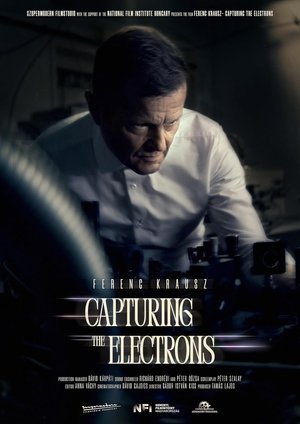
Capturing the Electrons(2024)
Status: Released
Date: 2024-12-30
100%
1 Votes
Time: 1h 1m
Overview:
Capturing the Electrons documents the life and career of Nobel Prize-winning Hungarian physicist Ferenc Krausz. His research team has generated and measured the first attosecond light pulse and used it for capturing electrons' motion inside atoms, marking the birth of attophysics. In 2023, jointly with Pierre Agostini and Anne L'Huillier, he was awarded the Nobel Prize in Physics.
Languages: Hungarian.
Countries:
Hungary
ProductionCompanies: 

Movie: Capturing the Electrons
Top 1 Billed Cast
Video Trailer Capturing the Electrons
All 1 videos
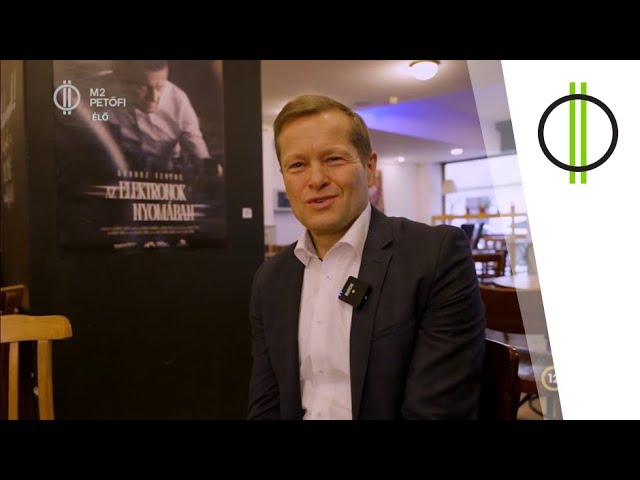
Dokumentumfilmajánló: Krausz Ferenc – Az elektronok nyomában - Behind the Scenes
Similar Movies

80%
The Lives of Albert Camus(fr)
2020-01-22
Albert Camus died at 46 years old on January 4, 1960, two years after his Nobel Prize in literature. Author of “L'Etranger”, one of the most widely read novels in the world, philosopher of the absurd and of revolt, resistant, journalist, playwright, Albert Camus had an extraordinary destiny. Child of the poor districts of Algiers, tuberculosis patient, orphan of father, son of an illiterate and deaf mother, he tore himself away from his condition thanks to his teacher. French from Algeria, he never ceased to fight for equality with the Arabs and the Kabyle, while fearing the Independence of the FLN. Founded on restored and colorized archives, and first-hand accounts, this documentary attempts to paint the portrait of Camus as he was.

0%
Elie Wiesel Goes Home(hu)
1997-02-12
A documentary chronicling the adolescent years of Elie Wiesel and the history of his sufferings. Eliezer was fifteen when Fascism brutally altered his life forever. Fifty years later, he returns to Sighetu Marmatiei, the town where he was born, to walk the painful road of remembrance - but is it possible to speak of the unspeakable? Or does Auschwitz lie beyond the capacity of any human language - the place where words and stories run out?

78%
Attacking the Devil: Harold Evans and the Last Nazi War Crime(en)
2014-06-09
Before the internet. Before social media. Before breaking news. The victims of Thalidomide had to rely on something even more extraordinary to fight their corner: Investigative journalism. This is the story of how Harold Evans fought and won the battle of his and many other lives.

80%
The Lie Detector(en)
2023-01-03
In the first decades of the 20th century, when life was being transformed by scientific innovations, researchers made a thrilling new claim: they could tell whether someone was lying by using a machine. Popularly known as the “lie detector,” the device transformed police work, seized headlines and was extolled in movies, TV and comics as an infallible crime-fighting tool. Husbands and wives tested each other’s fidelity. Corporations routinely tested employees’ honesty and government workers were tested for loyalty and “morals.” But the promise of the polygraph turned dark, and the lie detector too often became an apparatus of fear and intimidation. Written and directed by Rob Rapley and executive produced by Cameo George, The Lie Detector is a tale of good intentions, twisted morals and unintended consequences.

72%
Searching for Planet 9(fr)
2022-09-17
At the edge of our solar system supposedly lies an immense planet. Five to ten times the size of the Earth. Several international teams of scientists have been competing in a frantic race to detect it, in uncharted territories, far beyond Neptune. The recent discovery of several dwarf planets, with intriguing trajectories, have put astronomers on the trail of this mysterious planet. Why is this enigmatic planet so difficult to detect? What would a ninth planet teach us about our corner of the universe? Could it help us unlock some of the mysteries of our solar system?

62%
Facebook: Cracking the Code(en)
2017-04-11
"What's on your mind?" It's the friendly Facebook question which lets you share how you're feeling. It's also the question that unlocks the details of your life and helps turn your thoughts into profits.

0%
Judgement in Hungary(hu)
2013-04-28
Hungary was the site of serial murders on ethnic basis. Over the course of one year, the murderers killed and seriously injured Roma children and adults. The state charged 4 men with committing the crime with racial motivation. This historical trial started March, 2011, and ended August, 2013 in Budapest. The 167 days of hearings was only documented continuously by our crew. We had exclusive permission to use multiple cameras in the court-room. The film is a classical chamber-drama, taking place in a small, claustrophobic court room, in the middle of Europe. What will be the outcome of the marathon, 3 year-long trial?

0%
Podfather(en)
2009-10-12
Documentary telling the story of silicon chip inventor Robert Noyce, godfather of today's digital world. Re-living the heady days of Silicon Valley's seminal start-ups, the film tells how Noyce also founded Intel, the company responsible for more than 80 per cent of the microprocessors in personal computers.

87%
Pioneers in Skirts(en)
2022-10-15
Pioneers in Skirts is an Emmy-nominated 60-min documentary following filmmaker Ashley Maria’s quest to peel back the layers of obstacles that can limit a woman or girl's pioneering ambition.

77%
Revontulien armoilla(fi)
2019-12-04
In this documentary, scientists reveal their findings on the influence of solar storms on animal behavior and human transport infrastructure. The documentary explains why solar storms pose a threat to humanity: In extreme cases, they can damage satellites, slow down air traffic and paralyze high-voltage and telecommunications networks.

83%
The Kingdom: How Fungi Made Our World(en)
2018-03-01
You find fungi in Antarctica and in nuclear reactors. They live inside your lungs and your skin is covered with them. Fungi are the most under appreciated and unexplained organisms, yet they could cure you from smallpox and turn cardboard boxes into forests. They could even transform Mars into Eden. There are vastly more fungi species than plants and each and every one of them play a crucial role in life’s support systems. Join us on a journey into the mysterious world of Fungi to witness their beauty, unravel their mysteries and discover how this secret kingdom is essential to life on Earth, and may in fact hold the key to our future.

0%
The Man Who Stole Einstein's Brain(en)
2023-05-03
On April 18, 1955, the pathologist performing the autopsy on Albert Einstein covertly steals the genius's brain, hoping to uncover the secret of brilliance. His good intentions and scientific ambitions collide with harsh realities as his world crumbles.

0%
Ah, Amerika!(en)
1984-03-11
Documentary with animated sequences about that massive Hungarian exodus to the US which went on from the end of 19th century till the outbreak of WW1. The history of the nameless crowds presented in the film submerged under the surface of official history.

70%
The End of Quantum Reality(en)
2020-01-16
Almost one hundred years ago, the project to reduce the world to mathematical physics failed suddenly and completely: “One of the best-kept secrets of science,” physicist Nick Herbert writes, “is that physicists have lost their grip on reality.” The world, we are now told, emerges spontaneously, out of “nothing,” and constitutes a “multiverse,” where “anything that can happen will happen, and it will happen an infinite number of times.” Legendary reclusive genius Wolfgang Smith demonstrates on shockingly obvious grounds the dead end at which physics has arrived, and how we can “return, at last, to the real world.” The End of Quantum Reality introduces this extraordinary man to a contemporary audience which has, perhaps, never encountered a true philos-sophia, one as intimately at ease with the rigors of quantum physics as with the greatest schools of human wisdom.

70%
The Lost Forest(en)
2020-05-22
How would natural habitats develop without human interference? In this documentary we follow an international team of scientists and explorers on an extraordinary mission in Mozambique to reach a forest that no human has set foot in. The team aims to collect data from the forest to help our understanding of how climate change is affecting our planet. But the forest sits atop a mountain, and to reach it, the team must first climb a sheer 100m wall of rock.

0%
CARA-B(ca)
2023-04-15
A desktop documentary that focuses on the Golden Record that NASA sent into space in the late 1970s. The piece reflects on issues such as the power of scientific discourse to produce revisions of the world, the evolution of the concept of the archive and the resignification of borders in the rhetoric of space colonialism.

65%
The Most Unknown(en)
2018-03-16
An epic documentary film that sends nine scientists to extraordinary parts of the world to uncover unexpected answers to some of humanity’s biggest questions. How did life begin? What is time? What is consciousness? How much do we really know? By introducing researchers from diverse backgrounds for the first time, then dropping them into new, immersive field work they previously hadn’t tackled, the film pushes the boundaries of how science storytelling is approached. What emerges is a deeply human trip to the foundations of discovery and a powerful reminder that the unanswered questions are the most crucial ones to pose. Directed by Emmy-nominated and Peabody Award-winning filmmaker Ian Cheney and advised by world-renowned filmmaker Werner Herzog, The Most Unknown is an ambitious look at a side of science never before shown on screen.

35%
Free Will(en)
2022-03-26
An in-depth investigation featuring world renowned philosophers and scientists into the most profound philosophical debate of all time: Do we have free will?

65%
Passage of Venus(fr)
1874-12-09
Photo sequence of the rare transit of Venus over the face of the Sun, one of the first chronophotographic sequences. In 1873, P.J.C. Janssen, or Pierre Jules César Janssen, invented the Photographic Revolver, which captured a series of images in a row. The device, automatic, produced images in a row without human intervention, being used to serve as photographic evidence of the passage of Venus before the Sun, in 1874.
