Loading Page
Y aura-t-il de l’eau cet été ?(2025)
Status: Released
Date: 2025-12-10
0%
0 Votes
Overview:
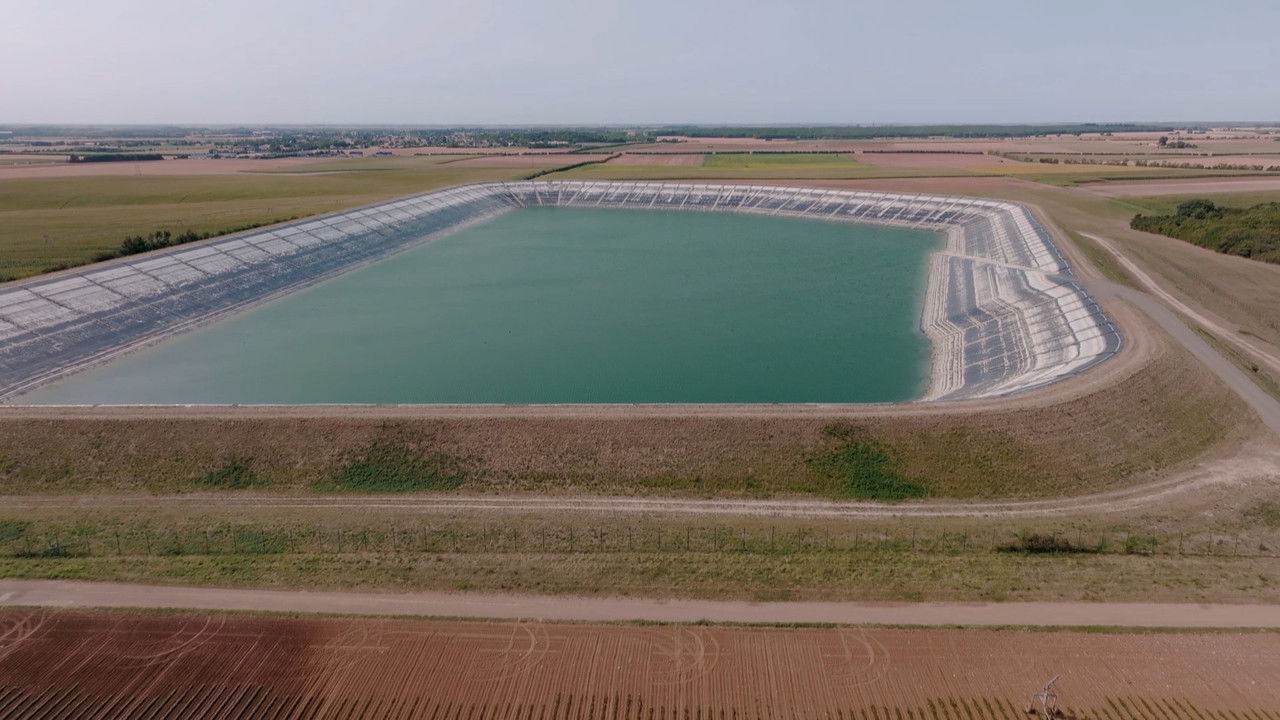
Through encounters with a hydrologist, a farmer, and citizens mobilized around the Marais Poitevin, the director helps us understand the effects—on biodiversity and the state of rivers—of substitution reservoirs, also known as megabassins. For several years, Anne-Morwenn, David, Patrick, Yann, and others have been fighting for fair water sharing and devising ways to convince as many people as possible that it is time to change the agricultural model.
Languages:
Countries:
France
ProductionCompanies: 


Région des Pays-de-la-Loire
ANGOA
Movie: Y aura-t-il de l’eau cet été ?
HomePage
Overview
Through encounters with a hydrologist, a farmer, and citizens mobilized around the Marais Poitevin, the director helps us understand the effects—on biodiversity and the state of rivers—of substitution reservoirs, also known as megabassins. For several years, Anne-Morwenn, David, Patrick, Yann, and others have been fighting for fair water sharing and devising ways to convince as many people as possible that it is time to change the agricultural model.
Release Date
2025-12-10
Average
0
Rating:
0.0 startsTagline
Genres
Languages:
Keywords
Similar Movies

0%
Let's be Together(ko)
2024-03-28

67%
The 11th Hour(en)
2007-08-17
A look at the state of the global environment including visionary and practical solutions for restoring the planet's ecosystems. Featuring ongoing dialogues of experts from all over the world, including former Soviet Prime Minister Mikhail Gorbachev, renowned scientist Stephen Hawking, former head of the CIA R. James Woolse

67%
Accidental Anarchist(en)
2017-07-23
Carne Ross was a government highflyer. A career diplomat who believed Western Democracy could save us all. But working inside the system he came to see its failures, deceits and ulterior motives. He felt at first hand the corruption of power. After the Iraq war Carne became disillusioned, quit his job and started searching for answers.

10%
Leninland(ru)
2013-11-30
At the peak of Perestroika, in 1987, in the village of Gorki, where Lenin spent his last years, after a long construction, the last and most grandiose museum of the Leader was opened. Soon after the opening, the ideology changed, and the flow of pilgrims gradually dried up. Despite this, the museum still works and the management is looking for ways to attract visitors. Faithful to the Lenin keepers of the museum as they can resist the onset of commercialization. The film tells about the modern life of this amazing museum-reserve and its employees.


72%
Anote's Ark(en)
2018-01-19
How does a nation survive being swallowed by the sea? Kiribati, on a low-lying Pacific atoll, will disappear within decades due to rising sea levels, population growth, and climate change. This exploration of how to migrate an entire nation with dignity interweaves personal stories of survival and resilience.

0%
Barbershops Uncut: East Coast(en)
2004-01-01
A raw and uncensored look at what really goes down in urban barbershops.

60%
Punk Rock Vegan Movie(en)
2023-01-25
The ongoing relationship between the worlds of punk rock and animal rights and how the music became a breeding ground for vegan activism.

0%
The Shepherds of Berneray(gd)
1981-10-28
In 1980, Jack Shae and Allen Moore, two ethnographic filmmakers from Harvard University, moved their families to the island of Berneray in the Outer Hebrides. Over the course of 18 months they documented the everyday lives and struggles of the crofters they lived among, whom were even then a vanishing breed. The film is in English and Gaelic. This carefully observed documentary by filmmakers Jack Shae and Allen Moore is a poetic ethnographic film in the style of their mentor, Robert Gardner (“Dead Birds”). It follows the rhythm of life on a wind-swept island in the Outer Hebrides through the four seasons and in the filmmakers’ observation of the day-to-day struggles of a vanishing society we see the deep-time legacy of their kind. The film is in English and Gaelic.

0%
Stand Together!(en)
1977-07-11
'Stand together!', a film on the "mass day of solidarity" on 11 July 1977, was made in 1977 for the Grunwick Strike Committee by the Newsreel Collective, of which Chris Thomas was a member, and members of the Association of Cinematograph, Television and Allied Technicians (ACTT) and the Transport and General Workers' Union.

80%
The Other Side of Everything(sr)
2017-09-11
For Serbian filmmaker Mila Turajlic, a locked door in her mother's apartment in Belgrade provides the gateway to both her remarkable family history and her country's tumultuous political inheritance.

65%
Cyrille(fr)
2020-02-26
Cyrille, a young gay farmer from Auvergne, has only one friend, a homosexual like him. One day, he goes on vacation to a beach in Charente Maritime. He cannot swim and sees the sea for the first time. It was there that he met the director Rodolphe Marconi who decided to devote this sensitive and gentle portrait to him, plunging us into an agricultural world in crisis and into a life often lonely and made up of hard work rarely pays off.


75%
Fascism in Colour(en)
2006-01-01
After the World War I, Mussolini's perspective on life is severely altered; once a willful socialist reformer, now obsessed with the idea of power, he founds the National Fascist Party in 1921 and assumes political power in 1922, becoming the Duce, dictator of Italy. His success encourages Hitler to take power in Germany in 1933, opening the dark road to World War II. (Originally released as a two-part miniseries. Includes colorized archival footage.)

58%
ThuleTuvalu(en)
2014-11-13
Thule, Greenland, also called Qaanaaqis, one of the northernmost towns in the world. As the climate warms and the ice caps begin to melt, the gentle balance of life for the people of this community is in jeopardy. On the other side of the globe, the melting ice caps are raising sea levels around the Polynesian island nation of Tuvalu, threatening to wipe the island right off the map. Though a world apart, these two communities are intricately connected as environmental balance begins to tip and traditional ways of life are threatened. 'ThuleTuvalu' is a stunning documentary addressing the high price of a hundred years of development and how two very different communities are now bound together in facing an uncertain future.

0%
Losing Blue(en)
2023-09-08
What does it mean to lose a colour? Losing Blue is a cinematic poem about losing the otherworldly blues of ancient mountain lakes, now fading due to climate change. With stunning cinematography, this short doc immerses the viewer in the magnificence of these rare lakes, pulling us in to stand on their rocky shores, witness their power and understand what their loss would mean—both for ourselves and for the Earth.

0%
Moving Ice(en)
2024-03-05
Ice has always moved. When glaciation took hold some 34 million years ago, interconnected rivers of ice combined to produce the Earth's vast ice sheets. As temperatures slowly warmed glaciers developed a unique balancing act; advancing and retreating to calibrate their annual winter accumulation against summer melt. Sometimes calving colossal icebergs into the sea. A positive feedback loop that has regulated the movement of ice for millions of years.