Loading Page

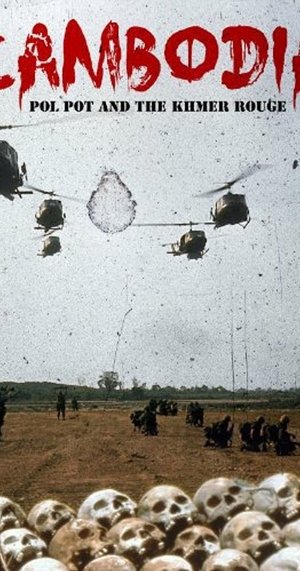
Cambodia, Pol Pot and the Khmer Rouge(2011)
Status: Released
Date: 2011-01-01
0%
0 Votes
Time: 1h 0m
Overview:
Between April, 1975 and January, 1979, Pol Pot and the Khmer Rouge were responsible for the deaths of 1.7 million people in Cambodia. A quarter of the population were wiped out in one of the most brutal and virulent genocides of the twentieth century. This new film explores the life of Pol Pot, the ever-smiling, obsessively secretive leader of the Khmer Rouge. What drove him to inflict such a radical experiment on his own people? How did the Khmer Rouge turn from a band of nationalist revolutionaries into a ruthless killing machine? And why did the West stand by and let it happen? As an international tribunal in Cambodia finally brings the surviving leaders of the Khmer Rouge to justice, it's time to re-examine the gruesome legacy of Pol Pot.
Languages: English, Khmer.
Countries:
United Kingdom
ProductionCompanies: 
Movie: Cambodia, Pol Pot and the Khmer Rouge
HomePage
Overview
Between April, 1975 and January, 1979, Pol Pot and the Khmer Rouge were responsible for the deaths of 1.7 million people in Cambodia. A quarter of the population were wiped out in one of the most brutal and virulent genocides of the twentieth century. This new film explores the life of Pol Pot, the ever-smiling, obsessively secretive leader of the Khmer Rouge. What drove him to inflict such a radical experiment on his own people? How did the Khmer Rouge turn from a band of nationalist revolutionaries into a ruthless killing machine? And why did the West stand by and let it happen? As an international tribunal in Cambodia finally brings the surviving leaders of the Khmer Rouge to justice, it's time to re-examine the gruesome legacy of Pol Pot.
Release Date
2011-01-01
Average
0
Rating:
0.0 startsTagline
Genres
Languages:
EnglishKeywords
Similar Movies

0%
Familienlos(de)
2023-01-20
The story of Thun Chay, a Cambodian who was left behind by his mother in a refugee camp during their escape from the Red Khmer and the civil war in their home country.

0%
Elie Wiesel Goes Home(hu)
1997-02-12
A documentary chronicling the adolescent years of Elie Wiesel and the history of his sufferings. Eliezer was fifteen when Fascism brutally altered his life forever. Fifty years later, he returns to Sighetu Marmatiei, the town where he was born, to walk the painful road of remembrance - but is it possible to speak of the unspeakable? Or does Auschwitz lie beyond the capacity of any human language - the place where words and stories run out?

69%
Architects of Denial(en)
2017-10-06
Though both the historical and modern-day persecution of Armenians and other Christians is relatively uncovered in the mainstream media and not on the radar of many average Americans, it is a subject that has gotten far more attention in recent years.

69%
The Pearl Button(es)
2015-10-15
The ocean contains the history of all humanity. The sea holds all the voices of the earth and those that come from outer space. Water receives impetus from the stars and transmits it to living creatures. Water, the longest border in Chile, also holds the secret of two mysterious buttons which were found on its ocean floor. Chile, with its 2,670 miles of coastline and the largest archipelago in the world, presents a supernatural landscape. In it are volcanoes, mountains and glaciers. In it are the voices of the Patagonian Indigenous people, the first English sailors and also those of its political prisoners. Some say that water has memory. This film shows that it also has a voice.

64%
Nuclear Savage: The Islands of Secret Project 4.1(en)
2011-11-16
A shocking political exposé, and an intimate ethnographic portrait of Pacific Islanders struggling for survival, dignity, and justice after decades of top-secret human radiation experiments conducted on them by the U.S. government.

58%
The Armenian Genocide(fr)
2005-03-22
More than one million Armenians perished between 1915 and 1916 in massacres or brutal deportation programs. Turkey still denies it ever happened. Laurence Jourdan examines massacres of Armenians in the decades leading up to the mass murder, and the geopolitical situation both before and after the genocide. Contemporaneous reports and documents written by Western diplomats stationed in the Ottoman Empire describe the methods used and the deportation routes. These accounts are mixed with personal stories from the living survivors and archive footage from Ottoman authorities.

80%
The Death Train(fr)
2019-11-23
In Iasi, Romania, from June 28 to July 6, 1941, nearly 15 000 Jews were murdered in the course of a horrifying pogrom. At the time, the programmed extermination of European Jews had not yet began. After the war, the successive communist governments did all they could to ensure the Iasi pogrom would be forgotten. It was not until November of 2004 that Romania recognized for the first time its direct responsibility in the pogrom. All that remains of this massacre are about a hundred photographs taken as souvenirs by german and romanian soldiers, and a few remaining survivors.

63%
How the Holocaust Began(en)
2023-01-23
Historian James Bulgin reveals the origins of the Holocaust in the German invasion of the Soviet Union, exploring the mass murder, collaboration and experimentation that led to the Final Solution.

69%
The Donut King(en)
2020-08-24
Cambodian refugee Ted Ngoy builds a multi-million dollar empire by baking America's favourite pastry: the doughnut.

58%
The Last Season(en)
2014-04-25
In search of the lucrative matsutake mushroom, two former soldiers discover the means to gradually heal their wounds of war. Roger, a self-described 'fall-down drunk' and sniper in Vietnam, and Kouy, a Cambodian refugee who fought the Khmer Rouge, bonded in the bustling tent-city known as Mushroom Camp, which pops up each autumn in the Oregon woods. Their friendship became an adoptive family; according to a Cambodian custom, if you lose your family like Kouy, you must rebuilt it anew. Now, however, this new family could be lost. Roger's health is declining and trauma flashbacks rack his mind; Kouy gently aids his family before the snow falls and the hunting season ends, signaling his time to leave.

67%
The Armenian Genocide(en)
2006-04-17
Explores the Ottoman Empire killings of more than one million Armenians during World War I. The film describes not only what happened before, during and since World War I, but also takes a direct look at the genocide denial maintained by Turkey to the present day.

63%
After Auschwitz(en)
2017-03-25
For six female Holocaust survivors, liberation from the camps marked the beginning of a lifelong struggle.


80%
Angkor Rediscovered(fr)
2013-01-01
The Khmer Empire - officially 'The Angkor Empire' was a powerful 13th century Hindu-Buddhist state in Southeast Asia. Using sophisticated technologies to see inside Khmer temples, combined with statues, casts, and documents discovered by 19th century explorers, scientists today discover how they operated, the meaning of their architecture, and how the capital become the largest city in the world.

75%
Kisangani Diary(en)
1998-02-20
Along an overgrown rail track south of the Zairean town Kisangani, a UN expedition together with a handful of journalists discover “lost” refugees. They are eighty thousand Hutus from far away Rwanda, the last survivors of three years of hunger and armed persecution that transpired throughout the vast Congo basin. The Hutu-refugees leave the forest, gathering in two gigantic camps. Hundreds of refugees die every day from diseases and malnutrition The Rwandans are promised repatriation with airplanes out of Kisangani. The film traces those refugees into the heart of the rainforest, and the hopeless attempts to help them.. But only four weeks later, the unprotected UN-camps are again attacked by machine-gun fire, deliberately massacred by factions of the rebel army (AFDL) of today’s Democratic Republic Congo. Eighty thousand men, women and children disappear once again back into the jungle. (jedensvet.cz)

0%
Africa in Pieces: The Tragedy of the Great Lakes(fr)
2000-01-01
April, 1994. Genocide in Rwanda. 800,000 dead. A catastrophe that upset the balance in the entire region. The Great Lakes region of Africa ended the year with a bloodbath. This documentary shows the intrigues, the dramatic effects, the treasons, the vengeances that prevailed over those years and whose only goal was to maintain or increase each faction’s area of influence. In just ten years, the population saw all their hopes vanish: The dream of an Africa in control of its own destiny, alimentary self-sufficiency, the end of interethnic conflicts


58%
Absent(ro)
2015-11-10
For over a hundred years, Mărculești was a vibrant Jewish agricultural and mercantile community in Bessarabia (now present-day Moldova). In July 1941, the village was the site of an unimaginable atrocity. Seventy-three years later, few speak honestly or completely about what happened. ABSENT is a cinematic portrait of the ghost village of Mărculești, its current inhabitants, and their very complex relationship to their own history. Filmed entirely on location, the film documents one of Europe's poorest, most remote, and least-visited places.

0%
A State Is Born(en)
1971-05-01
A short documentary, charting Bangladesh's quest for freedom from Pakistan.