Loading Page

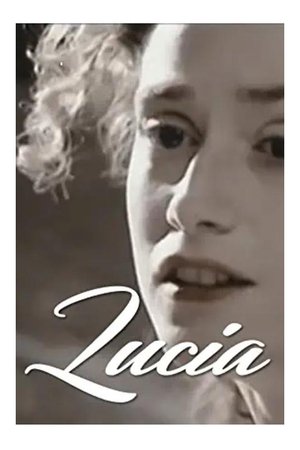
Movie: Lucia
Top 5 Billed Cast
John Osborn
Oliver Hickox 'Arturo'
HomePage
Overview
Members of an opera company performing Donizetti's "Lucia di Lammermoor" find their lives parallel those of the characters.
Release Date
1999-09-30
Average
1
Rating:
0.5 startsTagline
Genres
Languages:
Keywords
Similar Movies

0%
Puccini: Gianni Schicchi(it)
2004-08-19
Opera in one act, libretto by G. Forzano based on Dante's Divine Comedy. Third part of his opera Triptych. The plot is based on canto XXX of "Inferno" from "The Divine Comedy", which are dedicated to the rogue and deceiver Gianni Schicchi, who was punished for his sins: he impersonated a dying rich man in order to make a forged will on his behalf. Gianni Schicchi is Puccini's only comic opera, a brilliant example of a modern opera buffa based on the tradition of Verdi's Falstaff. The most expressive recitative, bubbling melody, sharp character, impetuous tempo distinguish her music. Recorded live at Glyndebourne Opera House, Sussex, UK on 11 July 2004.


71%
The Phantom of the Opera(en)
1925-06-29
The deformed Phantom who haunts the Paris Opera House causes murder and mayhem in an attempt to make the woman he loves a star.

0%
Puccini: La bohème(it)
1982-01-01
"La Bohème" is one of Giacomo Puccini's most popular and timeless works and the second-most performed opera at New York's Metropolitan Opera. This production, directed by the legendary Franco Zeffirelli, features José Carreras, Teresa Stratas, Renata Scotto and Richard Stilwell. The opera is replete with extraordinary visual beauty as it presents the tragic story of young bohemians struggling to make it in the world.

0%
Prodaná nevěsta(cs)
2024-03-04
The most popular Czech comic opera, with a libretto by Karel Sabina, marking the 200th anniversary of the birth of Bedřich Smetana, in the current production of the National Theater in Prague. For more than 150 years, The Bartered Bride has dominated Czech opera. No one else, not even Smetana himself, has managed to surpass its popularity, which over the years has become part of our national DNA, so to speak. At the time of its creation in the 1860s, however, The Bartered Bride was actually quite a bold experiment – Bedřich Smetana and librettist Karel Sabina masterfully mocked all those who imagined "national opera" as an idyllic picture of the Czech countryside, where national virtues reign supreme.

100%
Mozart: Don Giovanni(de)
2021-08-07
Premiered in 1787, “Don Giovanni” exposes the timeless theme of a man hovering between vitality and destruction. Neither morality nor the law can stop this serial lover in his quest to conquer all women as he places his own pleasure above all other principles. Today, the rich depth of Mozart’s masterpiece still astonishes audiences with its mix of comedy and seriousness, pleasure and love, entertainment and murder. At the helm of this new Salzburg Festival production, in a near-live broadcast from the Great Festival Hall, director Romeo Castellucci promises to focus on the ambiguity and inner turmoil of this serial lover whose immoral behaviour condemns him to a deadly solitude. The exceptional cast – featuring Italian baritone Davide Luciano (Don Giovanni), Russian soprano Nadezhda Pavlova (Donna Anna) and Finnish bass Mika Kares (the Commendatore) – is accompanied by the chorus and musicians of the musicAeterna ensemble, conducted by Vitaly Polonsky and Teodor Currentzis.

0%
The Ghosts of Versailles(en)
1992-01-10
What happened to Figaro and his friends after the events told in Rossini’s and Mozart’s operas? One possible sequel is told in John Corigliano’s “grand opera buffa” The Ghosts of Versailles—an uproariously funny and deeply moving work inspired by Beaumarchais’s third Figaro play, La Mère Coupable, and commissioned by the Met to celebrate its 100th anniversary. This telecast captures its world premiere run, conducted by James Levine. Håkan Hagegård is Beaumarchais, Figaro’s creator, who is deeply in love with Marie Antoinette (Teresa Stratas in a heart-searing performance) and determined to rewrite history and save her from the guillotine. A young Renée Fleming, at the beginning of her international career, sings the unfaithful Rosina. Gino Quilico is the wily Figaro who tries to take matters in his own hands, and Marilyn Horne stops the show as the exotic entertainer Samira.

0%
Tannhäuser(de)
2000-05-30
A romantic opera in three acts with music and libretto by Richard Wagner, performed by the Orchestra of the Teatro di San Carlo. The original title, Tannhauser und der Sangerkrieg auf Wartburg, reveals the real nature of the opera, born by a fusion of two traditional sagas and dedicated to the dualism of spirituality and sensuality and the possibility of redemption through love. Composed between 1843 and 1845, Tannhauser has a tormented musical theme, made up of constant variations. It debuted in Dresden in 1845 when Wagner was just over 30.

60%
1984(en)
2008-05-12
Inspired by one of the twentieth century's greatest novels, composer Lorin Maazel evokes Orwell's totalitarian nightmare, where "Big Brother" is always watching, and those guilty of "thoughtcrime" are condemned to face their worst fears in the infamous "Room 101". Filmed during world premiere performances of Robert Lepage's spectacular and psychologically gripping Royal Opera production and conducted by the composer, an international cast brings George Orwell's dark vision to shattering operatic life.

58%
The Match(en)
1999-08-13
Romantic comedy set against the story of a grudge football match between two pubs. The prize for the winner of the centenary match is the the closure of their opponent's bar. The Match was mainly filmed around Straiton in Ayrshire.


0%
Royal Opera House: The Queen of Spades(ru)
2019-01-22
The dark world of Tchaikovsky’s penultimate operatic masterpiece Queen of Spades hinges on obsession, greed, and a secret in winning at cards… In 2005, the Opéra Bastille mounted a compelling production featuring Vladimir Galouzine as the mad lover Hermann, Hasmik Papian as the doomed Lisa, and Irina Bogatcheva as the mysterious Comtesse.

80%
The Metropolitan Opera: Il Trovatore(en)
2011-04-30
Verdi’s IL TROVATORE again storms the Met stage in a star-studded, anvil-wielding cast , including Sondra Radvanovsky, Dolora Zajick and Dmitri Hvorostovsky. Marcelo Álvarez sings Manrico, the troubadour of the title. The story is well-known already: The gypsy Azucena has harbored a grudge for thirty years, but she is about to have revenge at last. Meanwhile, her son Manrico is in love with Leonora, but so is his arch-enemy, the Count Di Luna. A pot-boiler, where every tune is a hit.

33%
Rossini: La Cenerentola(it)
2009-05-09
"Irresistible" (Opera News) rising-star mezzo Elina Garanca triumphs as Rossini's Cinderella in this delightful Metropolitan Opera production. "As close to pure joy as you will find in a big-time opera house" (New Yorker), conquering audiences and critics alike, "Garanca has a gorgeous voice that she uses with exceptional skill, melting tenderness; but when the part calls for coloratura fireworks, she unleashes a flawless technique and ringing high notes of impressive power" (Associated Press). Filmed in High Definition Widescreen.

90%
Royal Opera House: Madama Butterfly(it)
2017-03-30
Cio-Cio-San, the young Japanese bride of dashing American officer Lieutenant Pinkerton, finds her romantic idyll shattered when he deserts her shortly after their marriage. She lives in hope that one day he will return. Three years later, Cio-Cio-San and her little son see Pinkerton’s ship in the harbour. She excitedly expects his visit – but Pinkerton and his American wife Kate have come only to take the boy away, to raise him in America. Cio-Cio-San bids her son farewell and then takes her own life.

0%
The ROH Live: Nabucco(en)
2016-06-09
Nabucco, King of Babylon, takes Jerusalem in his war with the Israelites – but his daughter Fenena loves the Israelite Ismaele. She releases their prisoners, leading her vengeful half-sister Abigaille to plot to take power. Nabucco declares himself a god and is struck by a bolt of lightning. Abigaille tricks the now feeble king into signing a death warrant for the Israelites, including Fenena and Ismaele. Nabucco prays to the God of Israel for forgiveness; his sanity is restored and he saves the prisoners from death. He converts himself and his people, while Abigaille commits suicide.


80%
La Traviata(it)
2006-01-01
This superb 2006 production of the Los Angeles Opera's La Traviata stars Renée Fleming, who joins the ranks of the elite handful of sopranos whose vocal and acting talents make their portrayals memorable. Her Violetta Valéry is a vulnerable figure torn between self-indulgence and love, sacrificing personal happiness to become a victim of the social mores of mid-19th-century bourgeois France. Fleming's acting captures the complexity of the character and her vocalism is flawless. She negotiates the wild coloratura of Act One with aplomb, and is stunning in the lyric passages that pervade the opera, and touching in her scenes with her lover, Alfredo, and his father. Her singing is free of the mannerisms that have sometimes crept into her work and at the same time she brings countless personal touches to the role, phrasing and verbal emphases that shed fresh light on the character.

0%
The Metropolitan Opera - Wagner: Tannhäuser(de)
1982-12-20
As renowned for its harmonious overture as for its romantic storybook characters, this three-act masterwork features some of the composer’s most groundbreaking and unforgettable music, as well as a theme the young Wagner would revisit again and again later in his career—the redemptive and transcendent power of a woman’s love. The enchanting plot harks back to medieval history: Wolfram is a lovesick troubadour who desires the virtuous Elisabeth. She, however, has eyes for another: the rebellious knight Tannhäuser, who in turn cannot get over an overwhelming sensual experience in the realm of the goddess Venus, and is banished for singing her praises at court. Only saintly Elisabeth’s death can atone for his misdeeds.

80%
La traviata in Paris(it)
2007-11-11
La traviata in Paris is a film-opera of Giuseppe Verdi's La traviata filmed live on television and worldwide, directed by Giuseppe Patroni Griffi, conceived and produced by Andrea Andermann in 2000. A Traviata that takes place live, with a television reporter who, amid the events of the day that took place in France on June 3, 2000, connects live to the scene of the action but at the time exactly a century earlier, in the Paris of June 3, 1900 (the setting of the opera is thus postdated from the original, which was conceived for the 1850s).