Loading Page

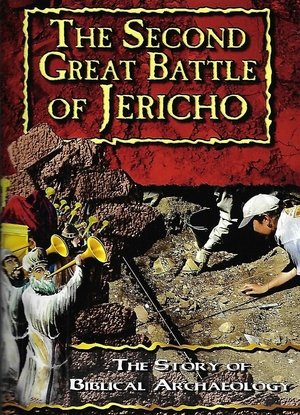
The Second Great Battle of Jericho(1997)
Status: Released
Date: 1997-01-01
0%
0 Votes
Time: 0h 53m
The Story of Biblical Archeology
Overview:
For decades, secular archaeologists have regularly announced discoveries that seem to contradict the Bible. A prime example of this was a conclusion by renowned archaeologist Kathleen Kenyon, who stated publicly that the Biblical account of the conquest of Jericho could not possibly be factual. This eye-opening video shows how Biblical Archaeology uncovered the true story about the battle for Jericho. To experience the detective-like quest of Biblical Archaeology, viewers will join an actual dig in Israel to begin a search for Joshua's Ai at Khirbet el-Maqatir with Dr. Bryant Wood and Gary Byers. Become part of the fascinating process of selecting the site, preparing for the excavation, and peeling back the layers of time to reveal the clues to ancient history.
Languages:
Countries:
Movie: The Second Great Battle of Jericho
HomePage
Overview
For decades, secular archaeologists have regularly announced discoveries that seem to contradict the Bible. A prime example of this was a conclusion by renowned archaeologist Kathleen Kenyon, who stated publicly that the Biblical account of the conquest of Jericho could not possibly be factual. This eye-opening video shows how Biblical Archaeology uncovered the true story about the battle for Jericho. To experience the detective-like quest of Biblical Archaeology, viewers will join an actual dig in Israel to begin a search for Joshua's Ai at Khirbet el-Maqatir with Dr. Bryant Wood and Gary Byers. Become part of the fascinating process of selecting the site, preparing for the excavation, and peeling back the layers of time to reveal the clues to ancient history.
Release Date
1997-01-01
Average
0
Rating:
0.0 startsTagline
The Story of Biblical Archeology
Genres
Languages:
Keywords
Similar Movies


85%
Peru - Sacrifices in the Kingdom of Chimor(fr)
2022-09-01
In northern Peru, the unprecedented archaeological discovery of the largest known mass child sacrifice in the world opens the doors to the kingdom of Chimor. This international archaeological investigation carried out like a criminal investigation reveals the mysteries of the last civilization of the Andes before the arrival of the Incas.

67%
Mysteries of the Terracotta Warriors(en)
2024-06-11
Thousands of terracotta warriors guarded the first Chinese emperor's tomb. This is their story, told through archeological evidence and reenactments.

48%
The Egtved Girl(de)
2018-02-24
In 1921, in the Danish town of Egtved, on the Jutland peninsula, was discovered one of the most important Bronze Age burial sites: the tomb of a girl who lived around 1370 BCE. Who was that girl and what was her daily life like?


60%
King Tut's Final Secrets(en)
2005-12-17
As part of a high-tech forensic probe into the demise of Egyptian Pharaoh Tutankhamun, scientists use X-rays and CT scans as they attempt to reach a conclusion about just how this famed king died. In addition, they explore the mysterious curse on explorers linked to Tut's tomb excavation.

90%
Pompeii: The New Revelations(en)
2020-02-15
Archaeologist Raksha Dave and historian Dan Snow return to Pompeii to gain special access to a variety of new excavations, including two never-before-seen discoveries.

50%
Nero's Sunken City(de)
2017-04-16
Beneath the turquoise waves of the Bay of Naples lies an extraordinary underwater archeology site, the ancient Roman city of Baiae. From the first century to the third century AD, Baiae was the exclusive playground for the rich and powerful among Rome’s elite. What made Baiae such a special place? What really went on there? And why did it disappear?

57%
In the Frozen Tomb of Mongolia(fr)
2014-08-30


75%
Secrets of Egypt's Lost Queen(en)
2007-01-01
Move over, King Tut: There's a new pharaoh on the scene. A team of top archaeologists and forensics experts revisits the story of Hatshepsut, the woman who snatched the throne dressed as a man and declared herself ruler. Despite her long and prosperous reign, her record was all but eradicated from Egyptian history in a mystery that has long puzzled scholars. But with the latest research effort captured in this program, history is about to change.

79%
The True Story of Pirates(fr)
2022-12-31
Thanks to new excavations in Mauritius and Madagascar, as well as archival and museum research in France, Spain, England and Canada, a group of international scholars paint a new portrait of the world of piracy in the Indian Ocean.

65%
Aku-Aku(en)
1960-01-22
Documentary following the 1955–1956 Norwegian Archaeological Expedition's investigations of Polynesian history and culture at Easter Island.

76%
Caligula with Mary Beard(en)
2013-07-29
What is true and what is false in the hideous stories spread about the controversial figure of the Roman emperor Gaius Julius Caesar Augustus Germanicus (12-41), nicknamed Caligula? Professor Mary Beard explains what is accurate and what is mythical in the historical accounts that portray him as an unbalanced despot. Was he a sadistic tyrant, as Roman historians have told, or perhaps the truth about him was manipulated because of political interests?

83%
Amérique, la nouvelle histoire des premiers hommes(fr)
2023-02-25
From the far north of Canada to the southern tip of Chile, through the southern United States, central Mexico and the Brazilian Mato Grosso, new concordant but still controversial archaeological discoveries have brought a new paradigm to the archaeology of American prehistory: the appearance of the first humans on the continent could date back to nearly 30,000 years before our era, that is to say, about 15,000 years earlier than the commonly accepted and taught thesis. Although there were a few mavericks in the past who disputed the scenario according to which the first ancestors of Americans arrived on foot through the Bering Strait 16,000 years ago, they were long kept out of the scientific community.

41%
Mystery of the Maya(en)
1995-01-01
Filmed in IMAX, a young Mayan boy who lives close to the ruins becomes acquainted with an archaeologist (Guerra) and asks her to tell him about his ancestors. The crew travelled to over 15 locations in Mexico and Guatemala, including Tulum and Chichén Itzá.

0%
CircleSpeak(en)
2005-01-01
Shot in Southern England over the course of six weeks by a crew of three American filmmakers, CircleSpeak offers a nuanced look at the passions and beliefs of the people immersed in the crop circle phenomenon during the season of 2001. This feature-length documentary presents interviews with serious “researchers”, self-proclaimed “hoaxers”, local farmers and villagers who are all, in one way or another, involved in this strange and compelling summer spectacle taking place year after year.

73%
Mont Saint-Michel: The Enigmatic Labyrinth(fr)
2017-12-24
Over the centuries, Mont Saint-Michel, an extraordinary island located in the delta of the Couesnon River, in Normandy, France, a place floating between the sea and the sky, has been a sanctuary, an abbey, a fortress and a prison. But how was this architectural wonder built?

80%
Last Hours of Pompeii(fr)
2020-02-21

87%
Mesopotamia: The Rise of Cities(fr)
2024-05-25
After decades of inaccessibility due to unrest and wars, teams of archaeologists from around the globe return to the greatest sites in Mesopotamia in a bid to save what can still be saved.