Loading Page


1848(1950)
Status: Released
Date: 1950-03-23
0%
0 Votes
Time: 0h 20m
Overview:
Using contemporary engravings and cartoons by artists such as Honoré Daumier, this short documentary recounts the events of the French Revolution of 1848, from the fall of the July Monarchy to the unrest that followed, narrated by Bernard Blier.
Languages: French.
Countries:
France
ProductionCompanies:
French Cinema General Cooperative
Movie: 1848
Top 1 Billed Cast
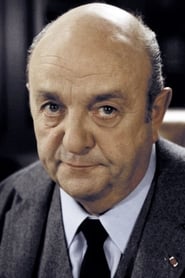
Bernard Blier
Récitant / Narrator (voice)
HomePage
Overview
Using contemporary engravings and cartoons by artists such as Honoré Daumier, this short documentary recounts the events of the French Revolution of 1848, from the fall of the July Monarchy to the unrest that followed, narrated by Bernard Blier.
Release Date
1950-03-23
Average
0
Rating:
0.0 startsTagline
Genres
Languages:
FrançaisKeywords
Similar Movies

0%
The Costume Designer(en)
1950-07-13
This short focuses on the job of the costume designer in the production of motion pictures. The costume designer must design clothing that is correct for the film historically and geographically, and must be appropriate for the mood of the individual scene. We see famed costume designer Edith Head at work on a production. The Costume Designer was part of The Industry Film Project, a twelve-part series produced by the film studios and the Academy. Each series episode was produced to inform the public on a specific facet of the motion picture industry. Preserved by the Academy Film Archive in 2012.

70%
Chicken Real(en)
1970-01-01
One of Les Blank's industrial films, which follows a Holly Farms "broiler" chicken from factory incubation to the county fair barbecue pit. A hilarious, disturbing and surreal look at a large-scale chicken farm producing 156 million chickens a year! Film includes lots of chicken songs and music recorded live in the Blue Ridge Mountains of North Carolina. Preserved by the Academy Film Archive in 2013.

63%
The Russian Revolution(en)
2017-06-15
Starting in 1881 this film shows the personal battle between Lenin's Ulyanov family and the royal Romanovs that eventually led to the Russian revolution.

60%
The Art Director(en)
1949-11-12
A film's art director is in charge of the set, from conception to construction to furnishing. This short film walks the viewer through art directors' responsibilities and the demands on their talents. They read a script carefully and design a set to capture the time and place, the social strata, and the mood. They must be scholars of the history of architecture, furnishings, and fashion. They choose the colors on a set in anticipation of the lighting and the mood. Their work also sets styles, from Art Deco in the 20's to 30s modernism. Then it's on to the next project. Preserved by the Academy Film Archive in 2012.

0%
Torn from the Flag(en)
2007-11-10
A sociopolitical historical documentary-thriller about the international decline of communism and the 1956 Hungarian Revolution.

0%
Nicaragua Part 3: In Their Time(en)
1985-10-28
Through the eyes of journalists and photographers working at Barricada, the official publication of the FSLN, the film observes the problems of putting socialism into practice, with reports on the war, the economy, the prison system and the political process leading up to the 1984 elections.

60%
No No Nooky T.V.(en)
1987-01-01
NO NO NOOKY TV posits sexuality to be a social construct in a "sex-text" of satiric graphic representation of "dirty pictures." Made on an Amiga Computer and shot in 16mm film, NO NO NOOKY TV confronts the feminist controversy around sexuality with electronic language, pixels and interface. Even the monitor is eroticized in this film/video hybrid that points fun at romance, sexuality, and love in our post-industrial age. Preserved by the Academy Film Archive in 2017.

50%
Food and Magic(en)
1943-11-18
A sideshow barker uses magic and visual aids to alert the public that proper food management is both a resource and a weapon that could be to America's advantage if conserved properly in winning the then current World War. Preserved by the Academy Film Archive, Academy War Film Collection, in 2008.

70%
¡Las Sandinistas!(en)
2018-03-12
¡Las Sandinistas! uncovers the disappearing stories of women who shattered barriers to lead combat and social reform during Nicaragua’s 1979 Sandinista Revolution, and who continue to lead Nicaragua’s current struggle for democracy and equality.

0%
Jeunesse Rouge: The Story of Young Communist Revolutionaries in France(fr)
2023-03-17
"Jeunesse Rouge" is a documentary exploring young French Communist revolutionaries fighting for a just and equal society. The film follows their organizing and mobilizing, while delving into the history of the Communist movement in France. Archival footage and interviews with activists show their passionate commitment, from protests and strikes to political education. It highlights the power of youth activism and their potential to bring about change in the face of systemic inequality.

0%
Landfall(es)
2020-04-15
Hurricane María abated, the news crews packed up and left Puerto Rico, and the interest of the international community turned elsewhere. What happened next?


68%
First Case, Second Case(fa)
1979-02-01
A documentary about a teacher who sends a group of pupils out of the classroom when one of them does not own up to talking behind the master's back.

62%
Ten Days That Shook the World(en)
1967-01-01
An epic presentation of the turbulent days leading to the Russian Revolution. Based on the classic work by John Reed, this important documentary makes use of rare footage and little-known information, stirringly narrated by Orson Welles.

20%
Christopher Tree(en)
1967-01-01
This film, photographed and edited by Les Blank, produced and directed by Pieter Van Deusen, documents a spontaneously improvised concert by musician Christopher Tree. With his one-man orchestra, including 40 Tibetan temple gongs, flutes, tympani and wind chimes, Christopher Tree whirls and weaves his sound tapestry within a pristine forest. Preserved by the Academy Film Archive in 2013.

50%
Ring of Steel(en)
1942-04-02
Documentary short detailing the American soldier's part in preserving the fundamental ideals of this nation. Preserved by the Academy Film Archive in 2012.

0%
Tuesday in November(en)
1945-05-11
A propaganda short about the 1944 United States presidential election, produced by the Office of War information, for overseas distribution. It is meant to explain how the democratic process in America works. Preserved by the Academy Film Archive in 2007.