Loading Page

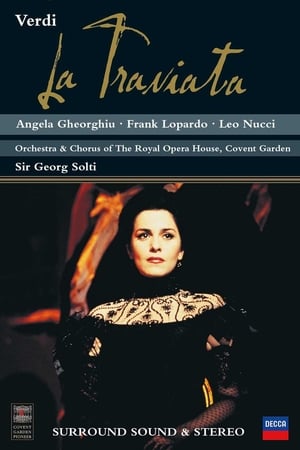
La Traviata(2001)
Status: Released
Date: 2001-03-04
65%
2 Votes
Overview:
La traviata (Italian: [la traˈviaːta], "The Fallen Woman"[1][2]) is an opera in three acts by Giuseppe Verdi set to an Italian libretto by Francesco Maria Piave. It is based on La dame aux Camélias (1852), a play adapted from the novel by Alexandre Dumas, fils. The opera was originally entitled Violetta, after the main character. It was first performed on 6 March 1853 at the La Fenice opera house in Venice. Piave and Verdi wanted to follow Dumas in giving the opera a contemporary setting, but the authorities at La Fenice insisted that it be set in the past, "c. 1700". It was not until the 1880s that the composer and librettist's original wishes were carried out and "realistic" productions were staged.[3]
Languages: Italian.
Countries:
United Kingdom
ProductionCompanies: 

Movie: La Traviata
Top 6 Billed Cast
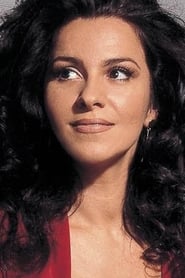
Angela Gheorghiu
Violeta Valéry
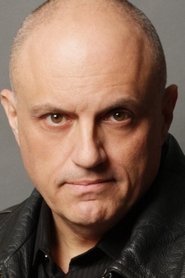
Frank Lopardo
Alfredo Germont
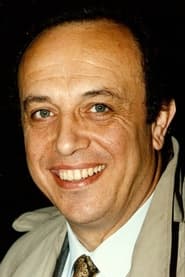
Leo Nucci
Giorgio Germont
HomePage
Overview
La traviata (Italian: [la traˈviaːta], "The Fallen Woman"[1][2]) is an opera in three acts by Giuseppe Verdi set to an Italian libretto by Francesco Maria Piave. It is based on La dame aux Camélias (1852), a play adapted from the novel by Alexandre Dumas, fils. The opera was originally entitled Violetta, after the main character. It was first performed on 6 March 1853 at the La Fenice opera house in Venice. Piave and Verdi wanted to follow Dumas in giving the opera a contemporary setting, but the authorities at La Fenice insisted that it be set in the past, "c. 1700". It was not until the 1880s that the composer and librettist's original wishes were carried out and "realistic" productions were staged.[3]
Release Date
2001-03-04
Average
6.5
Rating:
3.3 startsTagline
Genres
Languages:
ItalianoKeywords
Recommendations Movies

100%
Die Operngala der Stars (Baden Baden 2007)(de)
2007-01-08
Deutsche Grammophon proudly presents the new faces of the opera world in a glamorous new live concert DVD: Anna Netrebko, Elına Garanca, Ramón Vargas and the highly acclaimed young French baritone Ludovic Tézier sing a wide range of Italian and French opera favorites. This recording features highlights from concerts at Baden- Baden's Festspielhaus, where tickets to this extraordinary event sold out in record time. The DVD features the four young stars performing duets and the popular quartet "Bella figlia dell'amore" from Rigoletto. Other highlights include Delibes' famous flower duet from Lakmé performed sumptuously by Anna and Elına.

60%
Royal Opera House: La Traviata(it)
2019-01-30
Alfredo Germont and the courtesan Violetta Valéry fall in love at a party in Violetta's Paris salon. Alfredo is determined to cure Violetta of her tuberculosis, and the couple leave Paris and begin a contented life in the country. But Violetta's happiness is destroyed when Alfredo's father Giorgio Germont pays her a visit. Richard Eyre's stunning naturalistic production contrasts the superficial glamour of 19th-century Parisian high life with intimate scenes for Violetta with Alfredo and Giorgio Germont, culminating in the heart-breaking final act.

62%
The Land Before Time XII: The Great Day of the Flyers(en)
2006-02-27
As the Great Day of the Flyers nears, the Great Valley's flying youngsters are eager to participate in the annual exhibition to show off their skills. Everyone, that is, except free-spirited pterodactyl Petrie, whose individualism causes problems when it comes to staying in formation. Enter his dinosaur pals Littlefoot, Cera, Spike and Ducky, who encourage Petrie to embrace his uniqueness.

60%
Object: Alimony(en)
1928-12-22
Ruth Butler, a clerk in an emporium, marries Jimmy Rutledge and thereby greatly displeases his mother, the owner of the emporium, because of Ruth's lowly origins. Renaud Graham, one of Mrs. Rutledge's friends, becomes interested in Ruth, forces his way into her apartment, and attempts to make violent love to her. Jimmy walks in on their embrace and, suspecting the worst, leaves Ruth. In the family way, Ruth finds refuge in a boardinghouse where she meets Al Bryant, an aspiring writer. Ruth tells Al her life story, and he makes it into a bestselling novel and then into a play. Jimmy sees the play and comes to his senses, winning Ruth's forgiveness.

66%
F.O.T.O.G.R.A.F.(ru)
2018-03-11
A short film based on the S.T.A.L.K.E.R. fictional universe, combining the “Picnic to the curb” of the Strugatsky brothers, “Stalker” by Andrei Tarkovsky and the “Exclusion Zone” location around the Chernobyl NPP. According to the scenario, an agent of the peacekeeping forces, nicknamed "The Photographer", arrives in the Zone to prevent a global scale catastrophe, which could be caused by an experiment that went out of control at a scientific lab.

49%
Dr. T & the Women(en)
2000-09-13
A successful Texas gynecologist finds himself amid a bevy of women and their problems – his wife’s breakdown, his daughter's fake marriage, his other daughter’s conspiracy theories, and his secretary’s crush. Craving time for himself, he finds solace in a kind outsider.

60%
Fantozzi to the Rescue(it)
1990-12-21
Fantozzi is now retired but continues to go to the office where it is held up as a fine example of employees intending to do career.

68%
The H.K. Triad(cn)
1999-03-18
Two childhood friends become mortal enemies after their lives take drastically different paths and they discover that they are both in love with the same woman.

76%
Area of Conflict(en)
2017-05-04
Human traffickers wipe out a young girl's family and village. She then seeks revenge on those responsible, eventually becoming first the hunted then turning into the hunters with the mercenary hired to eliminate her.

73%
The Terrible People(de)
1960-08-25
The ghost of a hanged man returns to fulfill his promise. All of his accusers must die!

63%
The Land Before Time X: The Great Longneck Migration(en)
2003-12-02
A bedtime story leads Littlefoot and his grandparents on a journey to a new land, where Littlefoot discovers someone who vanished before he was born: his father! Now Littlefoot must decide between two worlds. Will he leave to be with his friends in the Great Valley, or stay behind and start a new life with his father?

77%
Dog Barbos and Unusual Cross(ru)
1961-09-18
This is the very first silent slapstick comedy short about adventures of Worldly, Coward, and Fool. What's more fun: fishing with worms, or dynamite? Three friends decided to have a blast! Unfortunately their dog Barbos just loves playing fetch. And this time that stick was used for blast fishing. Barbos saw people throwing a smoking stick in a water, and fetched it right back to his owners. The "unusual cross" part begins when owners try to outrun the dog with dynamite.

61%
Jimmy Neutron: Boy Genius(en)
2001-12-14
Jimmy Neutron is a boy genius and way ahead of his friends, but when it comes to being cool, he's a little behind. All until one day when his parents, and parents all over Earth are kidnapped by aliens, it's up to him to lead all the children of the world to rescue their parents.

99%
The Way to the Heart(en)
2024-04-02
Ava, an award-winning chef at a big-city restaurant, has lost her spark. Her boss sends her out to find herself to save her menu and her job. She returns home and finds little to inspire her, but when she reunites with her childhood friend Logan, Ava has to get her head out of the clouds and her foot out of her mouth to rediscover her passion for food.


50%
The Peasants(az)
1939-12-28
A historical revolutionary film depicting the struggle of peasants and the Baku proletariat against landowners and Musavatists in 1919.

63%
Balto: Wolf Quest(en)
2002-04-30
Balto and his daughter Aleu embark on a journey of adventure and self discovery.

63%
Bud Abbott and Lou Costello Meet the Invisible Man(en)
1951-03-14
As novice detectives, Bud and Lou come face to face with the Invisible Man.

53%
Klassentreffen(de)
2019-03-06
It's been 25 years since they graduated from high school or could have done it if they had not left before, made honors rounds or simply failed. Now they meet again at the class reunion, the former best of class, the former genius, the ex-class brat, the ex-class-ass, in their mid-40s, and suddenly face the people with whom they dreamed their future life , But what actually happened in the meantime?
Similar Movies

60%
1984(en)
2008-05-12
Inspired by one of the twentieth century's greatest novels, composer Lorin Maazel evokes Orwell's totalitarian nightmare, where "Big Brother" is always watching, and those guilty of "thoughtcrime" are condemned to face their worst fears in the infamous "Room 101". Filmed during world premiere performances of Robert Lepage's spectacular and psychologically gripping Royal Opera production and conducted by the composer, an international cast brings George Orwell's dark vision to shattering operatic life.

0%
The Ghosts of Versailles(en)
1992-01-10
What happened to Figaro and his friends after the events told in Rossini’s and Mozart’s operas? One possible sequel is told in John Corigliano’s “grand opera buffa” The Ghosts of Versailles—an uproariously funny and deeply moving work inspired by Beaumarchais’s third Figaro play, La Mère Coupable, and commissioned by the Met to celebrate its 100th anniversary. This telecast captures its world premiere run, conducted by James Levine. Håkan Hagegård is Beaumarchais, Figaro’s creator, who is deeply in love with Marie Antoinette (Teresa Stratas in a heart-searing performance) and determined to rewrite history and save her from the guillotine. A young Renée Fleming, at the beginning of her international career, sings the unfaithful Rosina. Gino Quilico is the wily Figaro who tries to take matters in his own hands, and Marilyn Horne stops the show as the exotic entertainer Samira.

0%
La Cenerentola(en)
1988-09-22
Gioacchino Rossini's sparkling version of the Cinderella story comes live from the Salzburg Festival with Ann Murray and Francisco Araiza as Cinderella and the Prince. Director Michael Hampe envisions La Cenerentola less as a fairy tale and more as a gently satirical comment on the nature of society and the relationship between people. Conductor Riccardo Chailly's masterly display of the Rossini style is visually matched by the opulent and elegant set designs by Mauro Pagano. 162 minutes.

0%
Cosi Fan Tutte(it)
1989-07-04
Officers Ferrando and Guglielmo are certain that their lovers Dorabella and Fiordiligi are faithful to them, but the cynical Don Alfonso challenges them to a bet that the women will be unfaithful given the chance. The officers thus pretend to go off to war, and return in disguise as Albanian strangers, to woo Dorabella and Fiordiligi incognito. The ladies are initially frosty, but soon warm to their new suitors, spurred on by their maid Despina. Performed at the La Scala Theatre in Milan.

0%
Mozart: Così Fan Tutte (Zurich Opera House)(it)
2000-07-05
A production of Mozart's opera recorded live at Zurich Opera House in 2000. Cecilia Bartoli leads an all-star cast including Roberto Saccà, Liliana Nikiteanu, and Agnes Baltsa. The conductor is Nikolaus Harnoncourt. Filmed live at the Zurich Opera House in February 2000 on a set which visualises the subtitle "The School for Lovers", the plot revolves around two army officers arguing about the fidelity of their brides, then setting out to test their chastity. Despite the often playful humour, this is not only psychologically telling music-making, but reveals Mozart exploring the structure of opera, discarding convention to mix large ensemble sections with arias for as many different combinations of singers as possible. With Liliana Nikiteanu attractively contrasted with Bartoli, and thoroughly convincing performances by Roberto Sacca (Ferrando) and Oliver Widmer (Guilelmo), this Così has a freshness and flow which, coupled with the timeless romantic themes, feels very contemporary.

80%
The Metropolitan Opera: Don Carlos(en)
2022-03-26
For the first time in company history, the Met presents the original five-act French version of Verdi’s epic opera of doomed love among royalty, set against the backdrop of the Spanish Inquisition. Patrick Furrer leads a world-beating cast of opera’s leading lights in this March 26 performance, including tenor Matthew Polenzani in the title role, soprano Sonya Yoncheva as Élisabeth de Valois, and mezzo-soprano Elīna Garanča as Eboli. Bass Günther Groissböck and bass-baritone John Relyea are Philippe II and the Grand Inquisitor, and baritone Étienne Dupuis rounds out the all-star principal cast as Rodrigue. Verdi’s masterpiece receives a monumental new staging by David McVicar that marks his 11th Met production, placing him among the most prolific and popular directors in recent Met memory. This live cinema transmission is part of the Met’s award-winning Live in HD series, bringing opera to movie theaters across the globe.

40%
The Metropolitan Opera: Lucia di Lammermoor(en)
2022-05-21
On May 21, soprano Nadine Sierra takes on one of the repertory’s most formidable and storied roles, the haunted heroine of Lucia di Lammermoor, in an electrifying new staging by in-demand Australian theater and film director Simon Stone, conducted by Riccardo Frizza. Show-stopping tenor Javier Camarena adds to the bel canto fireworks as Lucia’s beloved, Edgardo, with baritone Artur Ruciński as her overbearing brother, Enrico, and bass Matthew Rose as her tutor, Raimondo. This live cinema transmission is part of the Met’s award-winning Live in HD series, bringing opera to movie theaters across the globe.

0%
Puccini: Gianni Schicchi(it)
2004-08-19
Opera in one act, libretto by G. Forzano based on Dante's Divine Comedy. Third part of his opera Triptych. The plot is based on canto XXX of "Inferno" from "The Divine Comedy", which are dedicated to the rogue and deceiver Gianni Schicchi, who was punished for his sins: he impersonated a dying rich man in order to make a forged will on his behalf. Gianni Schicchi is Puccini's only comic opera, a brilliant example of a modern opera buffa based on the tradition of Verdi's Falstaff. The most expressive recitative, bubbling melody, sharp character, impetuous tempo distinguish her music. Recorded live at Glyndebourne Opera House, Sussex, UK on 11 July 2004.

71%
The Phantom of the Opera(en)
1925-06-29
The deformed Phantom who haunts the Paris Opera House causes murder and mayhem in an attempt to make the woman he loves a star.

0%
Handel: Admeto(en)
2006-01-01
Axel Kohler, the internationally renowned countertenor has brought Admeto into the modern era in timeless style by the skillful application of imaginative theatrical digressions. Köhler's production at the Halle Opernhaus revisits a work that encompasses comedy, tragedy and almost absurd grotesqueness, couching it in the convincing metaphor of a modern hospital.

92%
Attila(it)
2016-01-26


50%
Rigoletto(it)
1946-01-01
This tragic story revolves around the licentious Duke of Mantua, his hunch-backed court jester Rigoletto, and Rigoletto's beautiful daughter Gilda. The opera's original title, La maledizione (The Curse), refers to the curse placed on both the Duke and Rigoletto by a courtier whose daughter had been seduced by the Duke with Rigoletto's encouragement. The curse comes to fruition when Gilda likewise falls in love with the Duke and eventually sacrifices her life to save him from the assassins hired by her father.

30%
Wagner: Götterdämmerung(en)
2014-03-03
Götterdämmerung, the final instalment of Wagner’s Ring of the Nibelung, is a story of human passions. Two essentially benevolent creatures, involved with and possibly doomed by their traffic with the gods, find treachery and evil in the world of the humans, and are ruined by the dark side of humanity. Iréne Theorin, acclaimed worldwide for her portrayal of Wagner’s heroines, stars as Brünnhilde opposite Lance Ryan, who continues his radiant portrayal of the tragic hero Siegfried. The strong cast also includes Mikhail Petrenko as the dark antagonist Hagen and Johannes Martin Kränzle, who once again shines as his father Alberich. Waltraud Meier has a memorable appearance as Brünnhilde’s sister Waltraute. With this 2013 recording of Götterdämmerung, the musically and visually compelling Scala Ring Cycle by Daniel Barenboim and Guy Cassiers was completed and proved to be one of the highlights of the Richard Wagner bicentenary.

0%
Wagner: Siegfried(en)
2014-01-06
In Siegfried, the “Second Day” or third evening of the Ring Cycle, we meet the pivotal hero of the epic tale. The energetic drive from Die Walküre is pursued here while Siegfried finally recaptures the mighty ring from Fafner the Dragon and awakens Brünnhilde from her penal sleep on the great rock. Lance Ryan, having interpreted this role on the greatest stages of the world including the Bayreuth Festival, portrays the naïve hero. His antagonists are Peter Bronder, great and agile as Mime, Terje Stensvold, an experienced Wanderer and Johannes Martin Kränzle, who continues his mean and deceitful depiction of Alberich. The leading ladies are Nina Stemme, once again unrivalled as Brünnhilde and Anna Larsson, moving as the God-mother Erda.

0%
Prodaná nevěsta(cs)
2024-03-04
The most popular Czech comic opera, with a libretto by Karel Sabina, marking the 200th anniversary of the birth of Bedřich Smetana, in the current production of the National Theater in Prague. For more than 150 years, The Bartered Bride has dominated Czech opera. No one else, not even Smetana himself, has managed to surpass its popularity, which over the years has become part of our national DNA, so to speak. At the time of its creation in the 1860s, however, The Bartered Bride was actually quite a bold experiment – Bedřich Smetana and librettist Karel Sabina masterfully mocked all those who imagined "national opera" as an idyllic picture of the Czech countryside, where national virtues reign supreme.


0%
Brown Sounds(en)
2021-03-26
This short begins with a pair thriving in a lush paradise representing the Garden of Eden. The pair are suddenly uprooted and driven to the unknown: the original sin of slavery. In the end, they dig their roots into the soil and stretch their limbs to the sun, finding new identities, new truths and new power.