Loading Page

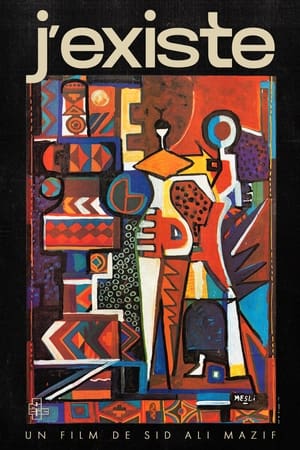
I Exist(1982)
Status: Released
Date: 1982-01-02
0%
0 Votes
Time: 3h 0m
Overview:
Composed of three parts, this montage film addresses all aspects relating to the role of women in Algerian society: their ambitions, the role of the State and the help of organizations that were created during the struggle for female emancipation. .
Languages: Arabic, French.
Countries:
Algeria
ProductionCompanies: 
Movie: I Exist
HomePage
Overview
Composed of three parts, this montage film addresses all aspects relating to the role of women in Algerian society: their ambitions, the role of the State and the help of organizations that were created during the struggle for female emancipation. .
Release Date
1982-01-02
Average
0
Rating:
0.0 startsTagline
Genres
Languages:
العربيةFrançaisKeywords
Similar Movies

100%
Abd El-Kader(fr)
2014-01-14
Illustrated with archival photographs, animations and live action, this film explores the history and historical and spiritual heritage of Emir Abd El-Kader. Algerian leader of the 19th century, was admired by Abraham Lincoln and celebrated to this day by the Red Cross as a great humanitarian. Emir Abd el-Kader, the man who challenged the French armies from 1832 to 1847 before creating the bases of a real Algerian state, is today considered by independent Algeria as one of the most outstanding figures. of its history. The nobility of his attitude after his capture and the very effective protection he brought to the Christians of Damascus at the end of his life also earned him great prestige among his former adversaries. A documentary told in dialectal Arabic by the voice of Amazigh Kateb.

80%
The Lives of Albert Camus(fr)
2020-01-22
Albert Camus died at 46 years old on January 4, 1960, two years after his Nobel Prize in literature. Author of “L'Etranger”, one of the most widely read novels in the world, philosopher of the absurd and of revolt, resistant, journalist, playwright, Albert Camus had an extraordinary destiny. Child of the poor districts of Algiers, tuberculosis patient, orphan of father, son of an illiterate and deaf mother, he tore himself away from his condition thanks to his teacher. French from Algeria, he never ceased to fight for equality with the Arabs and the Kabyle, while fearing the Independence of the FLN. Founded on restored and colorized archives, and first-hand accounts, this documentary attempts to paint the portrait of Camus as he was.

100%
An Unhealed Wound - The Harkis in the Algerian War(fr)
2010-09-20
It's the unforgivable story of the two hundred thousands harkis, the Arabs who fought alongside the French in the bitter Algerian war, from 1954 to 1962. Why did they make that choice? Why were they slaughtered after Algeria's independence? Why were they abandonned by the French government? Some fifty to sixty thousands were saved and transferred in France, often at pitiful conditions. This is for the first time, the story of this tragedy, told in the brilliant style of the authors of "Apocalypse".

64%
Mariner of the Mountains(fr)
2023-09-28
Filmmaker Karim Aïnouz decides to take a boat, cross the Mediterranean, and embark on his first journey to Algeria. Accompanied by the memory of his mother, Iracema, and his camera, Aïnouz gives a detailed account of the journey to his father’s homeland, interweaving present, past, and future.

85%
Algeria in Flames(ar)
1958-01-02
These are the first images shot in the ALN maquis, camera in hand, at the end of 1956 and in 1957. These war images taken in the Aurès-Nementchas are intended to be the basis of a dialogue between French and Algerians for peace in Algeria, by demonstrating the existence of an armed organization close to the people. Three versions of Algeria in Flames are produced: French, German and Arabic. From the end of the editing, the film circulates without any cuts throughout the world, except in France where the first screening takes place in the occupied Sorbonne in 1968. Certain images of the film have circulated and are found in films, in particular Algerian films. Because of the excitement caused by this film, he was forced to go into hiding for 25 months. After the declaration of independence, he founded the first Algerian Audiovisual Center.

100%
Sawt Echaâb(ar)
1961-01-01
“La Voix du Peuple,” composed of archival photographs by René Vauthier and others, exposes the root causes of the armed conflict of the Algerian resistance. Participating in a war of real images against French colonial propaganda, these images aimed to show the images that the occupier had censored or distorted, by showing the extortions of the French occupation army: torture, arrests and arbitrary executions, napalm bombings, roundabout fires, erasing entire villages from the map, etc. This is what the French media described as a “pacification campaign”.

100%
Gerboise Bleue(fr)
2009-02-11
"Gerboise bleue", the first French atomic test carried out on February 13, 1960 in the Algerian Sahara, is the starting point of France's nuclear power. These are powerful radioactive aerial shots carried out in areas belonging to the French army. Underground tests will follow, even after the independence of Algeria. From 1960 to 1978, 30,000 people were exposed in the Sahara. The French army was recognized recognized nine irradiations. No complaint against the army or the Atomic Energy Commission has resulted. Three requests for a commission of inquiry were rejected by the National Defense Commission. For the first time, the last survivors bear witness to their fight for the recognition of their illnesses, and revealed to themselves in what conditions the shootings took place. The director goes to the zero point of "Gerboise Bleue", forbidden access for 47 years by the Algerian authorities


100%
Frantz Fanon, trajectoire d'un révolté(fr)
2021-11-07
Frantz Fanon alone embodies all the issues of French colonial history. Martinican resistance fighter, he enlisted, like millions of colonial soldiers, in the Free Army out of loyalty to France and the idea of freedom that it embodies for him. A writer, he participated in the bubbling life of Saint-Germain with Césaire, Senghor and Sartre, debating tirelessly on the destiny of colonized peoples. As a doctor, he revolutionized the practice of psychiatry, seeking in the relations of domination of colonial societies the foundations of the pathologies of his patients in Blida. Activist, he brings together through his action and his history of him, the anger of peoples crushed by centuries of colonial oppression. But beyond this exceptional journey which makes sensitive the permanence of French colonialism in the Lesser Antilles at the gates of the Algerian desert, he leaves an incomparable body of work which has made him today one of the most studied French authors across the Atlantic.

100%
Our Algeria(ar)
1959-01-01
"Djazaïrouna", produced by the cinema service of the Provisional Government of the Algerian Republic (GPRA), is a montage film intended to inform the international community at the UN in 1959 on the objectives pursued by the Algerian resistance during the war of 'Algeria. Independence in Algeria (1954-1962). In 1959, Djamel-Eddine Chanderli and Mohammed Lakdar-Hamina produced Djazaïrouna (Our Algeria) from images taken by René Vautier and Doctor Pierre Chaulet. This film, completed a little later and will result in the film “The Voice of the People”. This documentary on the history of Algeria through a montage of current events, traces the political and military actions of the A.L.N, the demonstrations of December 1960, and the attack on a fortified French base on the border between Algeria and Tunisia.

81%
The Fence(ar)
2003-10-03
The Fence is a cry! In the aftermath of the civil war which bloodied Algeria, Tariq Teguia interviews the young people of Bab El Oued who express their anger. In the fixed shots in which they testify, Tariq Teguia alternates wanderings in a car which extend those of Ferrailles d’anticipations. And it is the violence of confinement that dominates, coupled with the desire for something impossible elsewhere.

65%
A People on the March(fr)
1963-01-02
In 1962, René Vautier, together with some Algerian friends, organised the audio-visual formation centre Ben Aknoun to encourage a "dialogue in images" between the two factions. Together with his students he made a film that shows the history of the Algerian War and of the ALN (National Liberation Army), and life during the reconstruction.

100%
Fernand Pouillon, Une architecture habitée(fr)
2017-01-01
In this documentary, Marie-Claire Rubinstein reveals to us, through the testimonies of the inhabitants who live there, the architectural achievements of the French urban planner Fernand Pouillon in Algiers. In particular the vast complexes of hundreds of social housing units, including the most famous Diar E Saâd (1953), Diar El Mahçoul (1954) and Climat de France (1957). The historical context, during the war of independence is related by the historian Benjamin Stora and Nadir Boumaza. This documentary also evokes the personality of Fernand Pouillon in a post-colonial context.

100%
Fernand Pouillon, Le roman d'un architecte(fr)
2003-01-01
Constructing freestone buildings on the cheap, Pouillon made a name for himself at the end of the 1940s in Aix-en-Provence and Marseille, shaking up his peers who only dreamed of towers and concrete bars. In Algiers, until Independence, he built in record time thousands of homes for the poorest, real urban projects inspired by traditional forms. In the Paris region, to build comfortable buildings quickly and well, nestled in the greenery, he becomes a promoter: this too adventurous bet leads him to prison and retains his reputation. Not very explicit about this complex affair, but seduced by a contemporary architecture that combines technical inventiveness and ancient references, Christian Meunier films by multiplying the angles of view. Today's lively atmospheres are interspersed with archive footage, while Pouillon's writings are read off. Moved, his collaborators evoke a demanding and generous man, with an infectious passion.

100%
Guerre sans images - Algérie, je sais que tu sais(ar)
2002-08-22
The Director Mohammed Soudani comes back to Algeria after 30 years with the photographer Michael von Graffenried to visit the Algerians he had photographed between 1991 and 2000 without them knowing it.

100%
On The Trail Of Emir Abd El-Kader(fr)
2004-01-01
Abdelkader ibn Muhieddine (Arabic: عبد القادر بن محي الدين (ʿAbd al-Qādir ibn Muḥyiddīn), also known as Emir Abdelkader, or Abdelkader El Djezairi (Abdelkader the Algerian), born September 6, 1808 in El Guettana, in the regency of Algiers, and died on May 26, 1883 in Damascus, then in the Ottoman Empire and in present-day Syria, is an Algerian emir, religious and military leader. Barely 20 years old, he federates the tribes and led a struggle against the conquest of Algeria by France in the middle of the 19th century.After his surrender, he was held captive in France before going into exile in Syria where he devoted himself to poetry and established great relations friendship with Paris, which showered him with honors after having intervened in favor of the persecuted Christians in Syria, he intervened by force to protect the Christian families who came to take refuge in large numbers in the Algerian district. of certain death.

100%
Scream(en)
2021-04-12
An experimental essay film about terrorism, media, violence and globalisation. Three infotainment news broadcasts - a rollercoaster, a hijacking, and an influencer - are soundtracked by pulsating experimental electronics that push the psychic residue of a post war-on-terror world out of the unconscious and onto the screen. Capitalism, imperialism, desire; all three are implicated in a nihilism that has seeped from the news into the social psyche.

100%
Algérie Couleurs(fr)
1972-01-01
"Film shot on the 'bench' from hundreds of photos, buildings, streets, towns unusually colorful for a North Mediterranean eye. The editing was composed on a score because the shots are generally very short, up to two images, and they do not follow each other "cut" or crossed but in "racket". The progression of shots varies from faintly colored recognizable to strongly colored unrecognizable. The soundtrack is composed of Arabic music that gradually turns into free-jazz. » Mannheim Festival, 1973


100%
Planet Malek(fr)
2019-01-18
Ahmed Malek’s name might have been forgotten by his fellow Algerians but his timeless tunes certainly haven’t. Called the Ennio Morricone of Algiers, he composed music for more than 200 movies, amongst which the most famous films of the Algerian New Wave in the 70s and the 80s can be found. Paloma Colombe, a DJ, digger and documentary director, went to Algiers to meet his daughter, friends and former coworkers. Images of the city by night offer a perfect background to Ahmed Malek’s music. Globetrotter, pioneer of electronic music and of the concept of the home studio, he created a unique sound that truly goes beyond genres and countries.