Loading Page

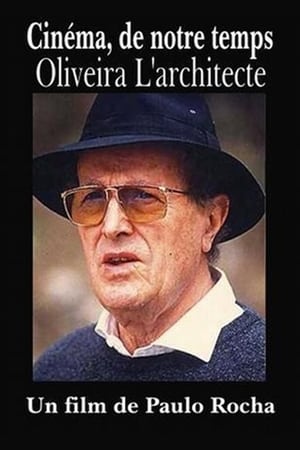
Oliveira, l'architecte(1993)
Status: Released
Date: 1993-10-06
0%
0 Votes
Time: 1h 1m
Overview:
Paulo Rocha catches up with his “beloved subject” in Porto, where he made Douro, Faina Fluvial in 1929, and where today Oliveira reminisces about the figure of his father, his first experience of cinema as an actor, his past as a racing driver, his first technical experiences…
Languages: Portuguese.
Countries:
Movie: Oliveira, l'architecte
Top 4 Billed Cast
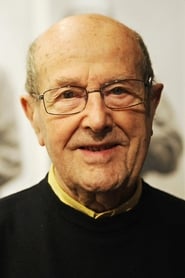
Manoel de Oliveira
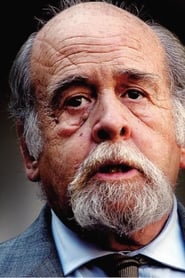
João Bénard da Costa

Leonor Silveira
HomePage
Overview
Paulo Rocha catches up with his “beloved subject” in Porto, where he made Douro, Faina Fluvial in 1929, and where today Oliveira reminisces about the figure of his father, his first experience of cinema as an actor, his past as a racing driver, his first technical experiences…
Release Date
1993-10-06
Average
0
Rating:
0.0 startsTagline
Genres
Languages:
Português
Similar Movies

0%
Discovering Buñuel(en)
2012-01-01
Luis Bunuel, the father of cinematic Surrealism, made his film debut with 'Un Chien Andalou' in 1929 working closely with Salvador Dali. Considered one of the finest and controversial filmmakers with, 'L’Age d’Or' (1930), attacking the church and the middle classes. He won many awards including Best Director at Cannes for 'Los Olvidados' (1950), and the coveted Palme d’Or for 'Viridiana' (1961), which had been banned in his native Spain. His career moved to France with 'The Diary of a Chambermaid' with major stars such as Jeanne Moreau and Catherine Deneuve.

77%
Belmondo, le magnifique(fr)
2017-09-03
With more than 70 films and 160 million cumulative tickets in France, Jean-Paul Belmondo is one of the essential stars of French cinema.

73%
Never Be Boring: Billy Wilder(de)
2017-10-28
A funny walk through the life story of Billy Wilder (1906-2002), a cinematic genius; a portrait of a filmmaker who never was a boring man, a superb mind who had ten commandments, of which the first nine were: “Thou shalt not bore.”

0%
Blaxploitalian: 100 Years of Blackness in Italian Cinema(en)
2016-06-08
A documentary that uncovers the careers of a population of entertainers never heard from before: Black actors in Italian cinema. With modern day interviews and archival footage, the documentary discloses the personal struggles and triumphs that classic Afro-Italian, African-American and Afro-descendant actors faced in the Italian film industry, while mirroring their struggles with those of contemporary actors who are working diligently to find respectable, significant, and non-stereotypical roles, but are often unable to do so. Blaxploitalian is more than an unveiling of a troubled history; it is a call-to-action for increased diversity in international cinema through the stories of these artists in an effort to reflect the modern and racially diverse Italy.

0%
Charlie Chaplin: A Tramp's Life(en)
1998-05-10
A biographical documentary about the great British actor and director Charlie Chaplin (1889-1977), from rags to riches, from the slums of London to glory.

63%
Birth of a Nation(en)
1997-08-06
Jonas Mekas assembles 160 portraits, appearances, and fleeting sketches of underground and independent filmmakers captured between 1955 and 1996. Fast-paced and archival in spirit, the film celebrates the avant-garde as its own “nation of cinema,” a vital community existing outside the dominance of commercial film.

40%
Lost Images: The Other Eye of Juan Pinzás(es)
2009-12-17
The filmmaker Juan Pinzás goes on a physical and also inner journey, in search of some lost images that he filmed in the 80s. The journey takes him from Madrid to Galicia and on the search for these images he meets with various characters who will help him in his undertaking, such as the actors Paul Naschy and Javier Gurruchaga whose personal worlds will be examined in the film. Finally in Vigo, his home city, of which he presents a remarkable portrait, he finds an old film in Super-8mm with the missing images. The catharsis is produced with the viewing of the old film which turns out to be a tribute to cinema and this means the end of the filmmaker's introspective journey.

72%
Flowers of Taipei: Taiwan New Cinema(zh)
2014-10-01
With Taiwan remaining in the grip of martial law in 1982, a group of filmmakers from that country set out to establish a cultural identity through cinema and to share it with the world. This engaging documentary looks at the movement's legacy.

69%
Sad Hill Unearthed(es)
2018-10-19
Province of Burgos, northern Spain, October 2015. A group of fans undertake the titanic task of restoring the location of the last scene of The Good, the Bad and the Ugly, the mythical spaghetti western directed by Italian filmmaker Sergio Leone in 1966.

90%
Broken Palace(en)
2014-09-29
A short documentary about the rapidly disappearing era of heritage movie palaces and the film going experience once offered within those hallowed walls.

70%
Meet the Filmmakers: Josh and Benny Safdie(en)
2017-10-03
Get to know the siblings whose films have captured the skittering pulse of New York’s city streets. An original documentary featuring footage from the making of their new thriller, Good Time, along with several of the brothers’ early features and shorts. Produced by the Criterion Channel for their "Meet the Filmmakers" series.

64%
My Life Directed by Nicolas Winding Refn(en)
2015-02-27
A documentary directed by Winding Refn's wife, Liv Corfixen, and it follows the Danish-born filmmaker during the making of his 2013 film Only God Forgives.

65%
CzechMate: In Search of Jiří Menzel(cs)
2018-09-16
An epic exploration of the Czechoslovak New Wave cinema of the 1960s and 70s, structured around a series of conversations with one of its most acclaimed exponents - Closely Observed Trains director Jiří Menzel.

0%
Lo que vale un peine(es)
2015-05-13


57%
Arab Camera(fr)
1987-01-02
Focusing on key Arab films produced in the last 20 years. Férid Boughedir traces the development of the film-makers' concern to produce more socially aware cinema. Themes include the issue of Palestinian homeland rights and the nature of Arab identity. The film-makers also share a desire to develop a strong poetic tradition.