Loading Page


Azem Galica(2011)
Status: Released
Date: 2011-01-01
0%
0 Votes
Time: 1h 58m
Overview:
Story of Azem Bejta (1889–1924), commonly known as Azem Galica, who was an Albanian nationalist and rebel who fought for the unification of Kosovo with Albania.
Languages: Albanian.
Countries:
Kosovo
ProductionCompanies:
SB Film Kosova
Movie: Azem Galica
Top 10 Billed Cast
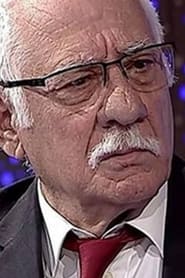
Reshat Arbana
Isa Boletini

Enver Petrovci
Pashiqi

Adem Mikullovci
Ramadan Shabani
HomePage
Overview
Story of Azem Bejta (1889–1924), commonly known as Azem Galica, who was an Albanian nationalist and rebel who fought for the unification of Kosovo with Albania.
Release Date
2011-01-01
Average
0
Rating:
0.0 startsTagline
Genres
Languages:
shqipKeywords
Similar Movies

0%
The Agreement(sr)
2016-08-17
First Serbian film shot in Kosovo after its separation, exploring the relations between Serbs and Albanians is inspired by true events and depicted through the fate of two tragic heroes and their families. The film was created from the personal experience of producer and screenwriter Predrag Raonić, observing the reality of journalistic work.

76%
Beasts of No Nation(en)
2015-09-11
Based on the experiences of Agu, a child fighting in the civil war of a West African country. Follows Agu's journey as he's forced to join a group of soldiers. While he fears his commander and many of the men around him, his fledgling childhood has been brutally shattered by the war raging through his country, and he is at first torn between conflicting revulsion and fascination.

70%
Doctor Homer's Brother(sh)
1968-01-01
This film predominantly deals with the problems of a young man whom his delusions led into conflict with society. These issues will throw him into an adventure that would be tragic for him, but still helpful for him to see the truth. The story takes place in Kosovo in 1945, in an atmosphere of uncured wounds, wandering, betrayal, burned homes, typhoid and other postwar misery. An authentic story from those days was taken as the film's basis.

58%
Red Blow(sh)
1974-07-16
At the beginning of the war the Germans come to the mine Trepca in Kosovo and occupy it. Communist Party and the workers do not agree with that and under constant repression, beginning small diversions, which will be transferred in the conquest and liberation of the entire mine.

84%
Unwanted(sq)
2017-09-14
A lonely boy, who lives in Amsterdam with his refugee mother from Kosovo, keeps getting into trouble while yearning for her acceptance. But the traumas caused by the war, which his mother hides away from him, turn his world upside down.

47%
La conquista de Albania(es)
1983-09-20
King Carlos II of Spain (r. 1665-1700) once sent his brother Luis to lead a military expedition into Albania and conquer that land for the Spaniards. Since Albania was a part of the dowry of Luis' wife, it seemed like a reasonable idea at the time. While that expedition and its final battle is the subject of this historical film, the scale involved can hardly do justice to the concept. The protagonists talk incessantly, and by the time they get down to the final grand battle, it turns out to be a skirmish between several dozen men.


80%
Canaguaro(es)
1981-08-06
The murder of popular leader Jorge Eliécer Gaitán unleashes violence in the Colombian countryside. Guerrillas are formed that, behind the facade of partisan struggle, also fight for control of the land. Canaguaro commands one of these groups. Their story is the same as that of thousands of Colombians, survivors of attacks on their families. We learn about his life and that of his friends through the journey in search of weapons that the party has promised them and that will never be delivered to them. They are called to order and reconciliation and, finally, murdered.

63%
The House by the Railway Tracks(sh)
1988-06-06
A Serbian family leaves the troubled Kosovo region after Albanians rape the daughter in front of her mother. When they leave their home after the assault, their family tombs are desecrated, and the move to northern Serbia is marked by rejection by the local people of their new community.

0%
The Swelling River(sq)
1981-01-01
In a mining plant in Kosovo, as occurs in many work organizations across the country, workers continue to win new positions in the self-management. The former miner and fighter - now general manager of the factory - is on the side of the workers, but has troubles in personal life.

76%
Magallanes(es)
2015-08-20
Magallanes sees his humdrum life turn upside down the day Celina, a women he met in the violent years when he was a soldier with the Peruvian Army, jumps into his taxi in a Lima street. This unexpected re-encounter after 25 years with the dark past that unites them prompts Magallanes to embark on a daring plan to help Celina get money and find his own redemption.

55%
Breathless Time(es)
2015-04-20
Maria, a nurse whose daughter was killed by three militiamen, travels from Colombia to Spain with her younger son in order to get revenge.

47%
When I Want to Cry, I Don't(es)
1973-07-04
In Venezuela, one day in 1948 there were born three children all named Victorino: Pérez, mulatto and son of the poor Lucía; Perdomo, son of a middle-class communist who gets arrested; and bourgeois Peralta. On the day of his eighteenth birthday Pérez escapes from prison using lather pretending it to be a rage attack. Peralta shows a friend of his a car he got from his parents. A young lady gives herself to Perdomo as a birthday present. Pérez finds his mistress with another man and wounds her. Pérez and a few others rob an old man while riding on their motorcycles. Perdomo and a bunch of bushwhackers plan to rob a bank. Pérez sees a friend of his smoking pot while Peralta visits a cousin of his and has sex with her. Perdomo’s father, recently elected a communist representative wants to talk him out of his violent ways. Pérez sleeps with three girls and remembers how he once killed a man in the middle of a robbery. Peralta and his friends shoot dogs just for fun. Perdomo and his pals…

60%
The Burning of Judas(es)
1974-11-20
Jesús María Carmona is a small-time crook who poses as a cop so he can rob a bank. A few days before the day he planned to do it, a guerrilla group robs the same bank and Carmona is shot to death defending it when he has no other choice but to act as a policeman. Soon after, his image becomes a symbol for the police and he is honored, but his identity is found out. Meanwhile, in the neighborhood where he grew up his effigy is burned as he is now considered a traitor.

62%
Portable Country(es)
1979-01-24
Portable Country is a classical Venezuelan film about the urban guerrilla. Based on the novel of the same name, written by Adriano González León, the film centers on Andrés Barazarte, a disillusioned man from a wealthy landowning family, who grapples with his personal and political identity in the midst of Venezuela's tumultuous social changes and engages in the guerrilla. He reflects on his life, his family's decline, and the broader struggle for power in a country torn between tradition and revolution.The story unfolds as Andrés is tasked with transporting a mysterious package. This journey becomes a metaphor for his search for meaning and a confrontation with his family’s, and his country's, violent past. His recollections weave together with present events, creating a complex tapestry of memory and history.


60%
The Last Winter(sq)
1976-07-08
Germans come amid snow and winter. In the village only people remained are women, that fight until wounded partisans, sheltered in the village, will retreat deeper and snow will cover their tracks. Face to face with the Germans and their control of the village, women, led by mother Shano and mother Mara, depart to make a pile of wood, but actually bring bread and food to the partisans.

80%
Comrade Augusto(es)
1976-07-21
Augusto Cardenas, former guerrilla of bourgeois origin, goes free after four years in prison, he meets with his parents and his wife. He returns to his world and realizes that the fight for his political ideals is only in his memory.