Loading Page
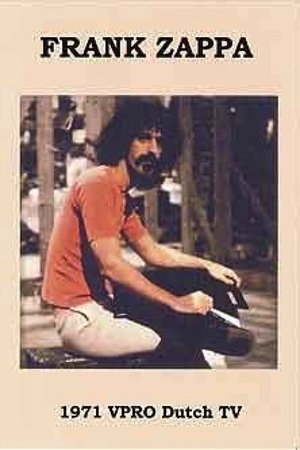
Frank Zappa: A Day With Frank(1971)
Status: Released
Date: 1971-02-11
0%
0 Votes
Time: 0h 51m
Overview:
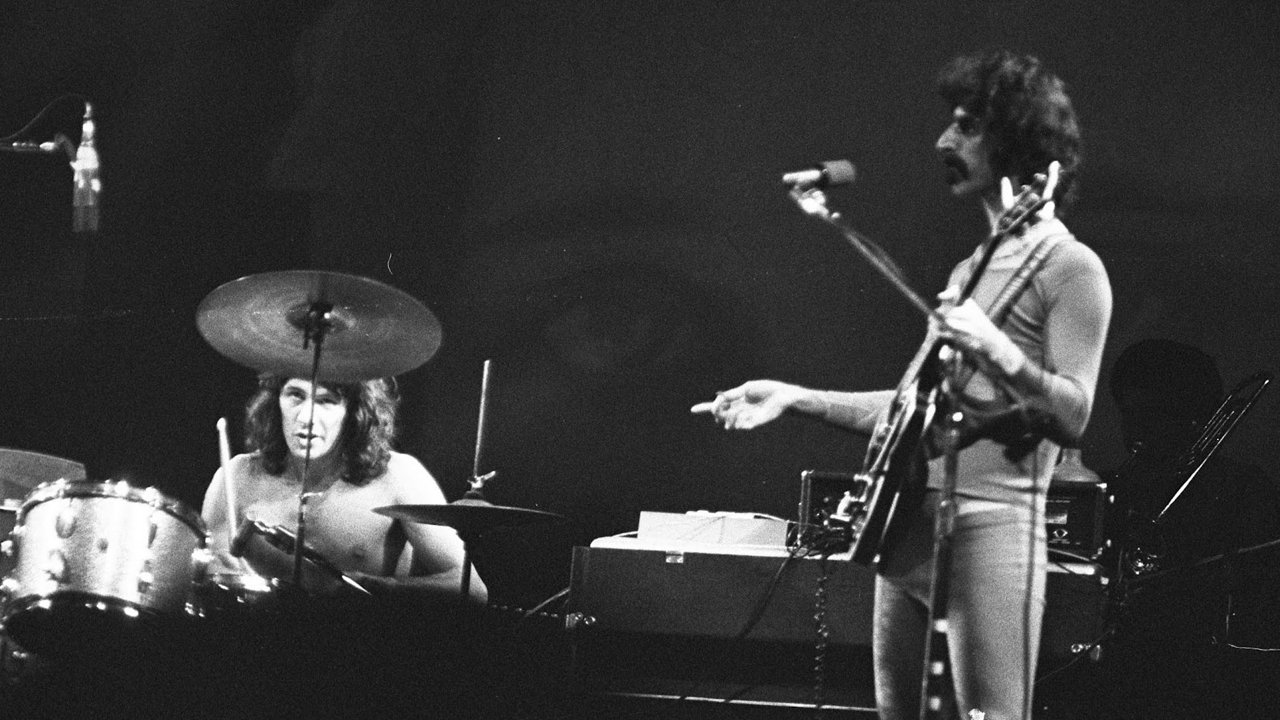
The Documentary centers around Zappa at home, and on Tour. The amazing thing is that Zappa allowed a guy with a camera to film the band at the Fillmore West w/ Flo and Eddie. There are times when the camera man seems to be on the stage. The performance is recorded from only one camera angle. There are only 4-5 songs presented here.....and Zappa referring to the Fillmore West as the ‘Psychedelic Dungeon’ is priceless………..It is a great piece of history.
Languages: English.
Countries:
Netherlands
ProductionCompanies: 
Movie: Frank Zappa: A Day With Frank
Top 10 Billed Cast
Frank Zappa
Self
Dweezil Zappa
Self
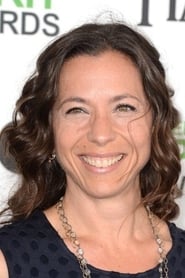
Moon Unit Zappa
Self
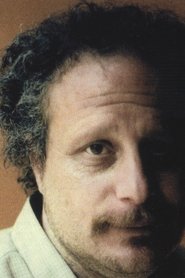
Wild Man Fischer
Self (archive footage)
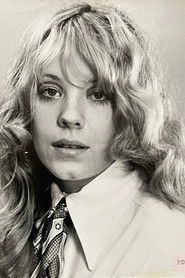
Pamela Des Barres
Self
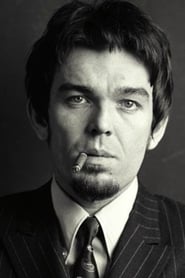
Don Van Vliet
Self
HomePage
Overview
The Documentary centers around Zappa at home, and on Tour. The amazing thing is that Zappa allowed a guy with a camera to film the band at the Fillmore West w/ Flo and Eddie. There are times when the camera man seems to be on the stage. The performance is recorded from only one camera angle. There are only 4-5 songs presented here.....and Zappa referring to the Fillmore West as the ‘Psychedelic Dungeon’ is priceless………..It is a great piece of history.
Release Date
1971-02-11
Average
0
Rating:
0.0 startsTagline
Genres
Languages:
EnglishKeywords
Similar Movies

40%
Progressive Touch(de)
2020-01-25
Sex as dance and comedy: in Progressive Touch Portnoy studies and expands the relationship between sex, choreography and composing music. He introduces complex compositions from progressive rock and math metal during sex, thereby combating the ostensible simplification of rhythm in human movements and gestures. A group of actors perform the new moves in three slapstick-like scenes. Worth trying at home.

0%
Man Ray: Prophet of the Avant-Garde(en)
1997-04-09
Man Ray, the master of experimental and fashion photography was also a painter, a filmmaker, a poet, an essayist, a philosopher, and a leader of American modernism. Known for documenting the cultural elite living in France, Man Ray spent much of his time fighting the formal constraints of the visual arts. Ray’s life and art were always provocative, engaging, and challenging.

0%
Discovering Buñuel(en)
2012-01-01
Luis Bunuel, the father of cinematic Surrealism, made his film debut with 'Un Chien Andalou' in 1929 working closely with Salvador Dali. Considered one of the finest and controversial filmmakers with, 'L’Age d’Or' (1930), attacking the church and the middle classes. He won many awards including Best Director at Cannes for 'Los Olvidados' (1950), and the coveted Palme d’Or for 'Viridiana' (1961), which had been banned in his native Spain. His career moved to France with 'The Diary of a Chambermaid' with major stars such as Jeanne Moreau and Catherine Deneuve.

70%
In continuo(it)
1971-01-26
"In continuo" uses slaughterhouse imagery to present the warlike nature of man, first depicting the cleaning and mechanical preparations for the slaughterhouse and then the killing, however, the animal slaughter itself isn’t shown.

38%
60 Seconds of Solitude in Year Zero(en)
2011-12-22
An anthology of one-minute films created by 51 international filmmakers on the theme of the death of cinema. Intended as an ode to 35mm, the film was screened one time only on a purpose-built 20x12 meter public cinema screen in the Port of Tallinn, Estonia, on 22 December 2011. A special projector was constructed for the event which allowed the actual filmstrip to be burnt at the same time as the film was shown.

62%
Panta Rhei(en)
1952-03-08
In 1952, Haanstra made Panta Rhei , another view of Holland through the eyes of a painter and filmmaker. Its poetic images of water, skies and clouds reflect Haanstra's own moods.

50%
Cinnamon(en)
2006-01-20
An experimental film that lifts the veil on the world of African American drag racing.

70%
.TV(en)
2018-01-25
.TV is a found footage essay film: Voicemails left by an anonymous caller from the future guide us to the remote islands of Tuvalu, a place the global media has described as “the first country to disappear due to rising sea levels”. Surrounded by thousands of miles of open water, much of Tuvalu’s revenue comes from its country-code web extension .TV, a popular domain choice among global video-streaming and television industries. The caller describes how heat, digital screens, and distance gave him no choice but to leave his sinking home and escape into cyberspace where rising waters will never reach him.

80%
Transatlantic: The Final Flight: Live At L'Olympia(en)
2023-02-17
Following the release of 2021’s ambitious studio album ‘The Absolute Universe’, progressive[1]rock supergroup Transatlantic present ‘The Final Flight: Live At L'Olympia’. A document of the bands triumphant show in Paris, the last night of their tour in support of their most recent studio album, it sees Neal Morse, Mike Portnoy, Roine Stolt & Pete Trewavas (along with Ted Leonard) performing the entirety of „The Absolute Universe (The Ultimate Version)”, before returning to the stage to perform some of their extensive back catalogue. A night as special as they come, this audio/visual document presents the band at their most majestic. Mixed by Rich Mouser, ‘The Final Flight - Live At L'Olympia’ will be available as a 3CD+Blu-ray Digipak & as a Gatefold 180g 4LP Vinyl with LP-booklet, featuring stunning photos from the evening. The Blu-ray features the entire concert film, plus 5.1 surround sound mix option.

0%
Lake(en)
2019-12-30
Lake gazes down at a still body of water from a birds-eye view, while a group of artists peacefully float in and out of the frame or work to stay at the surface. As they glide farther away and draw closer together, they reach out in collective queer and desirous exchanges — holding hands, drifting over and under their neighbors, making space, taking care of each other with a casual, gentle intimacy while they come together as individual parts of a whole. The video reflects on notions of togetherness and feminist theorist Silvia Federici’s call to “reconnect what capitalism has divided: our relation with nature, with others, and our bodies.”

55%
Two Museums(de)
2014-01-22
The film juxtaposes/compares two museums: The Museum of Art, Ein Harod, Israel, which Samuel Bickels (1909-1975) built there in 1948, and The Menil Collection in Houston, Texas, built by Renzo Piano (b. 1937) 1986 . The method of natural lighting in Bickels‘s construction was the direct model for Piano, who adopted for his construction at the request of its patroness Dominique de Menil.

81%
Good Morning, Mr. Orwell(en)
1984-01-01
In his book "1984", George Orwell saw the television of the future as a control instrument in the hands of Big Brother. Right at the start of the much-anticipated Orwellian year, Paik and Co. were keen to demonstrate satellite TV's ability to serve positive ends-- Namely, the intercontinental exchange of culture, combining both highbrow and entertainment elements. A live broadcast shared between WNET TV in New York and the Centre Pompidou in Paris, linked up with broadcasters in Germany and South Korea, reached a worldwide audience of over 10 or even 25 million (including the later repeat transmissions).

77%
Global Groove(en)
1973-01-01
Global Groove was a collaborative piece by Nam June Paik and John Godfrey. Paik, amongst other artists who shared the same vision in the 1960s, saw the potential in the television beyond it being a one-sided medium to present programs and commercials. Instead, he saw it more as a place to facilitate a free flow of information exchange. He wanted to strip away the limitations from copyright system and network restrictions and bring in a new TV culture where information could be accessed inexpensively and conveniently. The full length of the piece ran 28 minutes and was first broadcasted in January 30, 1974 on WNET.

0%
Everybody's Cage(en)
2015-06-13
In “Everybody’s Cage”, German film artist Sandra Trostel turns John Cage and his approach to art into a tangible fascination, without giving in to explain just a single bit of it.

0%
Blind Bombing, Filmed by a Bat(ja)
2020-04-28
During WWII, the Japanese army developed experimental balloons able to cross the Pacific Ocean and reach the West Coast of North America in 3-6 days. Armed with explosives, they were given the code name fu-go, or fusen bakudan (“fire balloons,” or balloon bombs) in an attempt to instill a culture of fear like that caused by the far more deadly American firebombing of Japanese cities. The U.S. responded by enacting a censorship campaign, requesting newspapers avoid reports of fu-go landings or sightings. Living near the remains of a fu-go launch site in Fukushima Prefecture, Takeuchi mimics their flight take-off using a drone camera, and, traveling to North America, follows their arrival across the shoreline and rural landscapes, using a bat’s echolocation as narrative device to place fu-go and Fukushima as echos across history.

65%
Genesis - Melody 74(en)
1974-02-12
Recorded at ORTF TV Studios, 12 February 1974 for Paris Melody Programme 1. I Know What I Like 2. Supper's Ready

70%
George: The Story of George Maciunas and Fluxus(en)
2018-02-21
In 1961 Lithuanian American artist and impresario George Maciunas established the avant-garde art movement Fluxus. George details the rise of Fluxus following a sensationalized tour of “concerts” in Europe in 1962, and continuing in New York for most of the 1960s and ’70s. During this time Maciunas was converting the dying industrial buildings of Soho into a network of artists’ lofts, creating one of the first official real estate co-ops of artist-owned buildings. Maciunas’s life and legacy—as recounted by artists of his generation, including Yoko Ono and Jonas Mekas—ignited debates that remain pivotal to artists working today.

76%
The Weavers of Nishijin(ja)
1961-12-01
The Weavers of Nishijin captures the process of traditional textile manufacture in Nishijin.

80%
Marilyn Manson: Birth of the Anti-Christ(en)
2001-01-01
The first live performance of shock rocker Marilyn Manson ever to be caught on film is featured here, recorded in 1990 as Manson performed alongside his band, The Spooky Kids. The film not only offers a glimpse into the early, formative years of the now-successful recording artist, it also highlights many of Manson's early songs, including "My Monkey," "Strange Same Dogma," "Sam Son of Man" and more.

78%
Frank Zappa – Summer '82: When Zappa Came to Sicily(en)
2014-10-05
In the feature documentary, Summer 82 – When Zappa Came to Sicily, filmmaker and Zappa fan Salvo Cuccia tells the behind-the-scenes story of Frank Zappa's star-crossed concert in Palermo, Sicily, the wrap-up to a European tour that ended in public disturbances and police intervention. Cuccia had a ticket to the concert but never made it. Thirty years later, collaborating with Zappa's family, he re-creates the events through a combination of rare concert and backstage footage; photographs; anecdotes from family, band members, and concertgoers; and insights from Zappa biographer and friend Massimo Bassoli. The story is also a personal one, as Cuccia interweaves the story of Zappa's trip to Sicily with his own memories from that summer.