Loading Page

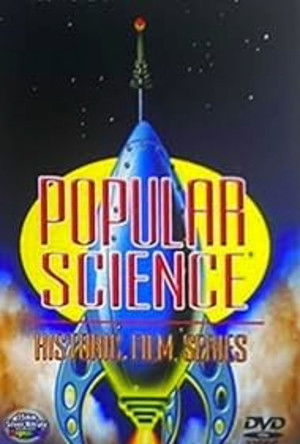
Popular Science J-8-1(1938)
Status: Released
Date: 1938-09-02
0%
0 Votes
Time: 0h 11m
Overview:
A variety of scientific subjects, including the laboratory of a plastic surgeon in London, and his method for applying permanent makeup; a new school for kiddies employing finger paint so they can express their urge to put things on paper; Army aviation, showing the latest development in blind landing. Produced in Cinecolor.
Languages: English.
Countries:
United States of America
ProductionCompanies: 
Movie: Popular Science J-8-1
Top 3 Billed Cast
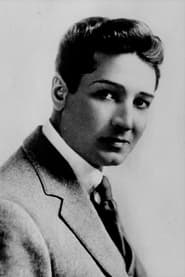
Gayne Whitman
Narrator
HomePage
Overview
A variety of scientific subjects, including the laboratory of a plastic surgeon in London, and his method for applying permanent makeup; a new school for kiddies employing finger paint so they can express their urge to put things on paper; Army aviation, showing the latest development in blind landing. Produced in Cinecolor.
Release Date
1938-09-02
Average
0
Rating:
0.0 startsTagline
Genres
Languages:
EnglishKeywords
Similar Movies

68%
Hitler's Games, Berlin 1936(fr)
2016-08-23
Summer 1936 - The Berlin Olympics, organized by the Nazi regime on the eve of World War II, acted as a grand showcase for a Germany that was athletic, peaceful and rejuvenated. The violence and hate that until then had reigned in the streets of Berlin suddenly vanished. Adolf Hitler became the triumphant host of European countries he would soon try to invade or face in a deadly global conflict.

78%
Attacking the Devil: Harold Evans and the Last Nazi War Crime(en)
2014-06-09
Before the internet. Before social media. Before breaking news. The victims of Thalidomide had to rely on something even more extraordinary to fight their corner: Investigative journalism. This is the story of how Harold Evans fought and won the battle of his and many other lives.

80%
The Lie Detector(en)
2023-01-03
In the first decades of the 20th century, when life was being transformed by scientific innovations, researchers made a thrilling new claim: they could tell whether someone was lying by using a machine. Popularly known as the “lie detector,” the device transformed police work, seized headlines and was extolled in movies, TV and comics as an infallible crime-fighting tool. Husbands and wives tested each other’s fidelity. Corporations routinely tested employees’ honesty and government workers were tested for loyalty and “morals.” But the promise of the polygraph turned dark, and the lie detector too often became an apparatus of fear and intimidation. Written and directed by Rob Rapley and executive produced by Cameo George, The Lie Detector is a tale of good intentions, twisted morals and unintended consequences.

10%
Draft Day(th)
2013-07-14
In Thailand, all males turning 21 must participate in the military draft lottery. Drawing a black card grants exemption. Drawing a red card results in two years of military service. This short film follows two girls, who were born as males, as they participate in the drafting process.

10%
How we built the Moscow metro(fr)
2014-03-18
In the 1930’s, the workers of the underground, headed by brigades of writers, are in charge to write in real time "the history of the Moscow Metro". Based on their narratives, partially unpublished, the film recounts the first lines construction of the most beautifiul underground in the world, in the light of this "big literary Utopia", stoped by the purges of 1937-38.

65%
Cinecittà Babilonia: Sex, Drugs and Black Shirts(it)
2017-06-14
The story of Italian cinema under Fascism, a sophisticated film industry built around the founding of the Cinecittà studios and the successful birth of a domestic star system, populated by very peculiar artists among whom stood out several beautiful, magnetic, special actresses; a dark story of war, drugs, sex, censorship and tragedy.

0%
The Man Who Stole Einstein's Brain(en)
2023-05-03
On April 18, 1955, the pathologist performing the autopsy on Albert Einstein covertly steals the genius's brain, hoping to uncover the secret of brilliance. His good intentions and scientific ambitions collide with harsh realities as his world crumbles.


75%
Elgar: Fantasy of a Composer on a Bicycle(en)
2002-09-22
Ken Russell revisits the life of Elgar, with musical background provided by the composer's works.

65%
Open Secrets(en)
2004-05-24
This provocative documentary uncovers a lost chapter in Canadian military history: how the Armed Forces dealt with homosexual behaviour among soldiers, during and after World War II. More than 60 years later, a group of five veterans, barely adults when they enlisted, break the silence to talk about how homosexual behaviour "was even more unmentionable than cancer." Yet amidst the brutality of war, instances of sexual awakening among soldiers and officers were occuring. Initially, the Army overlooked it, but as the war advanced, they began to crack down: military tribunals, threats of imprisonment, discharge and public exposure. After the war, officers accused of homosexuality were discharged. Back home in Canada, reputations and careers were ruined. For the young men who had served their country with valour, this final chapter was often too much to bear. Based on the book Courting Homosexuals in the Military by Paul Jackson.

0%
CARA-B(ca)
2023-04-15
A desktop documentary that focuses on the Golden Record that NASA sent into space in the late 1970s. The piece reflects on issues such as the power of scientific discourse to produce revisions of the world, the evolution of the concept of the archive and the resignification of borders in the rhetoric of space colonialism.

65%
The Most Unknown(en)
2018-03-16
An epic documentary film that sends nine scientists to extraordinary parts of the world to uncover unexpected answers to some of humanity’s biggest questions. How did life begin? What is time? What is consciousness? How much do we really know? By introducing researchers from diverse backgrounds for the first time, then dropping them into new, immersive field work they previously hadn’t tackled, the film pushes the boundaries of how science storytelling is approached. What emerges is a deeply human trip to the foundations of discovery and a powerful reminder that the unanswered questions are the most crucial ones to pose. Directed by Emmy-nominated and Peabody Award-winning filmmaker Ian Cheney and advised by world-renowned filmmaker Werner Herzog, The Most Unknown is an ambitious look at a side of science never before shown on screen.

70%
Slovo House(uk)
2017-11-09
Chain-smoking artists, poets and playwrights were among the colourful array of intellectuals living in the ‘Slovo House’ in 1920s Ukraine. The communist paradise was built under Stalin's approval, but it quickly became a prison. The brutal Soviet regime spied on the inhabitants, destroying their eccentric way of life and sealing their fate. This fascinating film explores the extraordinary story of the building and its residents.

35%
Free Will(en)
2022-03-26
An in-depth investigation featuring world renowned philosophers and scientists into the most profound philosophical debate of all time: Do we have free will?

74%
From Caligari to Hitler(de)
2015-05-28
Film journalist and critic Rüdiger Suchsland examines German cinema from 1919, when the Republic of Weimar is born, to 1933, when the Nazis come into power. (Followed by Hitler's Hollywood, 2017.)

50%
Mallorca(es)
1934-01-01
A journey through different places in 1930s Mallorca, the coast, the countryside, the city, in the company of the evocative music of Isaac Albéniz (1860-1909), to whom homage is paid.

0%
Desire for Beauty(pl)
2013-03-22
Four people turn to plastic surgery as the last resort in their search for perfection - their appearances will change, but will their lives?

73%
Riefenstahl(de)
2024-08-29
Explores Leni Riefenstahl's artistic legacy and her complex ties to the Nazi regime, juxtaposing her self-portrayal with evidence suggesting awareness of the regime's atrocities.

67%
I Betrayed Hitler(fr)
2016-03-27
During the worst days of World War II, the British government asks the mathematician Alan Turing to unravel the mysteries of the German Enigma encryption machine, an impossible task to accomplish without the invaluable information that Hans-Thilo Schmidt, a disenchanted but greedy German citizen, had been handing over to the French secret services since 1931.