Loading Page

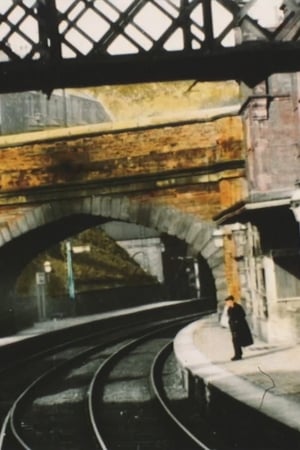
Panoramic View of Conway on the L. & N.W. Railway(1898)
Status: Released
Date: 1898-01-01
70%
1 Votes
Time: 0h 2m
Overview:
A hand-colored ride along the Bangor-Conwy-Colwyn Bay railroad filmed from an express train from the London and North Western Railway; Stations, vistas and a tunnel under the Conwy Castle (misspelled in the title) in North Wales.
Languages: No Language.
Countries:
United Kingdom
ProductionCompanies:
British Mutoscope and Biograph Company
Movie: Panoramic View of Conway on the L. & N.W. Railway
Video Trailer Panoramic View of Conway on the L. & N.W. Railway
All 1 videos

Conway Castle - Panoramic View of Conway on the L.& N.W. Railway (1898) - Clip
Similar Movies

0%
Desert Empire(en)
1948-01-01
A travelogue, this film provides a guided tour of pre-World War II Utah and of course does not pretend to cinematic greatness. Recommended viewing for those in search of introductory Utah history. Also valuable for persons seeking insight into the state as it would have looked during this time period. Especially informative for those desiring a window into the past for a view of how Utah was in the days of their pre-World War II progenitors living in the state. Those whose Utah ancestors were involved in mining, railroading, sugar beets, and other featured industries; featured towns, sights, recreational attractions, and industries may find this otherwise banal travelogue a quite valuable addition to their family history.

0%
Last of the Giants(en)
1959-01-01
A Union Pacific production outlining the Big Boy locomotive and the history of the last great steam engine to rule the rails

60%
Railroad Man(en)
1967-01-01
The story of the railroad man in his role in keeping the trains moving on the rails.

0%
Mainline U.S.A.(en)
1957-01-01
A documentary on the railroads of America produced by the Association of American Railroads

0%
Tshiuetin(fr)
2016-09-08
Take a breathtaking train a ride through Nothern Quebec and Labrador on Canada’s first First Nations-owned railway. Come for the celebration of the power of independence, the crucial importance of aboriginal owned businesses and stay for the beauty of the northern landscape.

80%
Tutankhamun In Colour(en)
2020-06-18
The BBC version of "King Tut In Color" documentary. A century after the world’s most exciting archaeological find - the tomb of Tutankhamun - we can witness the dramatic scenes of its discovery and marvel at its extraordinary treasures exactly as they were then, in colour.


62%
Hitler's Steel Beast(fr)
2017-01-20
Trace the history of Hitler's armored private train, a 15-car mobile headquarters boasting state-of-the-art communications and anti-aircraft cannons.

0%
André Le Nôtre, le jardinier de Louis XIV(fr)
2014-12-31
André Le Notre is certainly the most famous French gardener. He was also a designer, architect, engineer, landscaper and urban planner. He worked for Louis XIV from 1645 to 1700 and designed the gardens of Versailles, Vaux le Vicomte, Chantilly and Fontainebleau, as well as the Tuileries in Paris.

100%
The End Of The Line: Rochester's Subway(en)
1995-05-01
"The End of the Line - Rochester's Subway" tells the little-known story of the rail line that operated in a former section of the Erie Canal from 1927 until its abandonment in 1956. Produced in 1994 by filmmakers Fredrick Armstrong and James P. Harte, the forty-five minute documentary recounts the tale of an American city's bumpy ride through the Twentieth Century, from the perspective of a little engine that could, but didn't. The film has since been rereleased (2005) and now contains the main feature with special portions that were added as part of the rereleased version. These include a look at the only surviving subway car from the lines and a Phantom tun through the tunnels in their abandoned state, among others, for a total of 90 minutes of unique and well preserved historical information.

0%
Railroaders(en)
1958-01-29
A film about winter railroading in the Canadian Rockies and the men who keep the lines clear. The stretch between Revelstoke and Field, British Columbia, is a snow-choked threat to communications. The film shows the work of section hands, maintenance men, train crews and telegraph operators.


0%
Train 406(en)
1958-01-01
This short documentary offers a step-by-step account of a fast freight train on a run from Toronto to Halifax, with glimpses of the vast amount of organization necessary in the operation of a country-wide transportation network.

87%
Chambord: The Leonardo Da Vinci Mystery(fr)
2018-11-20
A building lost in the midst of a 5 000 hectare park, that's the equivalent of the surface of Paris, Chambord is the castle of all superlatives. Having required nearly 220,000 tonnes of stone to build, the Chateau de Chambord, in the Loir-et-Cher department, is an architectural gem. 156 metres of facade, it has more than 70 staircases, 282 fireplaces and 426 rooms. The castle commissioned by Francis 1st in the 16th century is also the most mysterious. The majestic monument has its share of mysteries: identity of its architect, influence of the Florentine painter Leonardo da Vinci in its design, location in the middle of marshes in the heart of the forest and even longevity because it has survived through time without being damaged since the beginning of its construction in September 1519.

60%
The Occult Experience(en)
1985-07-07
An examination of occultism as practiced in different parts of the world.

0%
Trains: Two Centuries of Innovation(fr)
2017-02-23
Nearly 200 years ago, the train revolutionized our lives. It redrew the maps of states and nations, and changed concepts of distance and time like no other invention before. What visionaries imagined the development of the railroad? How did we get from the first chugging locomotives to the smooth giants of speed we see today? How does France's extensive rail network keep running smoothly, 24/7?

50%
Model Citizens(en)
2016-01-01
Somewhere in the world right now--much closer than you think--people are playing with trains. You might not see them at first, but they're there. In basements. In garages. In converted Army barracks. They're among the world's most compelling underground communities.

0%
Bienvenido Mr. Heston(es)
2016-11-25
Spain, 1961. Life in the small village of Torrelobatón, in the province of Valladolid, was turned upside down when the cinematic magic circus of a future Hollywood blockbuster, produced by Samuel Bronston, the rogue mogul of his own film empire, came to town: its inhabitants became participants and witnesses of the shooting of “El Cid,” a film directed by Anthony Mann, starring mythical actors Charlton Heston and Sophia Loren. Those days, legends came alive.
