Loading Page

Cattle Ranch(1961)
Status: Released
Date: 1961-05-01
0%
0 Votes
Time: 0h 20m
Overview:
This short documentary offers a portrait of life on a cattle ranch, for both its human and animal inhabitants. Featuring sprightly music by folk singer Pete Seeger and narration by theatre actress Frances Hyland, the film is shot through the seasons on a large Canadian cattle ranch near Kamloops, British Columbia. With hundreds of cows and calves on the ranch, there’s no shortage of work to be done: soil cultivation and crop maintenance are taken care of by seasonal ranch hands while the resident cowboys—“anxious guardians”—brand and breed their bovine charges.
Languages:
Countries:
Canada
ProductionCompanies: 
Movie: Cattle Ranch
Top 2 Billed Cast
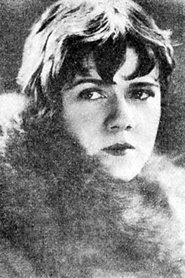
Frances Hyland
Narrator (English Version)
HomePage
Overview
This short documentary offers a portrait of life on a cattle ranch, for both its human and animal inhabitants. Featuring sprightly music by folk singer Pete Seeger and narration by theatre actress Frances Hyland, the film is shot through the seasons on a large Canadian cattle ranch near Kamloops, British Columbia. With hundreds of cows and calves on the ranch, there’s no shortage of work to be done: soil cultivation and crop maintenance are taken care of by seasonal ranch hands while the resident cowboys—“anxious guardians”—brand and breed their bovine charges.
Release Date
1961-05-01
Average
0
Rating:
0.0 startsTagline
Genres
Languages:
Keywords
Similar Movies

80%
Coast Modern(en)
2012-10-11
A core group of architects embraced the West Coast from Vancouver to LA with its particular geography and values and left behind a legacy of inspired dwellings. Today, architects celebrate the influence established by their predecessors.

77%
The Alpinist(en)
2021-02-07
Marc-André Leclerc, an exceptional climber, has made solo his religion and ice his homeland. When filmmaker Peter Mortimer begins his film, he places his camera at the base of a British Columbia cliff and waits patiently for the star climber to come down to answer his questions. Marc André, a little uncomfortable, prefers to return to the depths of the forest where he lives in a tent with his girlfriend Brette Harrington. In the heart of winter, Peter films vertiginous solos on fragile ice. He tries to make appointments with the climber who is never there and does not seem really concerned by this camera pointed at him "For me, it would not be a solo if there was someone else" . Marc-André is thus, the "pure light" of the mountaineers of his time, which marvel Barry Blanchard, Alex Honnold or Reinhold Messner, interviewed in the film. An event film for an extraordinary character.

0%
Beautiful Lennard Island(en)
1977-01-01

0%
Totems(en)
1944-01-01
For Indigenous peoples the totem pole is the symbol of life, portraying the relationship between humans and animals. Fitting into the landscape of British Columbia, these monuments, witnesses to an ancient and powerful culture, look down at us. The group "Indians of British Columbia" singing group provide a powerful soundtrack as Haida and Tsimshian people talk about poles in their communities.

0%
White Ravens: A Legacy of Resistance(en)
2018-05-11
Filmed on the island of Haida Gwaii, this documentary depicts the ongoing resistance and resurgence of the Haida people and their culture against the different manifestations and trauma of colonization.

83%
Invasion(en)
2020-05-01
In this era of “reconciliation”, Indigenous land is still being taken at gunpoint. Unist’ot’en Camp, Gidimt’en checkpoint and the larger Wet’suwet’en Nation are standing up to the Canadian government and corporations who continue colonial violence against Indigenous people. The Unist’ot’en Camp has been a beacon of resistance for nearly 10 years. It is a healing space for Indigenous people and settlers alike, and an active example of decolonization. The violence, environmental destruction, and disregard for human rights following TC Energy (formerly TransCanada) / Coastal GasLink’s interim injunction has been devastating to bear, but this fight is far from over.

0%
Silvicola(en)
2023-04-28
The human impact on forests is explored through breathtaking vistas and poignant vignettes set in Canada's Pacific Northwest. Those who rely on this precious resource highlight the tensions and dilemmas between commodification and conservation.

80%
Totem: Return and Renewal(en)
2007-01-01
In this follow-up to his 2003 film, Totem: the Return of the G'psgolox Pole, filmmaker Gil Cardinal documents the events of the final journey of the G'psgolox Pole as it returns home to Kitamaat and the Haisla people, from where it went missing in 1929.

0%
Warrior Boyz(en)
2008-01-01
To date, more than a hundred young men from the South Asian community have died in gang-related violence in Metro Vancouver. Gangs are a reality of urban life, yet behind the body count and the headlines, a far different battle is being waged. Educators and parents are taking action against gang violence. Director Baljit Sangra's documentary Warrior Boyz takes an unflinching look at the root causes of gang violence, and offers real solutions and a hard-fought hope for the future.

10%
The Stand(en)
2024-10-03
On a misty morning in the fall of 1985, a small group of Haida people blockaded a muddy dirt road on Lyell Island, demanding the government work with Indigenous people to find a way to protect the land and the future. In a riveting new feature documentary drawn from more than a hundred hours of archival footage and audio, award-winning director Christopher Auchter (Now Is the Time) recreates the critical moment when the Haida Nation’s resolute act of vision and conscience changed the world.

0%
Highway of Tears(nl)
Discover the endless highway in British Columbia where over 40 indigenous women and girls (by unofficial estimates) have disappeared since the 1970s.

0%
Nuxalk Radio(en)
2020-05-28
A day in the life of 91.1, Nuxalk Radio, a radio station built to help keep the Nuxalk language alive while broadcasting the laws of the lands and waters.

0%
Over Beautiful British Columbia: An Aerial Adventure(en)
2002-01-01
Over Beautiful British Columbia is a spectacular scenic tour of Canada's Pacific province. Savor the grandeur of British Columbia as you join a helicopter adventure from elegant Victoria to rugged Fort Nelson, from the ski slopes of Whistler to the sun-drenched Okanagan shores, from the razor spine of Mount Robson to the primeval coast of the Queen Charlotte Islands.

0%
The Story of the Coast Salish Knitters(en)
2000-01-01
For almost a century, the Coast Salish knitters of southern Vancouver Island have produced Cowichan sweaters from handspun wool. These distinctive sweaters are known and loved around the world, but the Indigenous women who make them remain largely invisible.

0%
Haida Carver(en)
1964-01-01
On Canada's Pacific coast this film finds a young Haida artist, Robert Davidson, shaping miniature totems from argillite, a jet-like stone. The film follows the artist to the island where he finds the stone, and then shows how he carves it in the manner of his grandfather, who taught him the craft.

0%
Wild in the City(en)
1986-01-27
This short documentary films some of the wild animal species that have adapted to the city of Vancouver, from the familiar pigeons and starlings to the less familiar herons nesting in Stanley Park and a coyote in a farmer's field.


39%
Beyond Gay: The Politics of Pride(en)
2010-03-26
Over the course of a year, film follows Vancouver Pride Society president Ken Coolen to various international Pride events, including Poland, Hungary, Russia, Sri Lanka and others where there is great opposition to pride parades. In North America, Pride is complicated by commercialization and a sense that the festivals are turning away from their political roots toward tourism, party promotion and entertainment. Christie documents the ways larger, more mainstream Pride events have supported the global Pride movement and how human rights components are being added to more established events. In the New York sequence, leaders organize an alternative Pride parade, the Drag March, set up to protest the corporatization of New York Pride. A parade in São Paulo, the world's largest Pride festival, itself includes a completely empty float, meant to symbolize all those lost to HIV and to anti-gay violence.

0%
Bill Reid Remembers(en)
2022-04-30
Renowned Haida artist Bill Reid shares his thoughts on artistry, activism and his deep affection for his homeland in this heartwarming tribute from Alanis Obomsawin to her friend's life, legacy and roots.

50%
Haida Gwaii: On the Edge of the World(en)
2015-11-20
Denizens of the British Columbia archipelago unite to protect their land.