Loading Page
2 degrés avant la fin du monde(2015)
Status: Released
Date: 2015-11-16
0%
0 Votes
Languages:
Countries:
France
Movie: 2 degrés avant la fin du monde
Top 1 Billed Cast
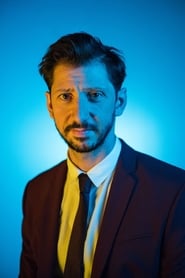
Camille Pierrandeli
lui-même
HomePage
Overview
Release Date
2015-11-16
Average
0
Rating:
0.0 startsTagline
Genres
Languages:
Keywords
Similar Movies


70%
The Lost Forest(en)
2020-05-22
How would natural habitats develop without human interference? In this documentary we follow an international team of scientists and explorers on an extraordinary mission in Mozambique to reach a forest that no human has set foot in. The team aims to collect data from the forest to help our understanding of how climate change is affecting our planet. But the forest sits atop a mountain, and to reach it, the team must first climb a sheer 100m wall of rock.

60%
Terra Antarctica, Re-Discovering the Seventh Continent(en)
2009-03-10
For six weeks we explored the Antarctic Peninsula by sea kayak, sailboat, foot and small plane, observing the fast changing evolution of this most remote place. Impacted by climate change - temperatures have warmed along the Peninsula faster than anywhere on the planet during the past 50 years - this part of Antarctica is also experiencing a boom in tourism and nations fighting over who owns what as its ice slowly disappears. This National Geographic-sponsored exploration is a one-of-a-kind look at Antarctica from a unique perspective - sea level.

62%
Antarctica: Ice & Sky(fr)
2015-10-21
Documentary about the work of Claude Lorius, who began studying Antarctic ice in 1957, and, in 1965, was the first scientist to be concerned about global warming.

0%
One Word(en)
2020-05-31
A documentary about the impacts of climate change on the Republic of the Marshall Islands and its people. Most parts of the Marshall Islands are less than 5.9 feet above sea level. Forecasts predict the uninhabitability of the country by 2050.

0%
We're All Going to Die(en)
2024-10-31
Ben is worried. Overwhelmed by the world's encroaching crises, he travels from Brandenburg to London to Kansas to the Yucatan peninsula and many places in between, to find out how to cope with social and ecological collapse.

40%
The Agency(es)
2020-12-04
A look at the work of a group of reporters and photographers from EFE, a Spanish news agency founded in 1939, which is celebrating its eightieth anniversary. A journey around the world —Mexico, Congo, USA, Libya, France, Spain, China and the Chilean Patagonia— with the purpose of honoring all people who work in the shadows, tirelessly seeking the truth in the era of social networks and fake news.


0%
Hot Planet(en)
2009-12-09
Professor Iain Stewart and Professor Kathy Sykes take a timely look at global warming, exploring the world's leading climate scientists' vision of the planet's future.

0%
Meltdown(en)
2021-02-12
For 30 years, Lynn Davis has photographed the magnificent icebergs of Greenland. Davis returned recently with climate change expert Tony Leiserowitz, where they take in the meltdown, and explore the implications for the planet.

67%
The Age of Consequences(en)
2016-06-10
'The Hurt Locker' meets 'An Inconvenient Truth', THE AGE OF CONSEQUENCES investigates the impacts of irreversible climate change, resource scarcity, mass migration, and pandemic conflict through the lens of US national security and global instability.

77%
Chasing Coral(en)
2017-03-16
Coral reefs are the nursery for all life in the oceans, a remarkable ecosystem that sustains us. Yet with carbon emissions warming the seas, a phenomenon called “coral bleaching”—a sign of mass coral death—has been accelerating around the world, and the public has no idea of the scale or implication of the catastrophe silently raging underwater.

66%
An Inconvenient Sequel: Truth to Power(en)
2017-07-28
A decade after An Inconvenient Truth brought climate change into the heart of popular culture comes the riveting and rousing follow-up that shows just how close we are to a real energy revolution. Vice President Al Gore continues his tireless fight, traveling around the world training an army of climate champions and influencing international climate policy. Cameras follow him behind the scenes—in moments private and public, funny and poignant—as he pursues the empowering notion that while the stakes have never been higher, the perils of climate change can be overcome with human ingenuity and passion.

0%
Energiepioniere(en)
2019-02-27
«Energy Pioneers» portrays two visionaries and their fellow campaigners as they fight to solving one of humanity’s most challenging problems. A film about obstacles, crises and the power of an idea.

70%
Ice on Fire(en)
2019-06-23
An eye-opening documentary that asks the question: Are we going to let climate change destroy civilization, or will we act on technologies that can reverse it? Featuring never-before-seen solutions on the many ways we can reduce carbon in the atmosphere thus paving the way for temperatures to go down, saving civilization.

77%
Breakpoint: A Counter History of Progress(fr)
2019-07-14
An account of the last two centuries of the Anthropocene, the Age of Man. How human beings have progressed so much in such a short time through war and the selfish interests of a few, belligerent politicians and captains of industry, damaging the welfare of the majority of mankind, impoverishing the weakest, greedily devouring the limited resources of the Earth.

77%
Before the Flood(en)
2016-10-21
A look at how climate change affects our environment and what society can do to prevent the demise of endangered species, ecosystems, and native communities across the planet.

71%
Climate Change: The Facts(en)
2019-04-18
After one of the hottest years on record, Sir David Attenborough looks at the science of climate change and potential solutions to this global threat. Interviews with some of the world’s leading climate scientists explore recent extreme weather conditions such as unprecedented storms and catastrophic wildfires. They also reveal what dangerous levels of climate change could mean for both human populations and the natural world in the future.

70%
Landscapes at the World's Ends(en)
2010-05-16
A non-verbal visual journey to the polar regions of our planet portrayed through a triptych montage of photography and video. Landscapes at the World's Ends is a multi-dimensional canvas of imagery recorded above the Arctic Circle and below the Antarctic Convergence, viewed through the lens of whom is realistically an alien in this environment, the polar tourist. Filmed during several artist residencies on-board three expedition vessels, New Zealand nature photographer and filmmaker Richard Sidey documents light and time in an effort to share his experiences and the beauty that exists over the frozen seas. Set to an ambient score by Norwegian Arctic based musician, Boreal Taiga, this experimental documentary transports us to the islands of South Georgia, the Antarctic Peninsula, Greenland and Svalbard. Landscapes at the World's Ends is the first film in Sidey's Speechless trilogy, and is followed by Speechless: The Polar Realm (2015) and Elementa (2020).
