
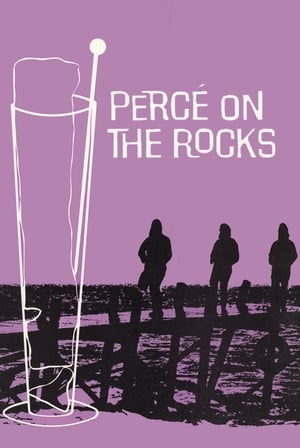
Percé on the Rocks(1964)
This quirky little short by Gilles Carle was filmed on the pierced rock that stands near Quebec’s Gaspé peninsula. It is perhaps the most photographed natural phenomenon on Canada’s East Coast. Shot in the 1960s, the film has a very psychedelic feel to it, with animation, special effects, and a trio of women to guide us through.

Movie: Percé on the Rocks
Top 3 Billed Cast

(voice)

(voice)
(voice)
HomePage
Overview
This quirky little short by Gilles Carle was filmed on the pierced rock that stands near Quebec’s Gaspé peninsula. It is perhaps the most photographed natural phenomenon on Canada’s East Coast. Shot in the 1960s, the film has a very psychedelic feel to it, with animation, special effects, and a trio of women to guide us through.
Release Date
1964-01-01
Average
0
Rating:
0.0 startsTagline
Genres
Languages:
FrançaisKeywords
Similar Movies

Québec...?(fr)
This short documentary film is a fascinating portrait of urban and rural Quebec in the late 1960s, as the province entered modernity. The collective work produced for the Quebec Ministry of Industry and Commerce calls on several major Quebec figures.

Les héritiers(fr)
Gilles Groulx's first film shot in 1955 with a camera borrowed from his brother and edited during his spare time when he worked as an editor at the Radio-Canada news service a few years before he joined the NFB. Silent film, presented as its author left it, where the soil and the dialectic of Groulx's work are already there: documentary realism, the social space to be explored, daily life, the relationship between individual and society, social disparities, the consumer society, seduction and happiness.


R. Roussil, From the Ground Up(fr)
Robert Roussil, one of the central figures of Québec sculpture, left a profound mark on art history with his bold creations and unwavering commitment to freedom of expression. However, since his death in 2013, his legacy seems to be fading. This film seeks to revive the memory of this visionary artist by delving into his work and philosophy. Constructed from a rich body of archival footage, the documentary also draws on numerous interviews given by Roussil throughout his career. The film traces his journey from his early exile in France to his life in a mill in Tourrettes-sur-Loup, in the Provence-Alpes-Côte d’Azur region, where he created most of his works. The narrative opens the doors to his home and studio, while also shedding light on his sculptures, still visible in Montreal, which continue to reflect his lasting influence.

Nanook of the North(en)
This pioneering documentary film depicts the lives of the indigenous Inuit people of Canada's northern Quebec region. Although the production contains some fictional elements, it vividly shows how its resourceful subjects survive in such a harsh climate, revealing how they construct their igloo homes and find food by hunting and fishing. The film also captures the beautiful, if unforgiving, frozen landscape of the Great White North, far removed from conventional civilization.

Tshiuetin(fr)
Take a breathtaking train a ride through Nothern Quebec and Labrador on Canada’s first First Nations-owned railway. Come for the celebration of the power of independence, the crucial importance of aboriginal owned businesses and stay for the beauty of the northern landscape.

Asbestos(fr)
A cinematic and introspective look at the residents of a Quebec town—once the site of the world's largest asbestos mine—as they grapple with their community's industrial past. Striving to honour their heritage while reconciling with their history and forging a new path forward, the miners delve into the intricacies of progress and healing.

Madwoman of God(fr)
This feature-length film tells the story of the passion between Marie de l’Incarnation, a mid-seventeenth-century nun and God, her "divine spouse." Fusing documentary and acting by Marie Tifo, whom we follow as she rehearses for this demanding role, the film paints an astonishing portrait of this mystic who abandoned her son and left France to build a convent in Canada, where she became the first female writer in New France.

The Mosque(en)
The story of the Quebec Mosque Shooting—the first ever mass shooting in a mosque in the West—is known around the world, but the story of the community that survived the attack is all but unknown. The Mosque: A Community's Struggle is an intimate portrait of the resilient Muslim community of Ste-Foy, Québec, as they struggle to survive and shift the narrative of what it means to be a Muslim, one year after the devastating attack that took the lives of six of their members. As the world moves on, this small mosque and its community fights Islamophobia, harassment and hate speech. How will the community heal and how will they stop the rhetoric that threatens to precipitate further violence?

Resources(fr)
Co-directors Hubert Caron-Guay and Serge-Olivier Rondeau follow migrant workers through the steps in the hiring process of a community-based employment assistance organization. The filmmakers highlight the migrants’ difficult path by capturing conversations between the future employees and the recruiters. Through images shot on a body camera and a minimalist observational approach, the film exposes harsh and poignant realities. It draws parallels between the changing of the seasons and the cycle of the cattle industry that begins with animals being raised and cared for at a ranch and ends with them being sent to the abattoir grimly looming in the background. Ressources is a sobering and thought-provoking work that gives a voice to those who are at the heart of the food system that sustains this country.

Trinité(fr)


Through Your Eyes(fr)
In an effort to understand where she came from, Fabiola asked a question that became the central phrase of the film: what would my life have been like if I'd stayed in Haiti? Taking as her starting point her biological mother's precarious economic situation, she had no choice but to entrust her daughter to her care. Fabiola could have ended up restavek, or in a loving foster family, or on the streets abandoned to her fate, or adopted abroad.

The Hearing(fr)
After crossing 11 countries irregularly to seek asylum in Canada, Peggy, Simon and their three children are waiting for the hearing that will determine whether they get refugee status or not. Having fled political repression in the Democratic Republic of the Congo, the family tries to rebuild a peaceful life in Montreal, in spite of the constant threat of deportation. Between ghosts from the past, hopes for the future, a complex legal maze and seemingly endless trial, the film delves into the struggle of the Nkunga Mbala family to remain in Canada. Offering unprecedented access to their hearing before the Immigration and Refugee Board, the film unveils the opaque process of claiming asylum in Canada.


It Will Always End in the End(fr)
Gabriel Drolet-Maguire, a designer living in Montreal, takes us into their artistic world to discuss their HIV diagnosis. This is a timely and hopeful look at past and present day HIV/AIDS activism in Quebec.

Canada Mania(fr)

La bataille de Saint-Léonard(fr)

Passages(fr)
Five women from the North to the South of Quebec embark on a multisport expedition following the Koroc river in Nunavik. Travelling together against adversity, this journey soon becomes one of self-discovery for each participant.

Cozic(fr)
Portrait of the Canadian artist duo Cozic, composed of Monic Brassard (1944) and Yvon Cozic (1942). United in life and creation, the couple works with industrial materials in vibrant colors to create ecological and playful artworks. From the carefree hippie years of the 1960s to major public art commissions, their work reflects the evolution of our relationship with nature and the industrial world. Today, from their remarkable estate in Sainte-Anne-de-la-Rochelle in the Eastern Townships, the duo is preparing for their major retrospective at the Musée national des beaux-arts de Québec.