Loading Page

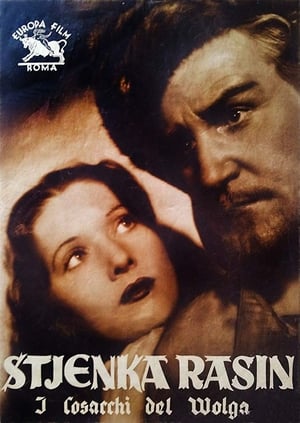
Movie: Stjenka Rasin
Top 10 Billed Cast

Wera Engels
Prinzessin Dolgoruki

Hans Adalbert Schlettow
Stjenka Rasin

Heinrich George
Fürst Dolgoruki
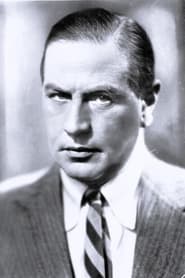
Anton Pointner
Fürst Prosorowsky

Rudolf Platte
Filka
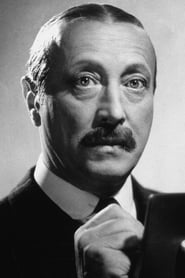
Hubert von Meyerinck
Borodin
HomePage
Overview
Release Date
1936-05-01
Average
0
Rating:
0.0 startsTagline
Genres
Languages:
Keywords
Similar Movies

62%
Poznań 56(pl)
1996-11-28
The film depicts the momentous and tragic history of the Poznan uprising of 1956. The memory of the director, who was a nine-year-old boy at the time, is the only canvass of the script. The main characters of the black-and-white film are two boys aged ten and twelve. From their perspective, the viewer follows the development of events. From the depths of the gates, through the rails of fences and cluttered backyards, through the eyes of the children we watch the street riots. The film, without action in the literal sense of the word, was made using a reportage technique that perfectly captures the spontaneity of the Poznan uprising. Among other things, the author of the picture depicts the adventures of a young worker Zenek, who becomes the unwitting leader of the protest, and five professors, who by chance find themselves in the very center of events.

70%
Rozina the Love Child(cs)
1945-12-14
Prague, the beginning of the 17th century. Rozina falls in love with Italian glass worker Nikolo, but after returning home, she gets a message that will never come to Prague. She falls for the promise of an older man to marry her, but when Nikolo does return, the tragic fate of Rozina is sealed.

63%
A Little Chaos(en)
2015-03-26
A landscape gardener is hired by famous architect Le Nôtre to construct the grand gardens at the palace of Versailles. As the two work on the palace, they find themselves drawn to each other and are thrown into rivalries within the court of King Louis XIV.

65%
The Sailor's Song(de)
1958-11-09
A film about the historical uprising of the seamen in Kiel: During the Russian October Revolution of 1917, German and Russian soldiers start to solidarize with each other. By disarming the officers, machinist Henne Lonke and stoker Jens Kasten prevent the attack on a Russian freighter. When German admiralty gives out orders for operation "Nibelungen", which would lead the German fleet into a suicidal attack against England and quell the revolutionary spirit, seamen and soldiers from different political backgrounds unite in protest.


52%
Nzinga, Queen of Angola(pt)
2013-11-08
In the 17th century a warrior woman fights for the independence of Angola. After witnessing the murder of her son and watching her people being humiliated by Portuguese colonizers, Njinga will become a Queen and struggle for their liberation embodying the motto: those who stay fight to win.

50%
A Cuban Fight Against Demons(es)
1972-01-02
In 1672 Cuban revolutionaries launch an uprising against the Spanish who are occupying the country. Preserved by the Academy Film Archive in 2017.

65%
Admiral(nl)
2015-01-29
When the young republic of The Netherlands is attacked by England, France and Germany and faces its own civil war no less, only one man, Michael de Ruyter, can lead the county's strongest weapon, the Dutch fleet.

71%
Warsaw Uprising(pl)
2014-05-09
It tells the story of the Warsaw Uprising of 1944 through the eyes of a US airman, escaper from the Nazi Stalag camp and two young reporters, cameramen for the Bureau of Information and Propaganda of the Polish Home Army. Their mission: documenting the Uprising by shooting newsreels for the “Palladium” cinema. Looking for the right shots, they go deeper and deeper – literally and figuratively – into the heart of the Uprising. Traumatic truth becomes obvious. Aware of being witnesses of indescribable events, they realize their duties: to document them and preserve the rolls of film at any cost…

70%
Cossacks Approaching(uk)
1991-08-09
Ukraine. The end of the XV century. All gunpowder made in factories suddenly disappears. The company of cossacks led by Maksym Trytuz comes together to find one of the transports that carries gunpowder to the Zaporozhian Sich.

41%
Influence(pl)
2015-01-23
A story about the key events of the Wielkopolska Uprising - a dramatic arrival of Ignacy Jan Paderewski in Poznań, and the people who prepared the uprising, fought in it and won.

60%
Mazeppa, Folk Hero of the Ukraine(de)
1919-07-01
The film tells the story of Ivan Mazeppa, a Ukrainian page at the Polish court who has an affair with the young wife of a much older count. Outraged when he learns of the incident, the nobleman has Mazeppa tied naked to a wild horse which is then released into the wilderness. The bulk of the poem describes the long hazardous journey during which Mazeppa almost dies twice but ultimately survives and returns to his native Ukraine.

63%
Chaar Sahibzaade(pa)
2014-11-06
Ajit Singh, Jujhar Singh, Zorawar Singh, and Fateh Singh, the four sons of Sikh Guru Gobind Singh Ji, sacrifice their lives in an important battle against the Mughals.

60%
The Frigid Sea(ru)
1954-01-01
Several commercial fishermen were attacked by sea pirates and were forced to spend more than one year on a desert island. Many considered them dead - but almost all of them managed to survive ...

70%
The Witch(en)
2016-02-19
In 1630, a farmer relocates his family to a remote plot of land on the edge of a forest where strange, unsettling things happen. With suspicion and paranoia mounting, each family member's faith, loyalty and love are tested in shocking ways.

77%
The Pilgrims(en)
2015-11-24
Arguably one of the most fateful and resonant events of the last half millennium, the Pilgrims journey west across the Atlantic in the early 17th century is a seminal, if often misunderstood episode of American and world history. The Pilgrims explores the forces, circumstances, personalities and events that converged to exile the English group in Holland and eventually propel their crossing to the New World; a story universally familiar in broad outline, but almost entirely unfamiliar to a general audience in its rich and compelling historical actuality. Includes the real history of the "first thanksgiving".

42%
The Last One Will Go to Hell(cs)
1982-07-23
A historical film that takes place on the eve of the thirty year war combines aspects of fairy-tales with historical dramas, fencing with a child heroes who find themselves in great dangers. We are in the year 1611 and mercenaries that had previously invaded Czech lands now have to withdraw before the Hungarian king's army. In this chaos a magical bottle, that fulfills the owner one single wish, appears among some fugitives - however after the fulfillment it has to be sold for half it's price to a new owner. The director Ludvík Ráža has created an attractive and surprisingly cruel film aimed not only at young viewers.

64%
Caravaggio's Shadow(it)
2022-11-03
The Catholic Church secretly investigates Caravaggio as the Pope weighs whether to grant him clemency for killing a rival.

10%
The Black Tulip(nl)
1921-08-19
In 17th century Holland, a faction of royalists is scheming to restore the monarchy and jail the De Witt brothers, who control the Republic. At the same time Tulip Fever is raging, and bulb-grower Cornelis van Baerle tries to obtain the secret of black tulips. Van Baerle will soon find himself threatened by radical royalists and rival bulb-grower Isaac van Boxtel.

0%
The Month of Dreams(hu)
2017-04-21
It is 1680 – the time of dreamt snow after the Turkish invasion. In the deserted plains of Bácska a living soul cannot be found in a few-days’ walk. Three former prisoners returning from their Turkish captivity – Long-Legged, Lame and One-Eyed – appear among the crumbling walls of a huge abandoned church without a roof. They are looking for their long lost home. How to revive a disappeared civilization? What is the survivors’ personal duty? Without a roof, a collapse is inevitable. The Old Man – a master of ancient knowledge – and his daughter come and with sharing sowing seeds they try to save the community of dispersion. No spiritual leader, no aims. Driven by rapacity, One-Eyed kills the Old Man, rapes his daughter and while looking for the remaining seeds he kills Long-Legged with a sudden anger. At the end of the film, the survivors need to face with dramatic encounters and special temptations. Their redemption under the leadership of Lame’s young son is the pledge for the future.