
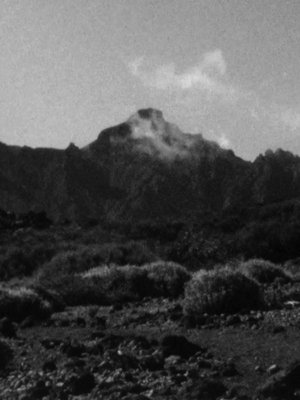
Timanfaya(2015)
Lanzarote, a volcanic island of the Canary Islands was shaped in the eighteenth century by a series of eruptions. It preserves its memory through semi-desert mineral landscapes. In 2015, I traveled this territory in search of the cataclysm. In this devastated landscape, traces of a return to life were emerging.
Movie: Timanfaya
HomePage
Overview
Lanzarote, a volcanic island of the Canary Islands was shaped in the eighteenth century by a series of eruptions. It preserves its memory through semi-desert mineral landscapes. In 2015, I traveled this territory in search of the cataclysm. In this devastated landscape, traces of a return to life were emerging.
Release Date
2015-07-09
Average
0
Rating:
0.0 startsTagline
Genres
Languages:
Keywords
Similar Movies

Aquí estamos(es)

Wild El Salvador: In the Shadow of the Volcanoes(en)
Join affable presenter Nigel Marven as he explores El Salvador, the volatile land of volcanoes with a colorful culture and natural history. Follow along as he climbs an active volcano near the capital San Salvador, comes face-to-face with a crocodile, cuddles a caecilian, fights fire with fire, dives deep into a volcanic lake, and discovers the Pompeii of Central America.


Elementa(en)
A black-and-white visual meditation of wilderness and the elements. Wildlife filmmaker Richard Sidey returns to the triptych format for a cinematic experience like no other.

Deadly Peaks(en)
Documentaries by Katia and Maurice Krafft feature some of the amazing footage shot by the renowned volcanologists, who perished in 1991 while filming a volcano in Japan. The duo documented more active and erupting volcanos than any other scientists in the world, and their dedication shows in Deadly Peaks and Killer Volcanos, two educational films that capture the scientists on the edge of a hot ash blast and floating on a lake of sulfuric acid. The films visit Mount Kilimanjaro and examine some of the less-known dangers such as carbon monoxide gas that builds under crater-formed lakes. They also take an in-depth look at the eruption of Mount St. Helens and the lengths to which people will go to save their communities. Venturing to places where most people would never dare, the Kraffts gave their lives to promote the study of volcanos and left behind a legacy of courage in the name of science. --Shannon Gee

Killer Volcanoes(en)
Documentaries by Katia and Maurice Krafft feature some of the amazing footage shot by the renowned volcanologists, who perished in 1991 while filming a volcano in Japan. The duo documented more active and erupting volcanos than any other scientists in the world, and their dedication shows in Deadly Peaks and Killer Volcanos, two educational films that capture the scientists on the edge of a hot ash blast and floating on a lake of sulfuric acid. The films visit Mount Kilimanjaro and examine some of the less-known dangers such as carbon monoxide gas that builds under crater-formed lakes. They also take an in-depth look at the eruption of Mount St. Helens and the lengths to which people will go to save their communities. Venturing to places where most people would never dare, the Kraffts gave their lives to promote the study of volcanos and left behind a legacy of courage in the name of science. --Shannon Gee

Volcano!(en)
For more than 20 years, Maurice & Katia Krafft have traveled the world. From Iceland to Hawaii, from Africa to Indonesia, they are usually the first to reach the scene of an eruption. Join them as they risk their lives to document the birth of a volcano.

Tenerife(en)
March 27, 1977. At 2:00 in the afternoon, a thick fog rolled into the usually quiet Los Rodeos Airport in Tenerife, in the Canary Islands. On the runway sat two fully loaded jumbo airliners. An explosion at a nearby airport had redirected air traffic to the undermanned airfield at Tenerife. Within three hours 583 people would be dead. This film reconstructs the moments leading up to the tragedy.

Earth: The Inside Story(en)
Earthquakes, tsunamis, volcanic eruptions, and extreme weather. Has Earth always been this way? Featuring footage of top geologic hot spots on every continent, the film traces the scientifically-based story of the 4.5 billion-year-old Earth, from the core to the crust and up into the atmosphere.


Into the Inferno(en)
With stunning views of eruptions and lava flows, Werner Herzog captures the raw power of volcanoes and their ties to indigenous spiritual practices.

Neanderthal Apocalypse(en)
40, 000 years ago the steppes of Eurasia were home to our closest human relative, the Neanderthals. Recent genetic and archaeological discoveries have proven that they were not the dim-witted cave dwellers we long thought they were. In fact, they were cultured, technologically savvy and more like us than we ever imagined! So why did they disappear? We accompany scientists on an exciting search for an answer to this question and come to a startling conclusion …


Iceland: The Quest for Origins(fr)
The fascinating landscape formations of Iceland in the North Atlantic bear witness to the beauty and primal power of nature. They were created through the interaction of powerful volcanic, geological and biological processes that have been changing the face of the earth for billions of years. This is what the Earth might have looked like four billion years ago. Iceland is the realm of ice and fire. Nowhere else is there such a high density of volcanoes. The landscapes, which are continually reshaped by eruptions, make the island a natural laboratory full of clues about the formation and development of the earth. The documentary follows a group of scientists through the most active areas of Iceland, along a mountain range that has emerged from the ocean. On the slopes of the volcanoes, in the fog of the fumaroles and on streams and rivers, the three researchers explore how the first forms of life populated the earth's surface and in what evolutionary steps they took over the earth.

Krakatoa(en)
On the morning of August 27, 1883, the rumbling volcano of Krakatoa stood more than 6,000 feet high, with a diameter of approximately 10 miles. Later that day, this giant cone exploded so violently it was literally blown away. The effects of the volcanic explosion caused a tidal wave more than 140 feet high; one ship was carried more than two miles inland. Hail-sized stones fell as far as 100 miles away, and the city of Jakarta fell into total darkness. For many of the area's inhabitants, Armageddon had arrived. Over 36,000 people were killed immediately, and countries all over the globe were affected by the volcano's devastating after-effects.

A Volcano Odyssey(fr)
The epic story of the life of a volcano, capable of both causing the extinction of all things and helping the evolution of species, over 60 million years.

Face of the Earth(en)
Face of the Earth explores the origin of our planet's outer layer, the why-and-how of its mobility. Through the use of well-designed diagrams, the earth's cyclical activity is clearly explained. Some unusual footage on volcanoes gives added punch to an already absorbing subject.

Encounters at the End of the World(en)
Herzog and cinematographer Peter Zeitlinger go to Antarctica to meet people who live and work there, and to capture footage of the continent's unique locations. Herzog's voiceover narration explains that his film will not be a typical Antarctica film about "fluffy penguins", but will explore the dreams of the people and the landscape.