Loading Page

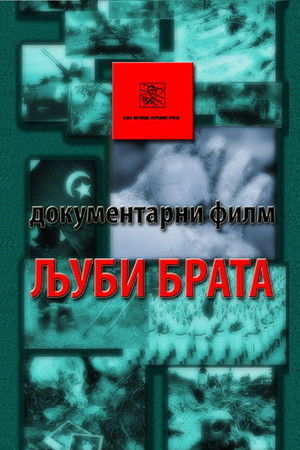
Kiss the Brother(2009)
Status: Released
Date: 2009-09-15
0%
0 Votes
Time: 1h 52m
Overview:
Documentary about the massacre of Bosniak army committed over soldiers of Republika Srpska during 1990s Bosnian wars.
Languages: Bosnian.
Countries:
Bosnia and Herzegovina
ProductionCompanies:
NRTV Banja Luka
Movie: Kiss the Brother
HomePage
Overview
Documentary about the massacre of Bosniak army committed over soldiers of Republika Srpska during 1990s Bosnian wars.
Release Date
2009-09-15
Average
0
Rating:
0.0 startsTagline
Genres
Languages:
BosanskiKeywords
Similar Movies

55%
Serbian Epics(en)
1992-07-16
Paul Pawlikowski's award-winning documentary on life behind Serbian lines in Bosnia. The film observes the roots of the extreme nationalism which has torn apart a country and provides a chilling examination of the dangerous power of ancient nationalist myths.

60%
Corporate Accountability(es)
2020-02-21
Images of Argentinian companies and factories in the first light of day, seen from the inside of a car, while the director reads out documents in voiceover that reveals the collusion of the same concerns in the military dictatorship’s terror.

70%
Back to Bosnia(en)
2005-01-01
Filmmaker Sabina Vajraca documents her Bosnian Muslim family's return to their home of Banja Luka, Bosnia, to recover their stolen belongings many years after being forced to flee to the United States. In Bosnia, they witness the devastation of the city, visit war crimes sites, and confront the family that has been living in their former apartment -- with all their furnishings -- for a decade.

64%
Kiss the Future(en)
2024-02-23
An exploration of the perils of nationalism and art’s role as a weapon of resistance and activism throughout the 1990s Siege of Sarajevo during the Bosnian War. Explore how art and music sustained hope, thanks in part to humanitarians and the band U2.

0%
Endphase(en)
2021-06-02
Endphase tells the story of one the last WWII massacres which was not spoken about for 75 years. In the night of 2 May 1945, 228 Jewish women, children and old men were murdered in Hofamt Priel, a small village in Austria. The perpetrators were never found. The film is a journey into the past of the neighbouring communities Persenbeug and Hofamt Priel, where the brothers Hans and Tobias Hochstöger grew up. In search of an explanation they speak with the last local eyewitnesses and find Yakov Schwarz, the last survivor, and his family in Israel.

67%
Mazar Sharif(fa)
2015-09-09
An Iranian diplomat who miraculously survived Taliban's raid on the Iranian consulate in Mazar E Sharif (Afghanistan) narrates his 19 days of hide and escape to reach Iran's borders meanwhile on the other side, the Iranian troops are preparing for retaliation.

70%
Burying the Past: Legacy of the Mountain Meadows Massacre(en)
2004-02-10
This documentary by filmmaker Brian Patrick explores the history and legacy of one of the most brutal massacres in the history of the American west. It examine the relationship between the descendants of the besieged party to the modern day Mormon church, and whether healing is a possibility.

73%
Wilmington on Fire(en)
2015-11-14
A historical and present day look at the Wilmington Massacre of 1898 and how the descendants of the victims of the event are asking for legal action in regards to compensation.

80%
A Failed Peace, The Mistakes of The Treaty of Versailles(fr)
2019-11-11
At the end of WWI, the treaty of Versailles established the conditions for peace in Europe. The aim for the victorious powers was to make Germany pay reparations, and to guarantee a future without war. Yet a decade later, the denunciation of 'Versailles' became a powerful lever for the nazis to obtain power as these reparations would mark the beginning of the humiliation of the German people, and nurture a feeling of having been bestowed a hopeless future. In the 20 years that follow the end of WWI, the issue of reparations and responsibility will effectively poison international relationship. The treaty negative impact goes well beyond WWII as the new European borders it implemented led to many conflicts during the twentieth century. This documentary shines a light on the causality between the decisions taken with the treaty of Versailles, and the ensuing events of the century.


10%
Harvested Alive(en)
2016-11-28
As a doctor, Zhiyuan Wang spent 30 years studying how to save lives. He never imagined that he would spend another 10 years investigating how Chinese doctors take innocent lives. 95% of his evidence comes directly from China. His sources are Chinese doctors, judges, legislators, military officials, government officials, the media, and hospital websites. His research reveals an inconceivable truth – China’s hospitals, judiciary, and military worked together under the authority of the previous Chinese president Jiang Zemin to mercilessly slaughter a large number of Falun Gong practitioners through the harvesting of their organs. Today in a time of peace, it is difficult for people to believe that such a large-scale massacre has been silently taking place in China. But the truth shows that this frenzied killing machine, driven by huge profits, is still running rampant in society.

70%
Sharkwater Extinction(en)
2018-09-07
Discovering that sharks are being hunted to extinction, and with them the destruction of our life support system - activist and filmmaker Rob Stewart embarks on a dangerous quest to stop the slaughter. Following the sharks - and the money - into the elusive pirate fishing industry, Stewart uncovers a multi-billion dollar scandal that makes us all accomplices in the greatest wildlife massacre ever known.

0%
Macedonian(sr)
2015-03-24
A tale of victory of humanism over revenge motif. Amir Reko (nicknamed "Macedonian", but actually Bosnian Muslim by ethnicity), the ex-captain of Yugoslav People's Army, saved lives of 44 Serb civilians during the siege of Gorazde in 1992. He went through personal and professional temptation during the war, while plenty of other officers ended up in Hague or other international criminal courts across Europe.

60%
Scars Of Nanking(en)
2017-12-12
During the brutal invasion of China in 1937 by Imperial Japanese forces, tens of thousands of civilians and prisoners of war are murdered and women raped in what is known simply as "The Rape of Nanking." This docudrama is a stirring account of a small band of courageous American missionaries who choose to stay in Nanking to try and protect a quarter million vulnerable Chinese civilians who are trapped in a city ruled by a savage, out of control army. Their stories are brought vividly to life through actual real-time letters and diaries as they bear witness to one of the worst wartime atrocities in history.

72%
The Trial of Ratko Mladic(en)
2018-11-18
The war crimes trial of Ratko Mladic, accused of masterminding the murder of over 7000 Muslim men and boys in Srebrenica in the 90s Bosnian war, the worst crime in Europe since WW2.

80%
Rise Again: Tulsa and the Red Summer(en)
2021-06-18
Comes one hundred years from the two-day Tulsa Massacre in 1921 that led to the murder of as many as 300 Black people and left as many as 10,000 homeless and displaced.

70%
Spell Your Name(en)
2006-09-01
he film is based on the testimonies of survivors of the Holocaust that were collected by The Visual Library Archive of USC Shoah Foundation. Director Sergey Bukovsky takes the viewer on a journey of discovery as he and several Ukrainian students absorb the testimony of Ukrainian people who escaped brutal execution and those who rescued friends and neighbors during the Holocaust. A collection of men and women share the details of their experiences, and we are afforded a glimpse of modern-day Ukraine: the ethnic stereotypes that continue to exist and the manner in which Post-Soviet society is dealing with the question of how to memorialize the sites where tens of thousands of Jewish families and others were executed and thrown into mass graves.

63%
Dreamland: The Burning of Black Wall Street(en)
2021-05-31
This documentary celebrates the Black cultural renaissance that existed in the Greenwood district of Tulsa, OK, and investigates the 100-year-old race massacre that left an indelible, though hidden stain on American history.