Loading Page

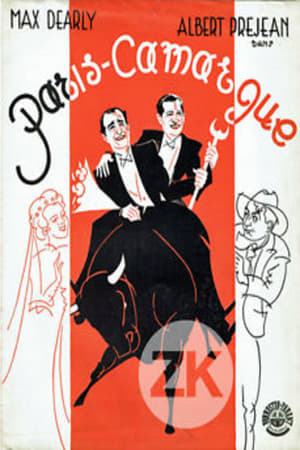
Paris-Camargue(1935)
Status: Released
Date: 1935-09-06
0%
0 Votes
Time: 1h 20m
Overview:
In the Camargue, the rich owner Jules Fabregoul squanders all his fortune to please his mistress, a Parisian actress with luxury tastes. But he is not the only one to be in trouble. His niece is having sentimental problems: she thinks she is being cheated on by her fiance Gérard, a music-hall artist. She takes refuge with Jules's sister, Aunt Fabregoul, the director of a home for repentant young girls. But Gérard did not make a mistake and the reconciliation takes place during the recording of a radio program.
Languages:
Countries:
Movie: Paris-Camargue
Top 10 Billed Cast

Albert Préjean
Gérard Davilliers
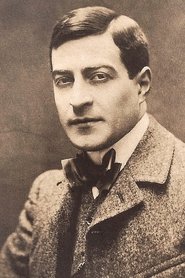
Max Dearly
Jules Fabrejoul
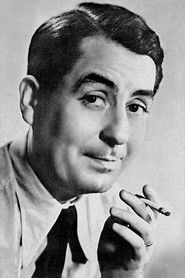
Julien Carette
Escanette

Simone Cerdan
Martine
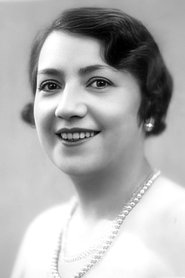
Luce Fabiole

Pierre Finaly
Anthony Gildès

Paule Launay
HomePage
Overview
In the Camargue, the rich owner Jules Fabregoul squanders all his fortune to please his mistress, a Parisian actress with luxury tastes. But he is not the only one to be in trouble. His niece is having sentimental problems: she thinks she is being cheated on by her fiance Gérard, a music-hall artist. She takes refuge with Jules's sister, Aunt Fabregoul, the director of a home for repentant young girls. But Gérard did not make a mistake and the reconciliation takes place during the recording of a radio program.
Release Date
1935-09-06
Average
0
Rating:
0.0 startsTagline
Genres
Languages:
Keywords
Similar Movies

74%
Thomas Pesquet : Objectif France(fr)
2023-02-02

0%
A French Youth(fr)
2024-11-15
In the heart of the Camargue region, in the south of France, Jawad and Belka find freedom in their love of Camargue races. For these young Maghrebi men, the event is more than a simple tradition. Facing off with a bull is an opportunity to establish their place in the arena—and in French society. But at what cost?

55%
La Camargue(fr)
1966-01-01
A short 6-minute essay-documentary by Maurice Pialat on the region in which much of the action of Nous ne vieillirons pas ensemble unfolds.

80%
Dream of the Wild Horses(fr)
1960-06-01
The horses in Denys Colomb Daunant’s dream poem are the white beasts of the marshlands of the Camargue in South West France. Daunant was haunted by these creatures. His obsession was first visualized when he wrote the autobiographical script for Albert Lamorisse’s award-winning 1953 film White Mane. In this short the beauty of the horses is captured with a variety of film techniques and by Jacques Lasry’s beautiful electronic score.

50%
Vendetta in Camargue(fr)
1950-08-23
The young Huguette arrives in Camargue to take over the farmhouse and the breeding of bulls from which she has just inherited - Huguette has to face the thefts of horses and bulls by the Romanichels and stand up to the Gardians, who do not appreciate being commanded by a young woman. Fortunately, her neighbor Fred will be there to help her to overcome all these obstacles.

0%
King of the Camargue(fr)
1935-01-24
A gypsy has cast a spell on Livette, the fiancee of Renaud, the proud guardian nicknamed, King of the Camargue. Renaud wants to punish the witch who frightened Livette. But then, meeting the gypsy, he is taken under the strange spell that emanates from her. She arranges to meet him in an isolated hut in the middle of the muddy ponds. Livette, warned of her betrothed betrayal, goes to the place where she is to meet the infidel. But Renaud changed the stakes that line the only fordable passage. And Livette dies, even more from Renaud's betrayal.

60%
The Guardian of Camargue(fr)
1910-01-01
This charming short film was shot in the Camargue, probably in the same place where Jean Durand filmed his cowboy movies. The plot is very simple. A guardian falls in love with a Parisian. Desperate, he commits suicide when she returns to the capital. But, as always with Perret, we appreciate the framing, the skilful use of the exteriors and the documentary side of life of the time. We see the young Arlesianas in traditional dress go out to collect almonds and return with their baskets to the city. The actor in the role of the guardian overreacts, imitating bombastic despair. But the finale, in which he rides a horse through the waves to find the rest of death, preserves its charm intact. Perret knows how to set the rhythm of a sequence and give it the necessary atmosphere.

0%
King of Camargue(fr)
1922-01-20
At the mouth of the Rhone, Jacques Renaud and his fiancee Lisette are cursed by a gypsy woman as punishment for their wrong decision.