Loading Page

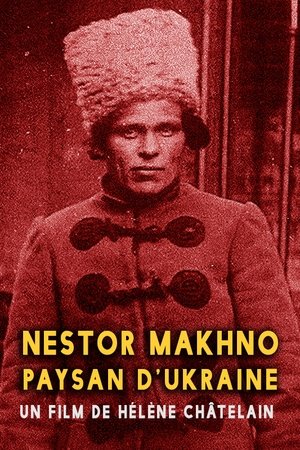
Nestor Makhno(1996)
Status: Released
Date: 1996-04-16
0%
0 Votes
Time: 1h 0m
Overview:
With breathless pace, Hélène Chatelain ("the woman" in "La Jetée") reconstructs the life of Nestor Makhno from his writings, Soviet propaganda films, reactions of workers today and the memory he has left in the hearts & minds of his people in Gouliaïpolié, in the east of the Ukraine.
Languages: French, Ukrainian.
Countries:
France,
Ukraine
Movie: Nestor Makhno
HomePage
Overview
With breathless pace, Hélène Chatelain ("the woman" in "La Jetée") reconstructs the life of Nestor Makhno from his writings, Soviet propaganda films, reactions of workers today and the memory he has left in the hearts & minds of his people in Gouliaïpolié, in the east of the Ukraine.
Release Date
1996-04-16
Average
0
Rating:
0.0 startsTagline
Genres
Languages:
FrançaisУкраїнськийKeywords
Similar Movies

83%
Ukraine: Enemy in the Woods(en)
2024-03-25
A revealing and moving portrait of lives compromised by war, filmed exclusively by Ukrainian soldiers with extraordinary access to a tightly-controlled frontline.

10%
Ukraine-Poland: The Border of Solidarity(fr)
2022-05-24
Since 24 February 2022, when the Russian invasion of Ukraine began, several million refugees have already been taken in by Poles. In the Lublin region, near the Bug River, which marks the border with Ukraine and Belarus, farmers, shopkeepers, a photographer, and a teacher tell how their daily lives have been transformed by the outbreak of this war.

75%
Camp Century: The Hidden City Beneath the Ice(de)
2020-01-08
How in 1959, during the heat of the Cold War, the government of the United States decided to create a secret military base located in the far north of Greenland: Camp Century, almost a real town with roads and houses, a nuclear plant to provide power and silos to house missiles aimed at the Soviet Union.

80%
The War of Chimeras(uk)
2017-03-25
The story of war, love and death that was documented by the immediate participants of events. Off screen and later on it are the two - a boy and a girl. He volunteered for the front; she went to the place just after the battle. He got into Ilovaysk cauldron, lost his closest brother-soldiers. She, while travelling along the ruined towns, strives to understand the essence of war and love. Both tell openly one another about their feelings during the war, escaping the cauldron, a try to live together after, and a common trip to the frontline.

0%
The Arrow of Time(en)
2017-10-03
President Mikhail Gorbachev recounts the end of the Cold War and the reduction of nuclear arms.

86%
The Gulag Archipelago: The Book That Changed Russian History(fr)
2023-11-24
The story of Russian writer and Soviet dissident Aleksandr Solzhenitsyn (1918-2008) and his masterpiece, The Gulag Archipelago, published in Paris in 1973, which forever shook the very foundations of communist ideology.


10%
Leninland(ru)
2013-11-30
At the peak of Perestroika, in 1987, in the village of Gorki, where Lenin spent his last years, after a long construction, the last and most grandiose museum of the Leader was opened. Soon after the opening, the ideology changed, and the flow of pilgrims gradually dried up. Despite this, the museum still works and the management is looking for ways to attract visitors. Faithful to the Lenin keepers of the museum as they can resist the onset of commercialization. The film tells about the modern life of this amazing museum-reserve and its employees.

0%
Homefront(uk)
2024-03-30
A family with five children flees the war raging in their home village on the Russian border. They end up in Mshanets, a farming village on the other side of the country, remote and unknown. Here the family starts building a new home. At the same time, two documentary makers come to the village, looking for a story. In the Lymar family they find the ideal characters for their film. But one day, when the renovation of their house is almost finished, the family disappears. The filmmakers go in search of their characters and along the way they try to find an answer to the question: what does a person need to feel at home?

80%
Orange Revolution(en)
2007-04-01
Filmmaker Steve York explores the controversial 2004 Ukrainian presidential election, during which candidate Viktor Yushchenko suffered a near-fatal poisoning and his unpopular opponent, Viktor Yanukovych, was declared the winner. In the aftermath, more than a million people -- including the ailing Yushchenko -- took to the streets of Kiev, protesting the results that contradicted exit polls showing Yushchenko with an impressive lead.

30%
Little Potato(en)
2017-03-11
Wes Hurley's autobiographical tale of growing up gay in Soviet Union Russia, only to escape with his mother, a mail order bride, to Seattle to face a whole new oppression in his new Christian fundamentalist American dad.

80%
20 Days in Mariupol(en)
2023-07-14
As the Russian invasion begins, a team of Ukrainian journalists trapped in the besieged city of Mariupol struggle to continue their work documenting the war's atrocities.

80%
Maidan(uk)
2014-07-24
A chronicle of the civil uprising against the regime of Ukrainian president Viktor Yanukovych that took place in Kyiv in the winter of 2013/14. The film follows the progress of the revolution: from peaceful rallies, half a million strong in the Maidan square, to the bloody street battles between protesters and riot police.

100%
Evacuation(uk)
2021-03-11
In 2014, the war begins. Immediately, a system of evacuation of the wounded and killed is being built, the outpost of which is the Dnieper - it is here that the first will be delivered, it is here that they are still received. Tatiana Guba has been coordinating the evacuation for 5 years. She is called "Mom Tanya". Thousands of people are grateful to her for her life. Serhiy Kryvorotchenko, director of the Dnipro Airport, has deployed a helicopter evacuation system since the beginning of the war. Eugene Titarenko, the film's director, in 2014-2015 was part of a volunteer medical battalion, communicates with the heroes of the film about the evacuation system. The viewer will see the whole way of saving lives, will be directly in the vortex of events and will understand how many people are involved in the process of saving one person.

90%
Squat 69(da)
2007-10-12
"For Sale! Including 500 violent stone throwers from Hell", was the message from the controversial squat 'Ungdomshuset' in Copenhagen, Denmark. The film takes a balanced look behind the barricades and follows the definitive last year in the life of the squatters before all was demolished in March 2007 and riots broke out in Copenhagen.

80%
Zelensky(fr)
2025-05-13
Ten years ago, Volodymyr Zelensky was just one of the many faces on Ukrainian television screens. He became a star thanks to the 2015 satirical series Servant of the People, in which he played a history teacher who becomes president. Four years later, what began as fiction became a reality. This French documentary follows the transformation of a popular TV comedian into a statesman on the front lines of the Russian invasion. Archival footage, family photos, television appearances, and interviews with Zelensky and those closest to him create a multi-layered portrait of a man who always longed for a large audience. At the same time, the film places his personal development in the broader context of post-Soviet Ukraine, which is also searching for its own identity.

69%
Slava Ukraini(fr)
2023-02-22
One year after the beginning of the full-scale Russian invasion of Ukraine, philosopher Bernard-Henri Lévy takes us to the heart of the combat through this war diary made during the second half of 2022. From Kharkiv and Bakhmut to Kherson, in the aftermath of the city’s liberation, this documentary bears witness to the ravages of war through the testimonies of soldiers, chronicles of the front and portraits of civilians, and shares with us the struggle of the Ukrainian people.

0%
Eastern Front(uk)
2023-04-13
On February 24, 2022, Yevhen, together with his friends, volunteered to join the first aid squad on the front line. They provided life-saving support and evacuation of the wounded. This film reveals the experiences of these young men for six months full of drama, despair, fear, hatred, bitterness, love, and, most importantly, faith in victory.

0%
Chubai. Speaking Again(uk)
2023-01-19
A theatrical documentary about Hrytsko Chubai, a genius of Ukrainian poetry, a connoisseur of literature, art and music and the brightest representative of Lviv underground culture of late 60s early 70s.

0%
Island Ablazed(ru)
1961-01-01
Documentary recounting the story of the Cuban Revolution and its impact on the young people of Cuba.