Loading Page

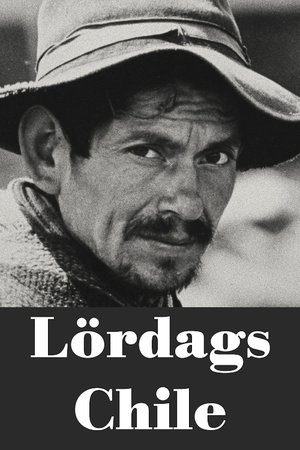
Saturday Chile(1974)
Status: Released
Date: 1974-01-01
0%
0 Votes
Time: 0h 42m
Overview:
A reflection on the dictatorship of Augusto Pinochet captured in its economic and social causalities. Originally shot for a TV youth program but canceled before broadcast.
Languages: Swedish.
Countries:
Sweden
Movie: Saturday Chile
HomePage
Overview
A reflection on the dictatorship of Augusto Pinochet captured in its economic and social causalities. Originally shot for a TV youth program but canceled before broadcast.
Release Date
1974-01-01
Average
0
Rating:
0.0 startsTagline
Genres
Languages:
svenskaKeywords
Similar Movies

0%
I Am Pablo Neruda(en)
Examines the career and literary output of Pablo Neruda, who makes his home at Isla Negra on the coast of Chile. Includes views of Mr. Neruda reading many of his poems in the locales which inspired them.

60%
Corporate Accountability(es)
2020-02-21
Images of Argentinian companies and factories in the first light of day, seen from the inside of a car, while the director reads out documents in voiceover that reveals the collusion of the same concerns in the military dictatorship’s terror.

0%
The Dawsonians(es)
During the first days after the 1973 Chilean coup d’état, the political leadership of the Popular Unity government was arrested and transferred to Dawson Island, Magallanes Region, extreme south of Chile and the mainland. The wives of the then political prisoners began an incessant effort to find out the whereabouts of their husbands and then try to return them alive. In these circumstances, they meet and spontaneously organize into a group they call the “Dawsonianas.”

88%
Nadia Comăneci: The Gymnast and the Dictator(fr)
2016-07-24
A documentary portrait of legendary Perfect Ten gymnast Nadia Comaneci after becoming an icon in the 1976 Olympics, during her Romanian period, and her challenging years under the dictatorship of Nicolae Ceausescu.

80%
Palm to Palm: Love. Home. Family(en)
2019-12-28
"Everybody should have a home. If you punish a nation, this is so abstract, it's very mean to use your power to put another country in your control... Instead of punishment, maybe we should have love." Eliane from Chile, Milad from Iran, and Georgia from Greece, three migrants in the UK and their thoughts on love, home, family, and Shakespeare's Romeo and Juliet.

64%
Chaplin Today: The Great Dictator(en)
2003-12-30
A short documentary about the making of "The Great Dictator."

30%
Kadyrov, The Dictator of Chechnya(fr)
2018-05-15
The lifestyle, self-styling and political opinions of Chechen dictator Ramsan Kadyrov are examined in this documentary.

70%
General Idi Amin Dada(fr)
1974-05-29
Filmmaker Barbet Schroeder shows the Ugandan dictator meeting his Cabinet, reviewing his troops, explaining his ideology.

70%
The Red Princess(fr)
2022-04-04
Who is Kim Yo-jong? In a context of maximum tensions between North Korea and the United States, Pierre Haski paints an unprecedented portrait of the little sister of Kim Jong-un, whose influence in Pyongyang is growing stronger day by day.

0%
The Girls(es)
2014-06-27
Four lucid grandmothers tell their story forgotten by history: the militancy and resistance of the young women of the leftist youth against the dictatorship of Marcos Pérez Jiménez.

58%
Yellow Caesar(en)
1941-05-24
Using edited archive footage, mockery is made of Italy's dictator Benito Mussolini.

100%
Puma!(en)
2015-10-08
It is a powerful predator, one of the most elusive animals in Patagonia and rarely filmed. In the very South of Chile the Pumas' hunting grounds lie in the awe-inspiring Torres del Paine National Park, follow a mother Puma as she rears her cubs in the wild, teaching them to survive and thrive.

69%
The Propaganda Game(es)
2015-10-03
North Korea. The last communist country in the world. Unknown, hermetic and fascinating. Formerly known as “The Hermit Kingdom” for its attempts to remain isolated, North Korea is one of the largest sources of instability as regards world peace. It also has the most militarized border in the world, and the flow of impartial information, both going in and out, is practically non-existent. As the recent Sony-leaks has shown, it is the perfect setting for a propaganda war.

85%
Pumas: Legends of the Ice Mountains(en)
2021-02-03
Travel to the ice mountains of Chile to discover the secrets of the puma (aka panther, mountain lion and cougar) the area's largest predator. Discover how this elusive cat survives and follow the dramatic fate of a puma and her cubs.

65%
Dictator: One Crazy Job(fr)
2013-06-12
They’ve become the human face of inhuman barbarity. Leaders like Hitler, Idi Amin Dada, Stalin, Kim Jong Il, Saddam Hussein, Nicolae Ceausescu, Bokassa, Muammar Kadhafi, Khomeini, Mussolini and Franco governed their countries completely cut off from reality. These paranoid leaders were driven to abuse their power by the pathology of power itself. Dictators are driven by a relentless, thought-out determination to impose themselves as infallible, all-knowing and all-powerful beings. But they are also men ruled by their caprices, uncontrollable impulses, and reckless fits of frenzy, which paradoxically render them as human as anyone else. The abuses they committed were clearly atrocious, yet some of them were as outlandish as the characters portrayed in the film The Dictator. They sunk to depths worthy of Kafka: so incredibly absurd, they are outrageously funny.

66%
My Imaginary Country(es)
2022-05-20
This documentary explores the protests that exploded onto the streets of Chile’s capital of Santiago in 2019 as the population demanded more democracy and social equality around education, healthcare and job opportunities.

65%
Interview with Salvador Allende: Power and Reason(it)
1973-09-15
An interview with the president of Chile conducted by Roberto Rossellini in 1971, but broadcast only after his death.

74%
Nostalgia for the Light(es)
2010-10-27
In Chile's Atacama Desert, astronomers peer deep into the cosmos in search for answers concerning the origins of life. Nearby, a group of women sift through the sand searching for body parts of loved ones, dumped unceremoniously by Pinochet's regime.


0%
Septembre Chilien(fr)
1973-01-01
Bruno Muel's documentary on the coup in Chile in 1973. Muel, who was part of the famed Medvedkine group, along with Chris Marker and Jean-Luc Godard, among others, captured one of the most powerful portraits of the early days of Dictatorship. Profound solidarity with the socialist cause, Muel and his team showed great courage to mix the official registration of images with those triumphant, clandestine, of the nascent opposition.