Loading Page


Ovid: The Poet and the Emperor(2017)
Status: Released
Date: 2017-11-16
0%
0 Votes
Time: 1h 0m
Overview:
Michael Wood explores the life, works and influence of one of the world's greatest storytellers who died 2,000 years ago. When an Elizabethan literary critic said that the witty soul of Ovid lived on in 'honey tongued Shakespeare', they were just stating the obvious. Ovid, everyone knew, was simply the most clever, sexy and funny poet in the western tradition. His Metamorphoses, it has often been said, is the most influential secular book in European literature.
Languages: English.
Countries:
United Kingdom
ProductionCompanies: 
Movie: Ovid: The Poet and the Emperor
Top 1 Billed Cast
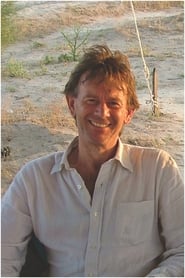
Michael Wood
Himself - Presenter
HomePage
Overview
Michael Wood explores the life, works and influence of one of the world's greatest storytellers who died 2,000 years ago. When an Elizabethan literary critic said that the witty soul of Ovid lived on in 'honey tongued Shakespeare', they were just stating the obvious. Ovid, everyone knew, was simply the most clever, sexy and funny poet in the western tradition. His Metamorphoses, it has often been said, is the most influential secular book in European literature.
Release Date
2017-11-16
Average
0
Rating:
0.0 startsTagline
Genres
Languages:
EnglishKeywords
Similar Movies

0%
Richard Hugo: Kicking the Loose Gravel Home(en)
1976-01-01
Filmed on location in Montana and Washington State, this 1976 biography of poet and teacher Richard Hugo features readings of some of his most famous poems as well as interviews with his family and friends.

76%
Caligula with Mary Beard(en)
2013-07-29
What is true and what is false in the hideous stories spread about the controversial figure of the Roman emperor Gaius Julius Caesar Augustus Germanicus (12-41), nicknamed Caligula? Professor Mary Beard explains what is accurate and what is mythical in the historical accounts that portray him as an unbalanced despot. Was he a sadistic tyrant, as Roman historians have told, or perhaps the truth about him was manipulated because of political interests?

0%
I Am Pablo Neruda(en)
Examines the career and literary output of Pablo Neruda, who makes his home at Isla Negra on the coast of Chile. Includes views of Mr. Neruda reading many of his poems in the locales which inspired them.

70%
Nin E Tepueian: My Cry(fr)
2020-01-24
NIN E TEPUEIAN - MY CRY is a documentary tracks the journey of Innu poet, actress and activist, Natasha Kanapé Fontaine, at a pivotal time in her career as a committed artist. Santiago Bertolino's camera follows a young Innu poet over the course of a year. A voice rises, inspiration builds; another star finds its place amongst the constellation of contemporary Indigenous literature. A voice of prominent magnitude illuminates the road towards healing and renewal: Natasha Kanapé Fontaine.

63%
The Eyes of Dante(it)
2021-03-02
He is considered the greatest European poet of the Middle Ages and his work unfolds the whole panopticon of occidental education – theology, philosophy, sciences, politics and literature. But who has really read it, the “Divine Comedy”? Who knows more of its creator Dante Alighieri than that he had an eagle-like profile and was in love with a woman named Beatrice? 700 years after Dante’s death, the filmmaker Adolfo Conti travels through Italy with Dante’s words in mind and eyes to see the world as Dante did. As the film encounters the beauty of arts and the Tuscan landscape, the forces of nature, a dramatic life story is unfolded.

82%
The Time Factory(fr)
2021-09-19
Who invented time, who invented the clock? Why 1 hour, why 60 minutes, why 60 seconds? Since prehistoric times, man has sought to measure time, to organize social and religious life, to plan food supply... Today we can surf the Internet, geolocate, pay by credit card… All our daily lives depend on time and the synchronization of clocks. The history of the invention of time and of the ways and instruments to measure it is a long story…

54%
Trudell(en)
2005-01-20
A chronicle of legendary Native American poet/activist John Trudell's travels, spoken word performances, and politics.

100%
Du Fu: China's Greatest Poet(en)
2020-04-05
Sir Ian McKellen reads the poetry, Michael Wood traces the journey on the ground. Together they conjure up the extraordinary life, times and words of China’s greatest poet, Du Fu. In this film, the first to ever be made about Du Fu in the west, Michael follows his tracks by road, train and riverboat. Along the way, he meets ordinary people, dancers and musicians, who help to tell the amazing story of a poet whose words have resonated through the centuries, describing the experiences of ordinary people caught up in war, corruption, famine and natural disasters. "I am one of the privileged. If my life is so bitter, then how much worse is the life of the common people?"

50%
Nero's Sunken City(de)
2017-04-16
Beneath the turquoise waves of the Bay of Naples lies an extraordinary underwater archeology site, the ancient Roman city of Baiae. From the first century to the third century AD, Baiae was the exclusive playground for the rich and powerful among Rome’s elite. What made Baiae such a special place? What really went on there? And why did it disappear?

63%
Stéphane Mallarmé(fr)
1968-01-01
Stéphane Mallarmé is one of the many educational documentaries that Éric Rohmer did for the television during the 1960’s. At the beginning of the film, Rohmer states that he has placed in Mallarmé’s mouth words taken from an interview with the writer by Jules Heuret published in 1891.

90%
David Macaulay: Roman City(en)
1994-02-15
The glories of Ancient Rome are explored in ROMAN CITY, based on David Macaulay's acclaimed book. This animated and live-action video recounts life in Verbonia, a fictional city in Gaul. A well-planned town with all modern conveniences, it is threatened by conflict between conquerors and conquered. Macaulay also visits Pompeii, Herculaneum, Ostia, Nimes, Orange, and Rome, to view actual Roman architecture and engineering greatness.

0%
Pink Motherland(es)
2009-02-18
A documentary about Néstor Perlongher. His life, his poems, and his activism in Argentina's Frente de Liberación Homosexual (homosexual liberation front).

80%
Merton: A Film Biography(en)
1984-01-01
In his lifetime, Thomas Merton was hailed as a prophet and censured for his outspoken social criticism. For nearly 27 years he was a monk of the austere Trappist order, where he became an eloquent spiritual writer and mystic as well as an anti-war advocate and witness to peace. Merton: A Film Biography provides the first comprehensive look at this remarkable 20th century religious philosopher who wrote, in addition to his immensely popular autobiography The Seven Storey Mountain, over 60 books on some of the most pressing social issues of our time, some of which are excerpted here. Merton offers an engaging profile of a man whose presence in the world touched millions of people and whose words and thoughts continue to have a profound impact and relevance today.

0%
Terry Jones' Barbarians(en)
2006-05-26
Terry Jones' Barbarians is a 4-part TV documentary series first broadcast on BBC 2 in 2006. It was written and presented by Terry Jones, and it challenges the received Roman and Roman Catholic notion of the barbarian. Professor Barry Cunliffe of the University of Oxford acted as consultant for the series.

60%
Immortal Pompeii(de)
2020-06-12
In 79 A.D., Mount Vesuvius erupted, killing 2,000 people. This documentary asks what happened next as experts explore Ancient Rome's crisis management.


60%
I will not travel hidden(es)
2018-08-23
Blanca Luz Brum traveled an unusual path, through twentieth-century Latin America, actively participating in the intellectual, political and artistic movements of Uruguay, Chile, Argentina, Peru and Mexico. It is today a symbol of female emancipation in Latin America. The versions about her life are varied and dissimilar, the testimonies of those who knew her, full of contradictions.

0%
This Is How a Child Becomes a Poet(fr)
2023-08-30
The last day of Patrizia Cavalli’s home. Before it’s all gone.


70%
Cleopatra: Mother, Mistress, Murderer, Queen(en)
2016-04-07
Cleopatra, the last Egyptian queen and one of the most legendary women in history. A beautiful seductress who used her sex appeal in order to manipulate the most powerful men in the Roman Empire. This film reveals the truth behind the legend.