Loading Page

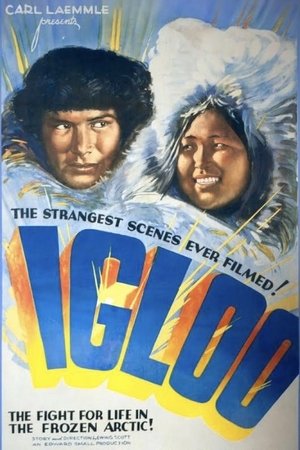
Igloo(1932)
Status: Released
Date: 1932-07-01
0%
0 Votes
Time: 1h 10m
A fight for life in the frozen Arctic!
Overview:
Documentary detailing the hardships of life among Alaskan Natives.
Languages: English.
Countries:
United States of America
ProductionCompanies:
Edward Small Productions
Movie: Igloo
Top 6 Billed Cast
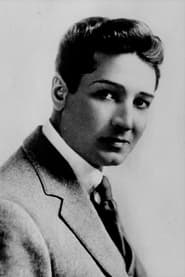
Gayne Whitman
Narrator (voice)
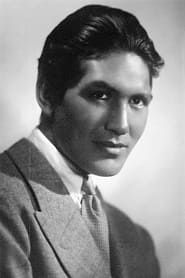
Mala
The Young Hunter
HomePage
Overview
Documentary detailing the hardships of life among Alaskan Natives.
Release Date
1932-07-01
Average
0
Rating:
0.0 startsTagline
A fight for life in the frozen Arctic!
Genres
Languages:
EnglishKeywords
Similar Movies

80%
Keep Talking(en)
2017-03-16
Three Alaska Native women work to save their endangered language, Kodiak Alutiiq, and ensure the future of their culture while confronting their personal demons. With just 41 fluent Native speakers remaining, mostly Elders, some estimate their language could die out within ten years. The small community travels to a remote Island, where a language immersion experiment unfolds with the remaining fluent Elders. Young camper Sadie, an at-risk 13 year old learner and budding Alutiiq dancer, is inspired and gains strength through her work with the teachers. Yet PTSD and politics loom large as the elders, teachers, and students try to continue the difficult task of language revitalization over the next five years.

75%
Camp Century: The Hidden City Beneath the Ice(de)
2020-01-08
How in 1959, during the heat of the Cold War, the government of the United States decided to create a secret military base located in the far north of Greenland: Camp Century, almost a real town with roads and houses, a nuclear plant to provide power and silos to house missiles aimed at the Soviet Union.

100%
Invasion(en)
2019-11-01
In this era of "reconciliation", Indigenous land is still being taken at gunpoint. INVASION is a new film about the Unist'ot'en Camp, Gidimt'en checkpoint, and the Wet'suwet'en Nation standing up to the Canadian government and corporations who continue colonial violence against indigenous people.

0%
Namatjira Project(en)
2017-09-05
From the remote Australian desert to the opulence of Buckingham Palace - Namatjira Project is the iconic story of the Namatjira family, tracing their quest for justice.


50%
maɬni—towards the ocean, towards the shore(en)
2020-01-26
An experimental look at the origin of the death myth of the Chinookan people in the Pacific Northwest, following two people as they navigate their own relationships to the spirit world and a place in between life and death.

0%
Trick or Treaty?(en)
2014-09-04
Legendary Canadian documentarian Alanis Obomsawin digs into the tangled history of Treaty 9 — the infamous 1905 agreement wherein First Nations communities relinquished sovereignty over their traditional territories — to reveal the deceptions and distortions which the document has been subjected to by successive governments seeking to deprive Canada’s First Peoples of their lands.

0%
Amarok's Song - The Journey to Nunavut(en)
1998-01-01
In this feature-length documentary, three generations of the Caribou Inuit family come together to tell the story of their journey as Canada's last nomads. From the independent life of hunting on the Keewatin tundra to taking the reins of the new territory of Nunavut on April 1, 1999, we see it all. The film is the result of a close collaboration between Ole Gjerstad, a southern Canadian, and Martin Kreelak, an Inuk. It's Martin's family that we follow, as the story is told through his own voice, through those of the Elders, and through those of the teens and young adults who were born in the settlements and form the first generation of those growing up with satellite TV and a permanent home.

0%
Aitamaako'tamisskapi Natosi: Before the Sun(en)
2023-02-25
An intimate and thrilling portrait of a young Siksika woman and the deep bonds between her father and family in the golden plains of Blackfoot Territory as she prepares for one of the most dangerous horse races in the world… bareback.

80%
Piripkura(pt)
2018-03-01
The last two surviving members of the Piripkura people, a nomadic tribe in the Mato Grosso region of Brazil, struggle to maintain their indigenous way of life amidst the region's massive deforestation. Living deep in the rainforest, Pakyî and Tamandua live off the land relying on a machete, an ax, and a torch lit in 1998.

90%
Alaska's Giant Bears(de)
2023-01-17
In Canada and Alaska, the consequences of global warming are being keenly felt by brown bears - but in different ways by different populations. Their survival depends mainly on the quantity of wild salmon available in the region, as it is the fruit of their catch that enables the bears to accumulate fat reserves for the winter. While salmon populations off Canada's Pacific coast continue to decline year after year, in the immense Bristol Bay in western Alaska, as well as on Kodiak Island, they are increasing considerably. The water temperature in the North Pacific is now ideal for salmon development. From Canada to Alaska, the documentary follows different bear populations over a two-year period.


69%
The Pearl Button(es)
2015-10-15
The ocean contains the history of all humanity. The sea holds all the voices of the earth and those that come from outer space. Water receives impetus from the stars and transmits it to living creatures. Water, the longest border in Chile, also holds the secret of two mysterious buttons which were found on its ocean floor. Chile, with its 2,670 miles of coastline and the largest archipelago in the world, presents a supernatural landscape. In it are volcanoes, mountains and glaciers. In it are the voices of the Patagonian Indigenous people, the first English sailors and also those of its political prisoners. Some say that water has memory. This film shows that it also has a voice.

100%
We Will Speak(en)
2023-03-23
The Cherokee language is deeply tied to Cherokee identity; yet generations of assimilation efforts by the U.S. government and anti-Indigenous stigmas have forced the Tri-Council of Cherokee tribes to declare a State of Emergency for the language in 2019. While there are 430,000 Cherokee citizens in the three federally recognized tribes, fewer than an estimated 2,000 fluent speakers remain—the majority of whom are elderly. The covid pandemic has unfortunately hastened the course. Language activists, artists, and the youth must now lead the charge of urgent radical revitalization efforts to help save the language from the brink of extinction.

60%
Nostalgia for the Lake(es)
2023-04-24
A vision from Limbo, where the canoeist of the eternal lake floats in his boat, between sleep and wakefulness. When he sleeps, he dreams of the everyday of a parallel time. when he wakes up, the same song haunts him again and again. his boat, “ara” (time, in guarani) travels through time like a shooting star.

0%
Woodland Spirits(en)
2007-01-01
In this documentary short, two men paddle a canoe across a remote part of northern Lake Superior. Each stroke brings them closer to the culmination of an artistic and spiritual journey, one that begins with ancient rock paintings from their Anishinaabe ancestors.

0%
Smudge(en)
2005-01-01
This short documentary follows three Indigenous women as they practice ancestral forms of worship: drumming, singing, and using sweetgrass. These ancient spiritual traditions may at first seem at odds with urban life, but to Indigenous people in Canada who are used to praying in natural settings, the whole world is sacred space.

80%
Hands of History(en)
1994-01-01
This documentary follows four female First Nations artists—Doreen Jensen, Rena Point Bolton, Jane Ash Poitras and Joane Cardinal-Schubert are First Nations artists who seek to find a continuum from traditional to contemporary forms of expression. These exceptional artists reveal their philosophies as artists, their techniques and creative styles, and the exaltation they feel when they create. A moving testimony to the role that Indigenous women artists have played in maintaining the voice of their culture.

62%
Return to the Wild: The Chris McCandless Story(en)
2014-11-25
Twenty years ago, a young American hiker named Chris McCandless, the accomplished son of successful middle class parents, was found dead in an abandoned bus in the Alaskan wilderness and became the subject of the best-selling book and movie “Into the Wild.” Now, PBS retraces Chris McCandless’ steps to try to piece together why he severed all ties with his past, burnt or gave away all his money, changed his name and headed into the Denali Wilderness. McCandless' own letters, released for the first time, as well as new and surprising interviews, probe the mystery that still lies at the heart of a story that has become part of the American literary canon and compels so many to this day.

83%
Invasion(en)
2020-05-01
In this era of “reconciliation”, Indigenous land is still being taken at gunpoint. Unist’ot’en Camp, Gidimt’en checkpoint and the larger Wet’suwet’en Nation are standing up to the Canadian government and corporations who continue colonial violence against Indigenous people. The Unist’ot’en Camp has been a beacon of resistance for nearly 10 years. It is a healing space for Indigenous people and settlers alike, and an active example of decolonization. The violence, environmental destruction, and disregard for human rights following TC Energy (formerly TransCanada) / Coastal GasLink’s interim injunction has been devastating to bear, but this fight is far from over.