Loading Page

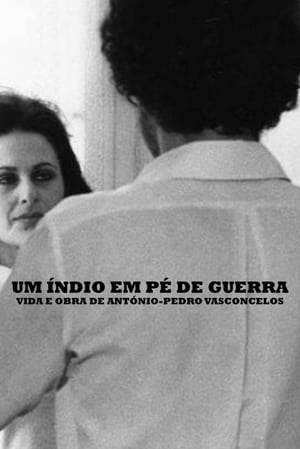
An Indian in War - Life and Work of António-Pedro Vasconcelos(2019)
Status: Released
Date: 2019-04-05
0%
0 Votes
Time: 2h 0m
António-Pedro Vasconcelos, a man who lives and breathes cinema
Overview:
A retrospective on the life and work of Portuguese director António-Pedro Vasconcelos.
Languages: French, Portuguese.
Countries:
Movie: An Indian in War - Life and Work of António-Pedro Vasconcelos
Top 10 Billed Cast
António-Pedro Vasconcelos
Self
Mário Barroso
Self
Paulo Branco
Self
Rogério Samora
Self

Soraia Chaves
Self
Joaquim de Almeida
Self
Ana Zanatti
Self
António da Cunha Telles
Self
Video Trailer An Indian in War - Life and Work of António-Pedro Vasconcelos
All 1 videos

Promo Um índio em pé de guerra - Vida e Obra de António-Pedro Vasconcelos | RTP - Trailer
Similar Movies

90%
Tasmanian Devil: The Fast and Furious Life of Errol Flynn(en)
2007-10-17
The story of Tasmanian-born actor Errol Flynn whose short & flamboyant life, full of scandals, adventures, loves and excess was largely played out in front of the camera - either making movies or filling the newsreels and gossip magazines. Tragically he was dead from the effects of drugs and alcohol by the time he was only 50 & the myths live on. But there is another side of Flynn that is less well known - his ambitions to be a serious writer and newspaper correspondent, his documentary films and his interest in the Spanish Civil War and Castro's Cuba

0%
Discovering Buñuel(en)
2012-01-01
Luis Bunuel, the father of cinematic Surrealism, made his film debut with 'Un Chien Andalou' in 1929 working closely with Salvador Dali. Considered one of the finest and controversial filmmakers with, 'L’Age d’Or' (1930), attacking the church and the middle classes. He won many awards including Best Director at Cannes for 'Los Olvidados' (1950), and the coveted Palme d’Or for 'Viridiana' (1961), which had been banned in his native Spain. His career moved to France with 'The Diary of a Chambermaid' with major stars such as Jeanne Moreau and Catherine Deneuve.

74%
From Caligari to Hitler(de)
2015-05-28
Film journalist and critic Rüdiger Suchsland examines German cinema from 1919, when the Republic of Weimar is born, to 1933, when the Nazis come into power. (Followed by Hitler's Hollywood, 2017.)

0%
Dear Antonioni(en)
1995-01-01
A documentary portrait of Michangelo Antonioni based on Roland Barthes' essay.

71%
Linklater: On Cinema and Time(en)
2013-12-04
If cinema is the art of time, Linklater is one of its most thoughtful and engaged directors. Unlike other filmmakers identified as auteurs, Linklater’s distinction is not found on the surface of his films, in a visual style or signature shot, but rather in their DNA, as ongoing conversations with cinema, which is to say, with time itself. A visual essay produced by Sight and Sound.

68%
The Characters of Star Wars(en)
2004-09-21
The Characters of Star Wars is a Video Documentary included in the 2004 DVD release of the Star Wars Original Trilogy. It explained the Mythos of many of the "Star Wars" Characters.

0%
Not Your Average Joe(en)
A documentary about the career of legendary production designer Joe Alves and his four decades in Hollywood.

65%
CzechMate: In Search of Jiří Menzel(cs)
2018-09-16
An epic exploration of the Czechoslovak New Wave cinema of the 1960s and 70s, structured around a series of conversations with one of its most acclaimed exponents - Closely Observed Trains director Jiří Menzel.

50%
Boiler Suit(pt)
2023-05-18
Documentary depicting the life and history of labour struggle of Bairro dos Pescadores, in Setúbal, while following the life of a street artist.

0%
Les Clippeurs(fr)
2013-01-07

60%
Our Time, Our Story(zh)
2002-10-25
Richly illustrated with film clips and interviews, OUR TIME, OUR STORY tells the still-evolving story of the Taiwanese "new wave," from its rise in the early 1980s, as the island was democratizing after decades under martial law, through growing international recognition and domestic debate in the 1990s. Spearheaded in its early years by such filmmakers as Edward Yang, Ko I-cheng, Hou Hsiao-hsien and Wan Jen, the movement revitalized Taiwan cinema through low-budget experiments that emphasized personal stories, political reflection and stylistic invention. Said filmmakers, writers and actors like Wu Nien-jen and Sylvia Chang, even "second wave" directors Tsai Ming-liang and Lin Cheng-sheng provide fond reminiscences and retrospective insights in this compelling account of one of the most distinctive national cinemas of the last quarter-century.

35%
The Name of This Film Is Dogme95(en)
2000-11-01
The Name of this Film is Dogme95 is an irreverent documentary exploring the origins of Dogme95, the most influential movement in world cinema for a generation. The film tells how a 'brotherhood' of four Danish directors armed with a radical Manifesto, has inspired, outraged and provoked filmmakers and filmgoers the world over. The rules of Dogme95 take filmmaking back to its brass-tacks - stories must be set in the here and now; the films must be shot on location, with a handheld camera, using natural light, and direct sound; the rules forbid murders and weapons (staples of the much-loved action-movie genre); and, most amusingly, the director must not be credited (that holds also for the director of The Name of this Film is Dogme95...).

0%
Autoritratto Auschwitz. L'occhio è per così dire l'evoluzione biologica di una lagrima(it)
2007-09-04
In the film we find some scrap of slow motion they see a Monica Vitti trying to cry, a meeting between Antonioni and Grifi, a film shot in the concentration camp of Auschwitz with a survivor who recounts those awful moments, a glimpse of Palestine today, Grifi's reflections on the prison.

0%
Gravity of the Tea(ko)
2019-11-28
IM Kwon-taek is a Korean film-maker. He was born in 1934 when his country was under Japanese occupation. When Korean War was over his parents became North Korean partisan, and he ran away from home. He’s made 101 films since he made his debut in 1962 with Farewell Doman River. He tasted the glory at Cannes Int’l Film Festival with Chiwhasun. However making the 102nd film seems harder than ever to this 80-year-old director. His 2 projects have been suspended. He still can’t find chance to make his 102nd film, but spends daily routine free from film-making. This is a recording of years that the film-maker spends without making a film.

70%
Friedkin Uncut(en)
2018-11-05
An introspective insight into the life and artistic journey of William Friedkin, an extraordinary and offbeat director of cult films such as The French Connection, The Exorcist, Sorcerer, Cruising, To Live and Die in L.A. and Killer Joe. For the first time Friedkin opens up, guiding the audience on a fascinating journey through the themes and the stories that have influenced his life and his artistic career.


57%
Life After Flash(en)
2017-10-02
A look at the roller coaster life of Sam J. Jones since his role as Flash Gordon, his struggles and successes, and the aftermath of when he went up against one of the most powerful producers in Hollywood.

44%
Sex-Business: Made in Pasing(de)
1970-01-03
Documentary film about the successful erotic film producer and author Alois Brummer. Documentary filmmaker Hans Jürgen Syberberg accompanies Brummer for six days in his daily business during the shooting of Brummer's film “Graf Porno und die liebesdurstigen Töchter” (Count Porno and the Love-Thirsty Daughters). In addition to Brummer, his employees and actors also have their say.

100%
I, Amália(pt)
2020-07-23
A portrait of Amália by herself. Her personality, experiences, daring, songs, joys and sorrows and a journey that took her all over the world, are told here through moments when Amália crossed with the history of radio and television and public.

72%
Hitchcock/Truffaut(en)
2015-09-05
Filmmakers discuss the legacy of Alfred Hitchcock and the book “Hitchcock/Truffaut” (“Le cinéma selon Hitchcock”), written by François Truffaut and published in 1966.