Loading Page
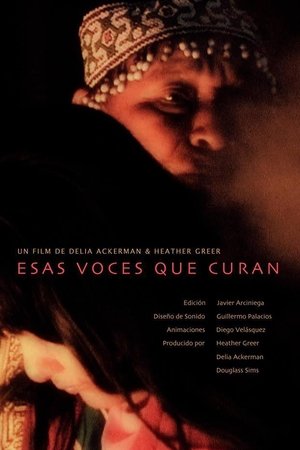
Voices That Heal(NaN)
Status: Released
Date:
0%
0 Votes
Time: 0h 45m
Overview:
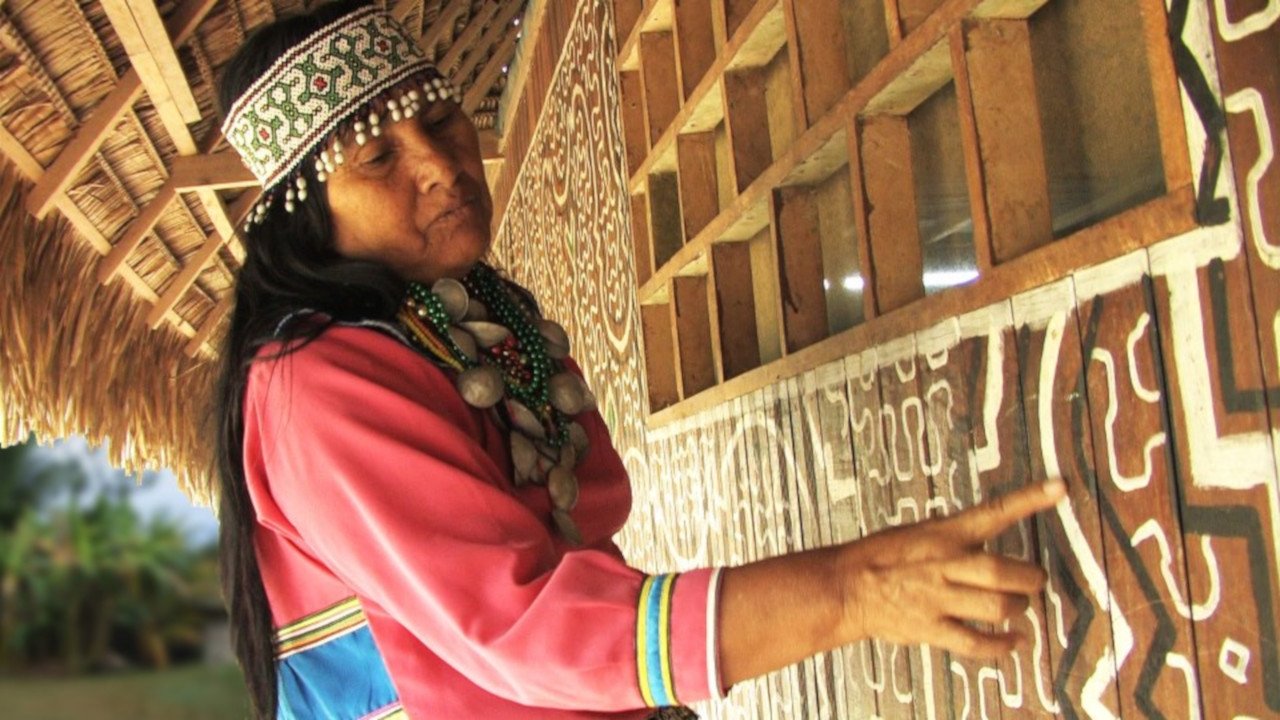
Herlinda Augustin is a Shipibo healer who lives with her family in Peruvian Amazonia. Will she and other healers be able to maintain their ancient tradition despite Western encroachment?
Languages: Spanish.
Countries:
ProductionCompanies:
Black Tartan Media
Movie: Voices That Heal
Top 1 Billed Cast
Video Trailer Voices That Heal
Video: Trailer "Voices That Heal"

Trailer "Voices That Heal"
Sacred Places, Jhingiori : Voices That Heal Documentary

Speaking to the Rain: Voices That Heal Documentary

Voices That Heal (2018)
All 4 videos

Trailer "Voices That Heal" - Trailer
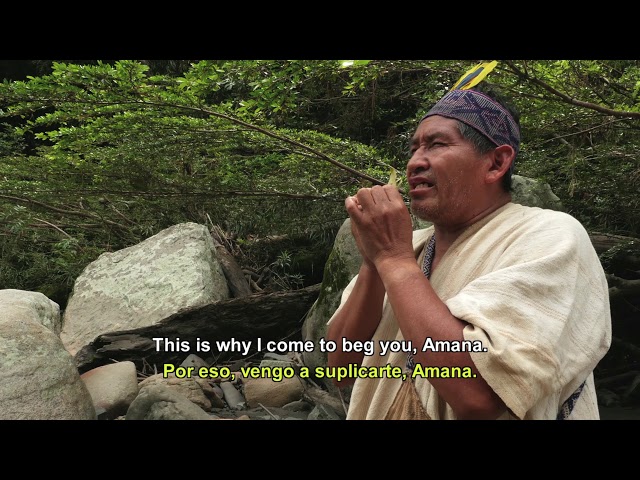
Sacred Places, Jhingiori : Voices That Heal Documentary - Clip

Speaking to the Rain: Voices That Heal Documentary - Clip

Voices That Heal (2018) - Teaser
Similar Movies

68%
Anaconda: Silent Killer(de)
2014-05-11
Exploring the large and powerful anaconda in remote parts of the Amazon rainforest.

78%
Into the Amazon(en)
2018-01-09
A documentary re-telling of the remarkable and dangerous journey taken by President Theodore Roosevelt and legendary Brazilian explorer Cândido Rondon into the heart of the South American rainforest to chart an unexplored tributary of the Amazon.


50%
Aya: Awakenings(en)
2013-04-01
Aya: Awakenings' is an experiential journey by journalist Rak Razam into the world and visions of ayahuasca, a powerful hallucinogenic plant medicine from the Amazon, capturing the experience and the western dynamic around it in unprecedented detail.

80%
Totem: Return and Renewal(en)
2007-01-01
In this follow-up to his 2003 film, Totem: the Return of the G'psgolox Pole, filmmaker Gil Cardinal documents the events of the final journey of the G'psgolox Pole as it returns home to Kitamaat and the Haisla people, from where it went missing in 1929.

72%
Wild Brazil(en)
2014-01-14
Go up-river and deep into the jungle far from Brazil's cities and stadiums, where families of giant otters, tufted capuchin monkeys and mischievous coati (South American raccoon cousins) rally their wits to survive in a breathtakingly beautiful yet dangerous land.

67%
Life of Ivanna(ru)
2021-10-01
A sensitive and intimate portrait of Ivanna, a nomadic reindeer herder in the Russian Arctic and mother of five small kids. Ivanna is forced to leave the traditional way of life and emigrate to the city, following her own dreams, due to the quickly deteriorating conditions of life in the tundra. We follow her life for several years.

0%
Ayahuasca and the Path of the Shaman(en)
Desperate to recover from his depression, Dave travels from his home in British Columbia, Canada to Peru in order to experience the healing effects of the sacred medicine ayahuasca. After Dave spends some time in the country, a Shipibo healer begins to teach him how to work with the medicine more deeply.


69%
The Pearl Button(es)
2015-10-15
The ocean contains the history of all humanity. The sea holds all the voices of the earth and those that come from outer space. Water receives impetus from the stars and transmits it to living creatures. Water, the longest border in Chile, also holds the secret of two mysterious buttons which were found on its ocean floor. Chile, with its 2,670 miles of coastline and the largest archipelago in the world, presents a supernatural landscape. In it are volcanoes, mountains and glaciers. In it are the voices of the Patagonian Indigenous people, the first English sailors and also those of its political prisoners. Some say that water has memory. This film shows that it also has a voice.

57%
Broken Rainbow(en)
1985-05-05
Documentary chronicling the government relocation of 10,000 Navajo Indians in Arizona.

100%
We Will Speak(en)
2023-03-23
The Cherokee language is deeply tied to Cherokee identity; yet generations of assimilation efforts by the U.S. government and anti-Indigenous stigmas have forced the Tri-Council of Cherokee tribes to declare a State of Emergency for the language in 2019. While there are 430,000 Cherokee citizens in the three federally recognized tribes, fewer than an estimated 2,000 fluent speakers remain—the majority of whom are elderly. The covid pandemic has unfortunately hastened the course. Language activists, artists, and the youth must now lead the charge of urgent radical revitalization efforts to help save the language from the brink of extinction.

83%
Invasion(en)
2020-05-01
In this era of “reconciliation”, Indigenous land is still being taken at gunpoint. Unist’ot’en Camp, Gidimt’en checkpoint and the larger Wet’suwet’en Nation are standing up to the Canadian government and corporations who continue colonial violence against Indigenous people. The Unist’ot’en Camp has been a beacon of resistance for nearly 10 years. It is a healing space for Indigenous people and settlers alike, and an active example of decolonization. The violence, environmental destruction, and disregard for human rights following TC Energy (formerly TransCanada) / Coastal GasLink’s interim injunction has been devastating to bear, but this fight is far from over.

61%
The Trip(en)
2021-07-30
In this honest and deeply personal account of living with addiction, a young man talks about the realities and challenges of living in the Anishinaabe community of Kitcisakik and the hope he still harbours for himself and his people.

77%
Warrior Women(en)
2018-05-26
Through the figure of Lakota activist and community organizer Madonna Thunder Hawk, this inspiring film traces the untold story of countless Native American women struggling for their people's civil rights. Spanning several decades, Christina D. King and Elizabeth A. Castle's documentary charts Thunder Hawk's lifelong commitment, from her early involvement in the American Indian Movement (AIM), to her pivotal role in the founding of Women of All Red Nations, to her heartening presence at Standing Rock alongside thousands protesting the Dakota Access Pipeline. She passed her dedication and hunger for change to her daughter Marcy, even if that often meant feeling like comrades-in-arms more than mother and child. Through rare archival material—including amazing footage of AIM's occupation of Wounded Knee—and an Indigenous style of circular storytelling, Warrior Women rekindles the memories and legacy of the Red Power movement's matriarchs.

76%
Peru: Hidden Treasure(es)
2017-11-09
Peru is a country steeped in cultural traditions that stretch back more than 1,000 years. But it's also a land of surprising natural riches.