Loading Page

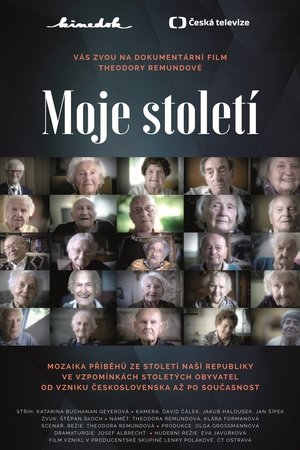
Moje století(2019)
Status: Released
Date: 2019-05-02
0%
0 Votes
Languages: Czech.
Countries:
Czech Republic
ProductionCompanies: 
Movie: Moje století
HomePage
Overview
Release Date
2019-05-02
Average
0
Rating:
0.0 startsTagline
Genres
Languages:
ČeskýKeywords
Similar Movies

0%
Building the Channel Tunnel(en)
2019-06-12
The Channel Tunnel linking Britain with France is one of the seven wonders of the modern world but what did it take to build the longest undersea tunnel ever constructed? We hear from the men and women, who built this engineering marvel. Massive tunnel boring machines gnawed their way through rock and chalk, digging not one tunnel but three; two rail tunnels and a service tunnel. This was a project that would be privately financed; not a penny of public money would be spent on the tunnel. Business would have to put up all the money and take all the risks. This was also a project that was blighted by flood, fire, tragic loss of life and financial bust ups. Today, it stands as an engineering triumph and a testament to what can be achieved when two nations, Britain and France put aside their historic differences and work together.

82%
Aghet(de)
2010-04-09
2010 documentary film on the Armenian Genocide by the Young Turk government of the Ottoman Empire during World War I. It is based on eyewitness reports by European and American personnel stationed in the Near East at the time, Armenian survivors and other contemporary witnesses which are recited by modern German actors.


90%
Pompeii: The New Revelations(en)
2020-02-15
Archaeologist Raksha Dave and historian Dan Snow return to Pompeii to gain special access to a variety of new excavations, including two never-before-seen discoveries.

63%
A Night at the Garden(en)
2017-09-24
Archival footage of an American Nazi rally that attracted 20,000 people at Madison Square Garden in 1939, shortly before the beginning of World War II.

66%
Atari: Game Over(en)
2014-11-19
The Xbox Originals documentary that chronicles the fall of the Atari Corporation through the lens of one of the biggest mysteries of all time, dubbed “The Great Video Game Burial of 1983.” Rumor claims that millions of returned and unsold E.T. cartridges were buried in the desert, but what really happened there?

0%
Věčná Slavia(cs)
2016-01-01

72%
Flatball: A History of Ultimate(en)
2016-10-23
On May 8, 1989, Sports Illustrated ran an article about Ultimate frisbee… about a team with no name hailing from New York City that was about to change the sport forever. From its 1968 New Jersey birth to its unanimous 2015 recognition by the International Olympic Committee, FLATBALL circles the globe to showcase four decades of world-class Ultimate and goes even further: to a set of fields in the Middle East to understand and demystify the unique spirit of the game.

67%
Accidental Anarchist(en)
2017-07-23
Carne Ross was a government highflyer. A career diplomat who believed Western Democracy could save us all. But working inside the system he came to see its failures, deceits and ulterior motives. He felt at first hand the corruption of power. After the Iraq war Carne became disillusioned, quit his job and started searching for answers.

80%
Led Zeppelin Played Here(en)
2014-10-11
1969. Man lands on the moon. Half a million strong at Woodstock....and Led Zeppelin perform in the gym of the Wheaton Youth Center in front of 50 confused teenagers. Or did they? Filmmaker Jeff Krulik chronicles an enduring Maryland legend, of the very night this concert was alleged to have taken place, January 20, 1969, during the first Presidential Inauguration of Richard Nixon. Led Zeppelin Played Here presents a mid-Atlantic version of what was happening nationwide as the rock concert industry took shape. Featuring interviews with rock writers, musicians, and fans, and several who claim they were witnessing history that night.

84%
In Search of Dracula(en)
2020-01-03
Mark Gatiss explores and celebrates Dracula, an icon of popular culture, asking just why we keep coming back to the count.

68%
The Day Hitler Died(en)
2015-12-18
The story of Hitler’s final hours told by people who were there. This special features exclusive forgotten interviews, believed lost for 65 years, with members of Hitler’s inner circle who were trapped with him in his bunker as the Russians fought to take Berlin. These unique interviews from figures such as the leader of the Hitler Youth Artur Axmann and Hitler’s secretary Traudl Junge, have never before been seen outside Germany. Using rarely seen archive footage and dramatic reconstruction, this special tells the story of Adolf Hitler’s final days in his Berlin bunker.

56%
Cincinnati's Rock 'N Roll Legends(en)
1995-01-01
An excellent comprehensive look at all the music that came out of Cincinnati, Ohio. Cincinnati "Rock Legends" "James Brown" "King Records" "Pure Prairie League" "Lemon Pipers" "Syd Nathan" WEBN "Bootsy Collins" "Lonnie Mack" "The Who concert 1979" "Rick Derringer"

66%
The 50 Year Argument(en)
2014-06-07
Follows the waves of literary, political, and cultural history as charted by the The New York Review of Books, America’s leading journal of ideas for over 50 years. Provocative, idiosyncratic and incendiary, the film weaves rarely seen archival material, contributor interviews, excerpts from writings by such icons as James Baldwin, Gore Vidal, and Joan Didion along with original verité footage filmed in the Review’s West Village offices.

60%
The Pity of War(en)
2014-02-28
Professor Niall Ferguson argues that Britain's decision to enter the First World War was a catastrophic error that unleashed an era of totalitarianism and genocide.


90%
Tasmanian Devil: The Fast and Furious Life of Errol Flynn(en)
2007-10-17
The story of Tasmanian-born actor Errol Flynn whose short & flamboyant life, full of scandals, adventures, loves and excess was largely played out in front of the camera - either making movies or filling the newsreels and gossip magazines. Tragically he was dead from the effects of drugs and alcohol by the time he was only 50 & the myths live on. But there is another side of Flynn that is less well known - his ambitions to be a serious writer and newspaper correspondent, his documentary films and his interest in the Spanish Civil War and Castro's Cuba

10%
Leninland(ru)
2013-11-30
At the peak of Perestroika, in 1987, in the village of Gorki, where Lenin spent his last years, after a long construction, the last and most grandiose museum of the Leader was opened. Soon after the opening, the ideology changed, and the flow of pilgrims gradually dried up. Despite this, the museum still works and the management is looking for ways to attract visitors. Faithful to the Lenin keepers of the museum as they can resist the onset of commercialization. The film tells about the modern life of this amazing museum-reserve and its employees.

76%
Diana: In Her Own Words(en)
2017-08-06
Using home videos recorded by her voice coach, Diana takes us through the story of her life.

60%
The Beast Is Still Alive(bg)
2016-11-11
A young Bulgarian girl digs into her grandfather's turbulent life in an attempt to unravel the past and find answers and explanations for the catastrophic fall of communism.